

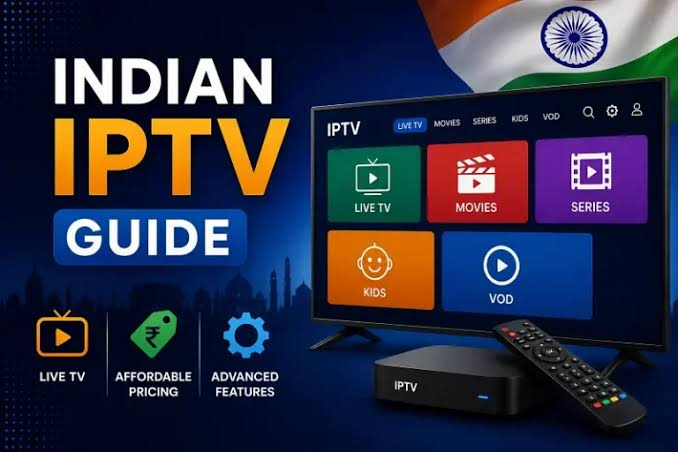
Ask anyone above the age of forty about the way they watched the 2011 World Cup final match and the response would definitely be that of watching on a cable wire along with a number of people in the family living room and someone else’s television. Now ask a college going student and the answer would be that of the phone. Such has been the difference that Indian IPTV has continued to feature in family discussions, tea stall debates and lunchtime office discussions.
The current post discusses how Indian IPTV works and what needs to be verified before making the payment.
What Is Indian IPTV and How Does It Work?
Internet Protocol Television or IPTV refers to the process where video is transmitted in small units of data packets via broadband or mobile network to be reconstructed at the receiving end by the device. The traditional set-top box is fed with anything that the operator decides to broadcast. On the contrary, the IPTV platform broadcasts the video stream only on request. Indian IPTV channels broadcast news, films and entertainment shows in Hindi, Tamil, Telugu, Bengali, Marathi and lots of other languages.
From the service provider’s point of view, the compression process takes place from their end and is transmitted to your device through the use of content delivery networks. In cases where you are transmitting high definition videos, ten megabits per second will be adequate but in ultra HD videos, this will not be enough.
Why Households Are Moving Away from Cable
There are no single reasons for people opting to change. The most frequently occurring ones include the following:
- Content viewing via smartphones, Smart TVs, tablets and laptops.
- Several providers offer functions like pause, rewind and view of recently aired programs.
- It is easy to access the small language channels compared to a set one way cable package.
- The pricing tends to be clear, with fewer hidden installation charges.
- There is an absence of a fuzzy transmission owing to old analogue cables.
Features to Check Before You Subscribe
There are many disparities in the quality of service. Therefore, make sure that you have examined each one with regards to the below mentioned criteria before making any payments:
- Compatibility of language: Channels need to match your watching preference and should not be offered as some kind of flashy advertisement.
- Reliability: Playback is very crucial, and having more channels is irrelevant since buffering would make everything pointless.
- Speed: More connections will lead to more bandwidth. Wired connection with the main TV is recommended.
- Refund policy: The information about reliable customer support and refund policy needs to be verified before paying.
- Legal rights: Make sure you find out who has the right for broadcasting the channels and if the company has a legitimate registered address.
- Payment method security: Go for reliable gateways. Untraceable payments and companies that don’t even have written terms and conditions are the ones to stay away from.
Any evasion on any of these questions should be enough to end any further discussion.
Comparing the Service Categories
The table that follows classifies the available choices to Indian viewers into four major categories.
| Category | Typical Content | Reliability | Legal Standing |
| Telecom-backed apps | Live TV, films, originals | High | Licensed |
| DTH-linked platforms | Live channels, catch-up | High | Licensed |
| Independent OTT services | On-demand series, regional titles | Moderate to high | Licensed |
| Unverified third-party sellers | Large unofficial channel lists | Unpredictable | Often unlicensed |
First three types publish prices, contacts and terms. Last one is not accountable; therefore, just having a long list of channels should never determine anything.
How to Make the Most of an IPTV Free Trial
The IPTV free trial period allows one to assess the service prior to making a payment. Do not take it as a leisurely TV time but rather as an inspection where you should have in mind from the start what channels are important for your family. Good companies normally provide trial periods that range from a couple of hours to a week and are available on the company’s website. A proper procedure would look as follows:
- Watch during busy evening times.
- Switch from news to movies to check the performance consistency.
- Check at least two devices.
- Make sure that there is no automatic renewing.
- Reach out to the company’s customer care once to see how quick and polite the reply would be.
Watching just one evening doesn’t say much as performance may vary depending on the day and time. Write everything down that happened: every buffering, any channel not available and every sound issue.
Legal and Safety Considerations
In India, the broadcast system is regulated by the Cable Television Networks (Regulation) Act and the regulation from the Telecom Regulatory Authority of India. Unauthorised broadcasting of copyrighted materials can also fall within the ambit of the Copyright Act, 1957. A very low price does not always ensure that you get a good deal.
Unlicensed suppliers may shut down anytime, bring along malware or steal payment information. Always go through the terms of any IPTV free trial, make sure of who the company is and never reveal bank information to an unknown supplier. Genuine providers will always disclose their licenses.
Parents should also consider the availability of parental control options. An ideal service gives adults the option to block adult content and restrict the time a child spends watching, which is not always easy to achieve using a cable box. The right choice of IPTV service in USA goes beyond price.
Final Thoughts
Indian IPTV brings choice, convenience and control of the content that reaches your home. The best way to enjoy those perks is with a reputable and licensed company. Begin with a trial of IPTV for free and do a comparison of at least two companies before deciding on one to subscribe to, as well as checking the speed of your internet connection. Making a good choice will help you avoid trouble and expense in the future.
