

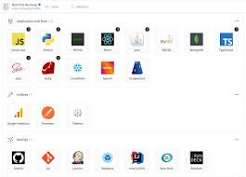
When people picture an online store, they usually think of the storefront: the product photos, the checkout button, the marketing emails. But the storefront is the smallest part of the operation. What actually keeps a product-based e-commerce business running is a stack of back-office tools most customers never see — the systems that handle inventory, documentation, payments, fulfillment, and search visibility. Here’s a look at the software layers a lean online brand typically relies on in 2026, and where the real operational leverage comes from.
## The Storefront Layer: Wix, WooCommerce, and Shopify
Every store starts with a platform decision. Hosted builders like Wix and Shopify get a brand online quickly with minimal technical overhead, handling hosting, security, and payment integration out of the box. Self-hosted options like WooCommerce (built on WordPress) trade convenience for control — they’re cheaper at scale and endlessly customizable, but they put maintenance, security patching, and uptime on the owner. Many operators run more than one brand across different platforms, which spreads risk but multiplies the number of systems they have to keep in sync.
## Inventory and Batch Tracking
Once orders start flowing, inventory becomes the bottleneck. Basic platforms track stock counts, but businesses dealing in physical goods with production batches need more: the ability to tie each unit back to a specific lot, production date, and supplier. Batch tracking matters for two reasons — recall readiness and quality control. If a problem surfaces with one production run, a business that codes its inventory by batch can isolate exactly which units are affected instead of guessing. Spreadsheets handle this early on, but most brands eventually move to dedicated inventory tools or custom fields inside their storefront.
## Document and Certificate Management
Certain product categories live and die by their documentation. Anything sold with quality or testing paperwork — from cosmetics to supplements to laboratory research materials — needs a reliable way to store, version, and surface certificates to customers. The best-run operations keep a Certificate of Analysis (COA) for every batch, generated by an independent lab, and attach it to the corresponding product record.
A Canadian research-supply brand like Durham Peptides, for example, publishes batch-specific HPLC and mass-spectrometry documentation across its catalog. Managing that at scale means maintaining a document library that maps cleanly onto the storefront’s product IDs — a small back-office discipline that pays off in customer trust and fewer support tickets.
## Payment Infrastructure
Payments are where many small brands hit friction. Mainstream processors are easy to plug in but can be quick to freeze or terminate accounts in higher-risk categories, which pushes operators toward a mix of options: e-transfer and direct bank rails for domestic customers, and in some cases cryptocurrency on-ramps for supplier payments. The tech consideration here is redundancy — a business that depends on a single payment method is one policy change away from being unable to take orders. Building in a backup processor is basic operational insurance.
## Shipping and Fulfillment Automation
On the outbound side, shipping automation connects the storefront to carriers so labels, tracking numbers, and confirmation emails generate automatically when an order is marked fulfilled. When this pipeline breaks — say, confirmation emails silently stop sending — customers are left in the dark and support volume spikes. It’s worth periodically auditing that every step of the fulfillment automation actually fires, because these failures tend to be invisible until customers start asking where their orders are.
## The SEO and Analytics Layer
Finally, no storefront gets traffic without visibility. Tools like Ahrefs, Google Search Console, and analytics platforms track keyword rankings, backlink profiles, and which pages actually convert. For a newer brand, the hardest metric to move is domain authority — largely a function of how many credible sites reference it — which is why content quality and genuine coverage tend to outperform quick fixes over the long run.
## The Takeaway
The storefront is the tip of the iceberg. The brands that scale cleanly are the ones that treat their back office — inventory, documentation, payments, fulfillment, and SEO — as a connected system rather than a pile of disconnected tools. Get those layers talking to each other, and the customer-facing store mostly takes care of itself.
