

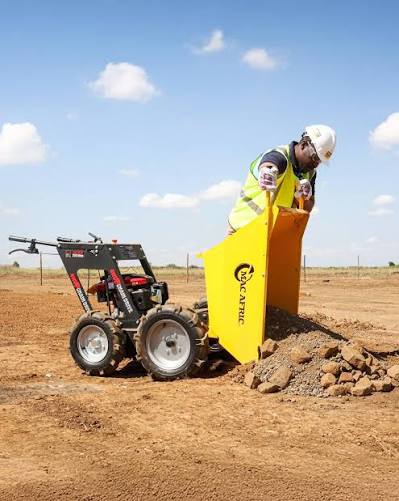
Anyone who has spent a full day pushing loaded wheelbarrows up a slope knows exactly what it costs a crew. Backs give out, buckets tip, and the second half of the workday is spent recovering from the first. On residential and small commercial jobs, that lost time is the difference between finishing on Friday and running into Saturday. A compact tracked hauler solves the problem by carrying several times the load of a wheelbarrow, climbing gradients that stop wheeled carts cold, and dumping the material exactly where it needs to be. This article looks at how these small haulers change the pace of jobsite material handling, the situations where they shine, and what to look for so the unit you pick actually earns back its price on the first big landscape or hardscape project.
The Wheelbarrow Problem, Solved by Tracks
Wheelbarrows work fine on flat ground with dry material. The moment the ground gets soft, the load gets heavy, or the path climbs a slope, they become a liability. A crew that can move eight hundred pounds of soil per trip in a compact tracked hauler simply outproduces a crew of three pushing single-wheeled carts. That is not marketing math. Time studies on hardscape sites routinely show a two-thirds reduction in material handling hours once a mini dumper replaces the wheelbarrow line. The rubber-tracked undercarriage is the reason it works. It floats over wet turf and mud that would leave a wheeled cart stuck, and it climbs banks without spinning out.
Where a Compact Hauler Pays for Itself Fastest
Backyard patios, retaining wall builds, drainage projects, and demolition cleanup all involve moving loose material over distances short enough to make a full-size dump truck impractical. These are the exact jobs where a compact tracked hauler cuts labor most sharply. Landscape crews use them to shuttle mulch and soil from a driveway pile to the far corner of a lot. Hardscape installers stage base rock at the trench line without touching the finished walkway.
Choosing the Right Load Capacity
Load capacity is the first specification most buyers check, and it is easy to misread. A machine rated at one thousand pounds does not mean you should pile it that high on every trip. Real productivity comes from matching typical trip loads to the machine’s stability envelope, especially on slopes. For most residential and light commercial work, a capacity in the six hundred to twelve hundred pound range covers the material you actually move without turning the hauler into a full-size dumper that no longer fits through a gate.
Bucket Type and Discharge Direction
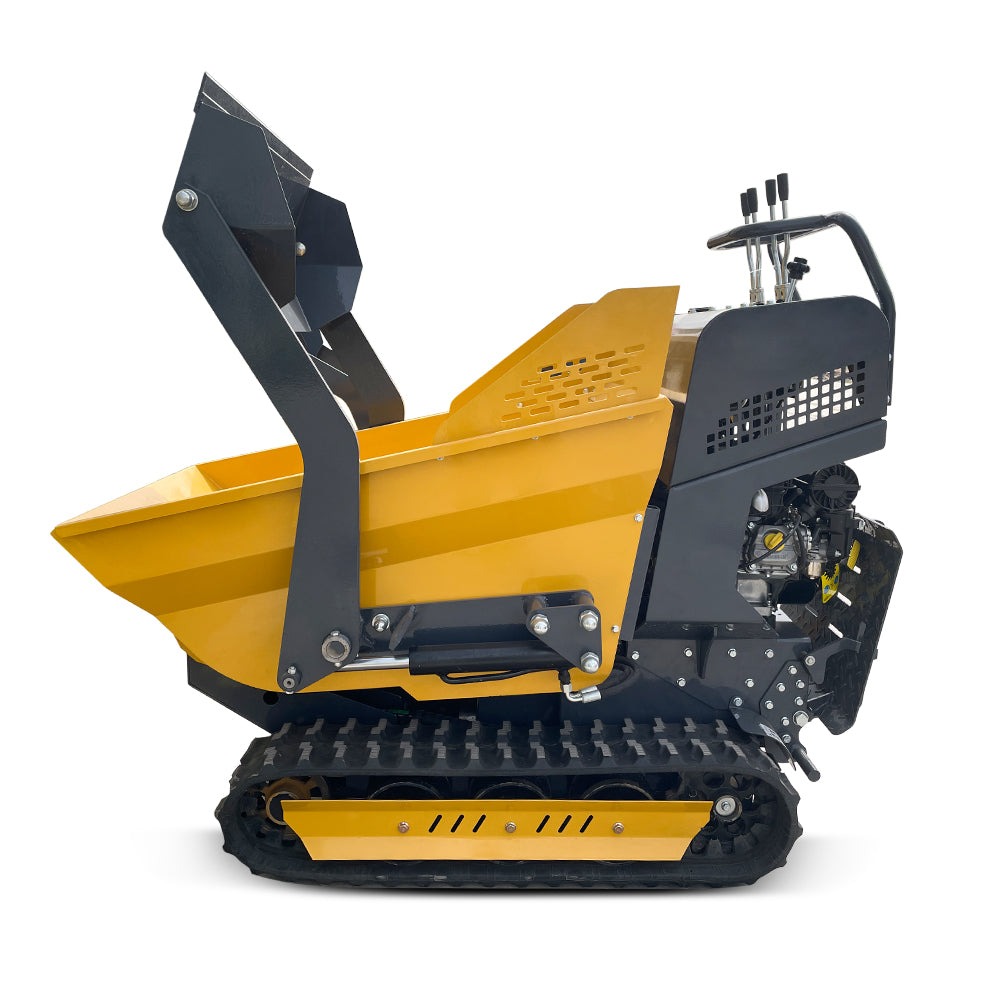
Most compact haulers offer a straight-tip bucket that dumps forward. Some models add self-loading buckets, high-lift dump mechanisms, or side-dump options. High-lift is worth the extra cost if you regularly need to unload into a truck or over a low wall. Self-loading saves time when the operator is working alone and cannot count on a second worker to load the bucket by hand. Match the discharge style to your typical scene rather than buying a feature just because it looks impressive.
Ground Clearance and Track Design
Undercarriage design decides where the hauler can go. Rubber tracks with proper cleats grip mud and wet grass without cutting the surface. Track width and ground clearance together determine whether the machine can cross ruts, gravel piles, and the timber bridges that appear on many jobs. A hauler with too little clearance will belly out on the first pile of stockpiled base rock, forcing the operator to path around obstacles and eating the very time savings the machine was bought to deliver.
Climbing Slopes Safely
Slope work is where these machines earn their reputation, but it is also where operators get in trouble. Always drive up and down a slope rather than across it. On steep grades, keep the load low and avoid sudden control inputs. Machines from established manufacturers such as MMS INDUSTRIAL publish a maximum gradient rating, and staying within that rating is not optional. The physics of a top-heavy load on a slope does not care about experience.
Operating Habits That Extend Machine Life
Compact haulers are simple machines, but they still respond to good operating habits. Load the bucket evenly, keep the material below the rim on rough ground, and let the engine warm for a minute before the first trip on a cold morning. Grease the pivot points weekly during heavy use, and rinse the undercarriage at the end of the day when working in clay or manure to keep the tracks from dry-rotting prematurely. Small habits like these turn a five-year machine into a ten-year machine.
Trailering and Transport
These haulers move between jobsites on a trailer, and that is another place where planning saves money. Check the machine’s overall length and width against your trailer’s usable deck, and confirm the ramp angle is shallow enough for the tracked undercarriage without scraping the belly. A dedicated tie-down point on each corner of the frame is standard on quality units and should be non-negotiable.
Faster Material Handling With a Compact Hauler
A compact tracked hauler is one of the highest-leverage tools a residential contractor can add to the trailer. It eliminates the slowest and most physically brutal part of most landscape and hardscape jobs, opens access to backyards where wheeled haulers cannot go, and lets a two-person crew produce the volume of a four-person crew on material-heavy work. The right unit for your site is one that fits your access width, carries a realistic trip load, and has the ground clearance and slope rating to handle the terrain you actually work on. Get those three right and the machine changes the shape of your workweek, replacing hours of aching labor with quick, efficient trips that finish jobs before the crew burns out.
