

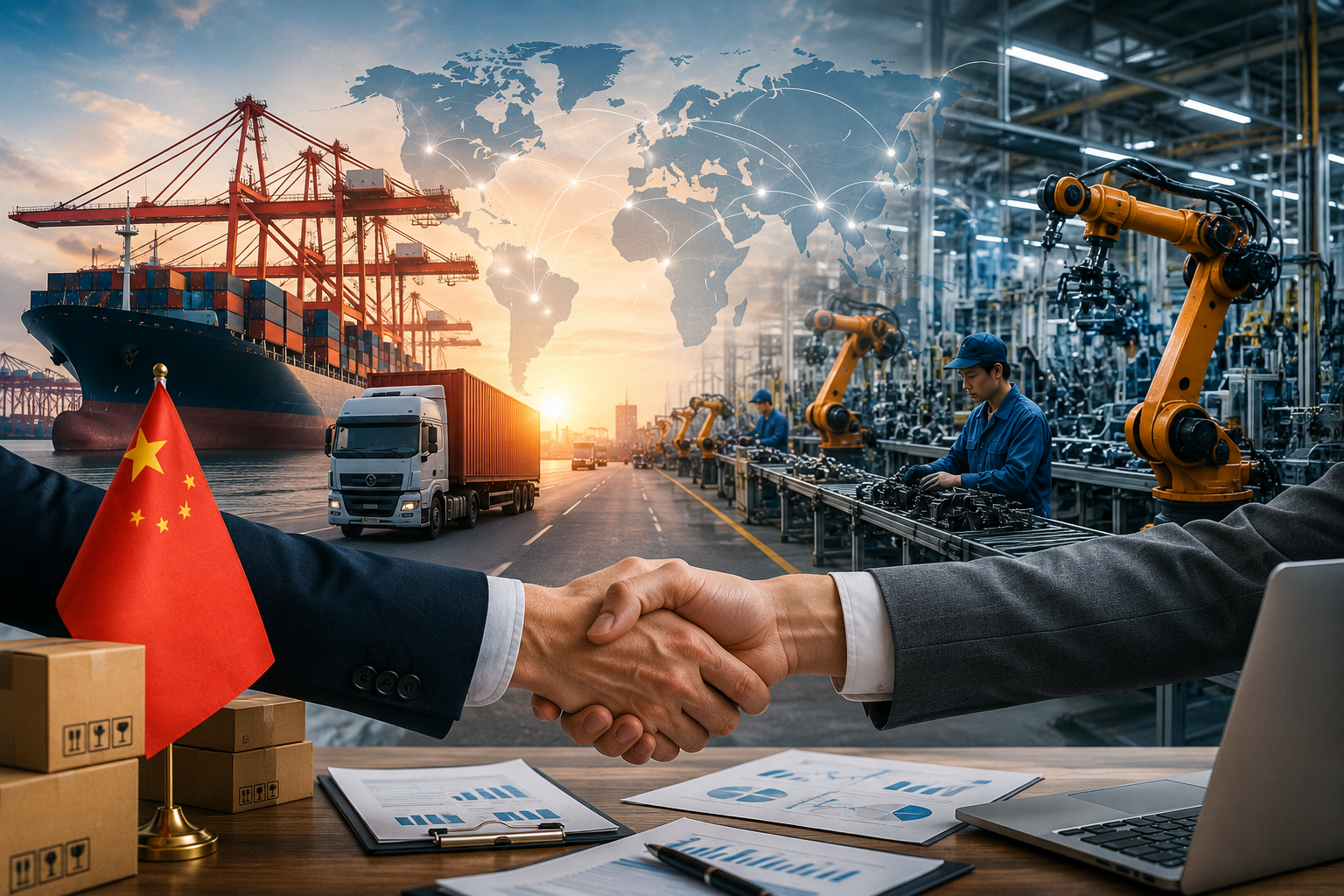
Outsourcing manufacturing to China helps international companies support local sales, reduce operating costs, improve customer proximity, and manage production through local infrastructure. For companies entering the Chinese market, outsourcing can also support leaner operations, local execution, and access to ready-made operational resources.
Outsourcing to China allows foreign companies to delegate on-the-ground tasks, such as product assembly, supply chain logistics, and back-office administration, while retaining important decision-making power at the overseas headquarters.
Why Do Companies Outsource Manufacturing to China?
Companies outsource manufacturing to China to optimize supply chains, reduce product-related costs, and support sales in the Chinese market.
Key benefits include:
- Reducing import barriers: Local assembly can reduce the financial impact of import regulations and transportation barriers that increase final product costs.
- Supporting local sales: Manufacturing or assembly in China can improve proximity to target customers and support faster local service.
- Maintaining IP control: Transferring full or partial assembly processes can help companies build a local presence while maintaining control over intellectual property and important work processes.
- Accessing infrastructure: Working with a local partner gives access to ready-made facilities, local market knowledge, and process optimization.
What Manufacturing Models Are Available in China?
International companies can choose between several manufacturing models depending on their budget, commitment level, production scale, and operational goals.
Contract Manufacturing
Contract manufacturing is a low-risk, light-commitment model for companies that want to start manufacturing in China without immediately establishing their own production plant.
This model may include:
- Initial assessment
- Component procurement
- Product assembly
- Quality control
- Shipping
- Adjusting the final design to local market needs
Industrial Incubator
The Industrial Incubator is designed for companies that want to start local manufacturing or assembly in China on a smaller scale.
This model provides:
- Customized production and assembly facilities
- A controlled operating environment
- On-site managerial support
- Manufacturing licenses and required certifications
- Staff recruitment, training, and supervision
- Quality control setup
- Product localization and supply chain support
- HR and finance back-office support
Factory Set-Up
Factory set-up is suitable for companies ready to establish a more comprehensive manufacturing operation in China.
This process may include:
- Early fact-finding
- Site selection
- Local government negotiations
- Construction supervision
- Equipment purchasing and installation
- Employee recruitment and training
- Financial management
- Local entity operational setup and mentoring
What Should Companies Consider Before Manufacturing in China?
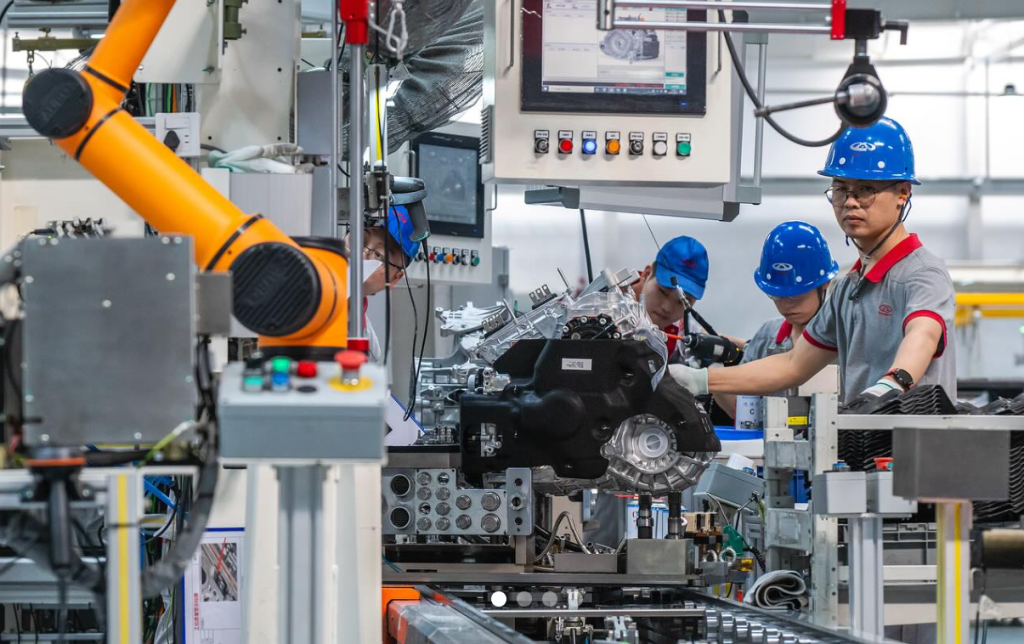
Before manufacturing in China, companies should evaluate industrial clusters, automation trends, environmental requirements, and intellectual property protection.
Important considerations include:
- Industrial clusters: Sector-specific areas can provide access to shared resources, local knowledge, networking, and supply chain advantages.
- Automation trends: Robotics and advanced production capabilities are shaping assembly in China as products become more complex and customers expect higher quality.
- Environmental requirements: Environmental requirements should be reviewed before factory set-up, as China is taking measures to reduce pollution and emissions.
- Trademark protection: PTL Group recommends registering trademarks before starting manufacturing or setting up local assembly lines.
How Does PTL Group Support China Outsourcing?
Foreign companies planning outsourcing manufacturing to china can work with PTL Group to choose a suitable operational model and manage local manufacturing and operational needs.
PTL Group supports companies through contract manufacturing, Industrial Incubator solutions, factory set-up, supply chain operations, HR and finance back-office support, payroll management, product localization, quality control processes, and local entity operational support.
For foreign companies, outsourcing can turn unfamiliar local business practices into a coordinated and well-functioning China operation.
