

Breast augmentation is a personal decision that involves careful planning before, during and after surgery. While many patients focus on choosing an implant size or understanding the expected appearance after surgery, preparation involves much more than selecting a procedure.
A successful breast augmentation journey requires patients to understand their goals, evaluate their suitability, discuss available options and prepare for the recovery process.
Factors such as existing breast anatomy, skin quality, lifestyle, future plans and personal expectations can influence the final outcome. This is why a thorough consultation with a qualified plastic surgeon is an important step before deciding on surgery.
Understanding Breast Augmentation Before Surgery
Breast augmentation is a surgical procedure designed to enhance breast volume, shape or proportion.
Patients may consider breast augmentation for different reasons, including:
- Increasing breast volume
- Restoring breast fullness after pregnancy or weight changes
- Improving breast symmetry
- Enhancing overall body proportion
Breast augmentation may involve:
Breast Implants
Breast implants are artificial devices placed within the breast to increase volume and improve contour.
Common considerations include:
- Implant material
- Implant size
- Implant shape
- Implant placement
Fat Transfer Breast Augmentation
Fat transfer uses fat collected from another area of the body and transfers it to the breasts.
This may be considered for patients who prefer a more subtle enhancement or wish to use their own tissue.
The most suitable option depends on each patient’s anatomy, goals and expectations.
1. Have a Detailed Consultation With a Plastic Surgeon
The consultation is one of the most important steps before breast augmentation.
During this appointment, the surgeon will assess whether the procedure is suitable and discuss the approach that best matches the patient’s goals.
The consultation may include:
Discussing Your Goals
Patients should consider what they hope to achieve, such as:
- A fuller appearance
- Improved breast proportion
- Restoring lost volume
- Addressing asymmetry
It is helpful to communicate your expectations clearly so the surgeon can explain what results are realistically achievable.
Assessing Your Breast Anatomy
The surgeon may evaluate:
- Existing breast volume
- Skin elasticity
- Breast shape
- Chest width
- Nipple position
- Overall body proportions
These factors influence implant selection and surgical planning.
2. Understand Whether You Are a Suitable Candidate
Not everyone who wants breast augmentation will necessarily be suitable for the procedure.
A suitable candidate generally has:
- Good overall health
- Realistic expectations
- A clear understanding of the procedure
- Personal reasons for wanting surgery
- Willingness to follow recovery instructions
A surgeon may also consider:
- Existing medical conditions
- Previous breast procedures
- Medication use
- Future pregnancy plans
The goal is to ensure that the procedure is appropriate for the patient’s needs and circumstances.
3. Understand Different Breast Implant Options
Choosing an implant involves several considerations. The “best” implant depends on the individual rather than a single option being suitable for everyone.
Implant Material
Common implant options include silicone implants, which are widely used due to their natural feel and appearance.
Patients may discuss:
- Implant texture
- Implant durability
- How different materials may affect results
Implant Size
Choosing implant size involves more than selecting a larger or smaller volume.
The surgeon will consider:
- Chest width
- Existing breast tissue
- Skin quality
- Desired appearance
- Lifestyle preferences
A size that suits one person may not produce the same result in another.
Implant Shape and Profile
Implants may differ in:
- Shape
- Projection
- Width
These factors influence the overall breast contour and should be selected based on anatomy and aesthetic goals.
4. Consider Whether Breast Lift May Be Needed
Some patients assume breast augmentation alone can address all breast concerns. However, implants mainly add volume and may not correct significant sagging.
Patients with breast drooping may need to discuss whether they require:
- Breast augmentation alone
- Breast lift
- A combination of breast lift and augmentation
The recommended approach depends on the degree of skin laxity and breast position.
5. Review Your Medical History
Before surgery, patients should provide complete information about their health.
This includes:
- Existing medical conditions
- Previous surgeries
- Allergies
- Current medications
- Supplements
- Previous breast concerns
This information helps the surgeon assess safety and plan the procedure appropriately.
6. Prepare Your Body Before Surgery
Maintaining good health before surgery can support recovery.
Patients may consider:
Maintaining a Balanced Diet
Nutrition plays an important role in healing.
A balanced diet with sufficient:
- Protein
- Vitamins
- Minerals
can support recovery after surgery.
Staying Physically Active
Maintaining a healthy level of activity may support overall fitness before surgery.
However, patients should avoid sudden intense exercise changes close to the procedure.
Avoiding Smoking
Smoking may affect circulation and healing.
Patients who smoke should discuss this with their surgeon before surgery.
7. Review Medications and Supplements
Certain medications and supplements may affect bleeding or healing.
Patients should inform their surgeon about:
- Blood-thinning medication
- Pain medication
- Vitamins
- Herbal supplements
Do not stop prescribed medication unless advised by your doctor.
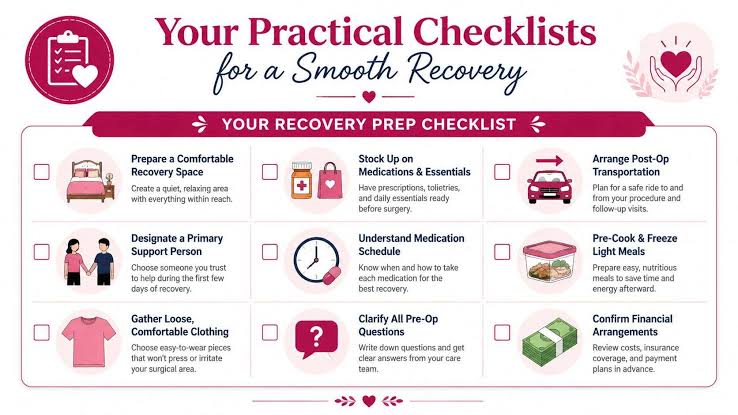
8. Plan for Recovery Before Surgery
Preparing for recovery ahead of time can make the process smoother.
Patients should consider:
Taking Time Off Work
Recovery depends on:
- Type of procedure
- Individual healing
- Job requirements
Those with physically demanding work may require more recovery time.
Arranging Transportation
Patients may need someone to bring them home after surgery.
Preparing Support at Home
Additional help may be useful for:
- Household tasks
- Childcare
- Daily activities during early recovery
9. Prepare Your Home Environment
Before surgery, patients can prepare a comfortable recovery space.
Helpful items may include:
- Loose-fitting clothing
- Front-opening tops
- Comfortable pillows
- Prescribed medication
- Easy-to-prepare meals
Patients may experience temporary difficulty with arm movement after surgery, so reducing unnecessary physical effort can help during recovery.
10. Understand the Recovery Process
Recovery after breast augmentation varies between individuals.
Common early experiences include:
- Swelling
- Tightness
- Bruising
- Mild discomfort
- Changes in breast position
During the early healing period, implants may appear higher or feel firmer than expected. This usually changes as swelling reduces and tissues settle.
Patients should follow their surgeon’s instructions regarding:
- Physical activity
- Support garments
- Wound care
- Follow-up appointments
11. Understand Long-Term Implant Considerations
Breast implants are designed to be durable but are not considered lifetime devices.
Patients should understand that:
- Implant monitoring may be recommended
- Changes may occur over time
- Revision procedures may sometimes be required
Factors that may affect long-term appearance include:
- Ageing
- Pregnancy
- Weight changes
- Natural breast changes
Preparing for breast augmentation involves understanding your goals, reviewing implant options, assessing suitability and planning for recovery.
The most suitable approach differs between individuals, which is why a detailed consultation is important before deciding on surgery.
By understanding the procedure, asking the right questions and preparing adequately, patients can approach breast augmentation with realistic expectations and greater confidence.
This article is for general information only and should not replace medical advice from a qualified healthcare professional.
