

Introduction
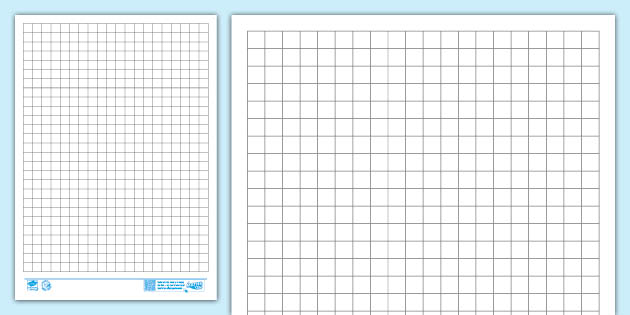
In today’s learning environment, students are constantly looking for simple tools that can make math easier and faster to understand. One of the most effective tools for this purpose is graph paper printable, which helps learners organize numbers, visualize equations, and reduce mistakes during problem solving. Whether students are working on algebra, geometry, or basic arithmetic, structured grids make it easier to keep everything aligned and clear on paper.
At Custom Graph and similar educational resources, printable squared pages are designed to support better learning habits. These pages are not just ordinary sheets; they act as guided spaces where students can plot points, draw graphs, and solve equations step by step. By using graph paper printable regularly, learners build confidence and improve accuracy, especially when dealing with complex mathematical problems.
Benefits of using graph paper printable for students
Graph paper printable offers students a structured way to organize their work, which is especially helpful when dealing with multi-step math problems. The evenly spaced squares help maintain neatness, making it easier to read numbers and track calculations without confusion. This simple structure can significantly reduce errors, especially in subjects like algebra and geometry where precision matters.
Another major benefit is improved focus and clarity. When students use squared pages, they naturally align their work in a logical way, which helps them understand patterns and relationships between numbers. Printable graph paper also saves time because students don’t need to draw grids manually, allowing them to focus more on solving problems rather than setting up their workspace.
How squared pages improve equation solving speed
One of the biggest challenges students face in math is solving equations quickly without losing accuracy. Graph paper printable helps solve this issue by providing a ready-made structure that guides every step of the process. Students can align variables, constants, and operations in a clear format, which reduces confusion and speeds up calculations.
With consistent use of squared pages, learners develop a natural sense of order in their work. This improves mental processing because they can visually track changes in equations more easily. Over time, this leads to faster problem-solving skills, especially in timed tests where efficiency is just as important as accuracy.
Using printable graph paper for algebra and functions
Algebra often involves working with unknown variables, and graph paper printable makes this process much easier to manage. Students can neatly arrange equations and solve step by step without mixing up values. This structured approach helps them understand how each part of an equation connects to the final answer.
When studying functions, printable grid paper becomes even more useful. Students can plot inputs and outputs on coordinate planes and instantly see how equations behave. This visual learning method strengthens understanding and makes abstract concepts more concrete, helping learners grasp algebraic relationships faster.
Role of coordinate grids in geometry learning
Geometry relies heavily on shapes, angles, and spatial understanding, and graph paper printable plays a key role in making these concepts easier to learn. By using coordinate grids, students can draw accurate shapes and measure distances more effectively. This improves their ability to understand symmetry, transformations, and area calculations.
Printable squared pages also help learners visualize geometric problems in a structured way. Instead of guessing measurements, they can plot points and see exact relationships between lines and shapes. This hands-on approach strengthens problem-solving skills and builds a stronger foundation in geometry.
Digital vs printable graph paper for modern education
In modern education, both digital tools and printable resources are widely used, but graph paper printable still holds strong value in classrooms and home study environments. While digital tools offer interactive features, printed squared pages provide a distraction-free space where students can focus purely on solving math problems.
Many educators prefer printable graph paper because it encourages handwriting practice and better memory retention. Writing equations manually on squared pages helps students understand each step more deeply compared to typing on a screen. This balance between traditional and digital learning makes printable resources an essential part of education.
How teachers and parents use graph paper printable resources
Teachers often use graph paper printable sheets in classrooms to help students practice structured problem-solving. These sheets are especially useful during exams, quizzes, and practice sessions where neat presentation and accuracy are important. They also help teachers explain complex topics like graphing and algebra in a more visual way.
Parents also find printable squared pages helpful when supporting their children’s learning at home. Instead of buying expensive materials, they can easily download and print sheets from resources like Custom Graph. This makes learning more accessible and ensures students always have the right tools for math practice.
Conclusion
Graph paper printable continues to be one of the most practical and effective tools for improving math skills among students. Its structured layout helps learners solve equations faster, reduce mistakes, and develop a clearer understanding of mathematical concepts. From basic arithmetic to advanced algebra and geometry, squared pages provide the support students need to succeed.
As education continues to evolve, simple yet powerful tools like printable graph paper remain essential. They bridge the gap between understanding and application, allowing students to learn in a more organized and confident way. With consistent use, these resources can significantly improve both academic performance and problem-solving speed.
