

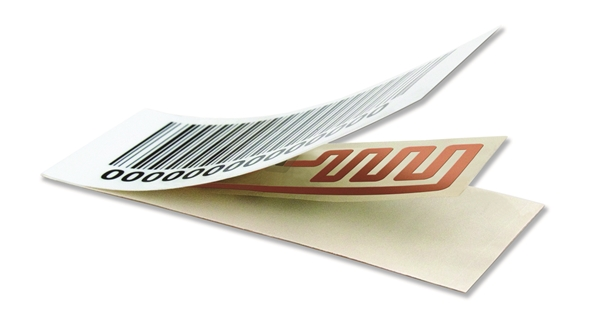
RFID tags do not all handle stored data the same way. Some let a reader change selected memory many times, while others contain factory-set information that cannot be edited. A tag can also become read-only after a lock command.
So, Can RFID Tags Be Rewritten? In many cases, yes, but the answer depends on the chip, memory bank, security settings, and application. Knowing those details prevents wasted tags and failed encoding attempts.
Rewritable RFID Starts With the Tag’s Memory
An RFID tag contains a chip with memory used for identification and, on some models, extra application data. In RAIN RFID systems, commonly called UHF RFID, GS1 defines several logical memory banks. Their purpose matters because each bank may have different write rules.
The EPC memory bank normally holds the Electronic Product Code or another identifier used during inventory reads. Many standard tags allow authorized equipment to write a new value into this area. That is why a business can encode blank labels before attaching them to products.
User memory is separate storage available on tags that support it. It may hold information such as a production code, service status, batch reference, or other application data. Capacity varies greatly by chip, and some low-cost tags have little or no user memory.
The TID, or Tag Identifier, is different. It identifies the tag chip and often includes manufacturer or model information. Parts of TID memory are commonly factory programmed and locked, so users should not expect to replace them with their own values.
Read/Write Does Not Mean Every Bit Is Editable
The term “read/write tag” can create the wrong impression. It means at least some supported memory can accept write commands. It does not mean every memory location stays open forever.
For example, a RAIN RFID tag may have writable EPC memory while its unique TID remains fixed. Reserved memory may also contain access and kill passwords. The exact features depend on the chip design.
This distinction matters when someone tries to rewrite rfid tag data after deployment. The reader must target a writable memory bank, use a command supported by the chip, and meet any access requirements. A successful read alone does not prove that the same data can be changed.
Writable, Locked and Permanently Locked States
GS1 Gen2 supports locking controls for several memory areas. A reversible lock can restrict writing until the correct access process changes the state. This provides a useful safeguard when data should remain stable during normal operations.
Permalock is more restrictive. Once relevant memory has been permanently locked, the protected area cannot simply be opened again with ordinary credentials. GS1’s Gen2 specification provides permanent lock behavior, including BlockPermalock for supported user-memory areas.
A tag may therefore be physically reusable but no longer suitable for a job that requires a new EPC. Before planning a reuse program, businesses should confirm both memory capacity and lock status.
What Happens When Data Is Rewritten?
Writing does not normally create a second record beside the old value. The reader sends a write command that changes data at specified memory locations. Software then checks the result, often by reading the value back.
The process requires more radio energy than a basic read on passive UHF tags. As a result, a tag that reads reliably at a certain distance may need to be closer to the antenna for dependable writing. Tag orientation, surrounding materials, reader power, and antenna placement can also affect encoding.
Software matters too. The operator needs the correct memory bank, starting address, data format, and password where applicable. An incorrect setting may cause a failed write or change the wrong writable field.
Can the Same RFID Tag Be Reused?
Reusable RFID works well when the physical tag survives the application and its required memory remains writable. Hard tags used on returnable assets are a clear example. A company can associate the same tag with a new container, tool, or workflow cycle when its data model permits that change.
Some operations do not need to alter the tag at all. Instead, they keep the tag’s permanent identifier and change the item-to-tag association in a database. That approach reduces repeated writes and preserves a stable identity for the tag.
Reusing disposable adhesive labels is less practical. Even if the chip supports many write cycles, the label, antenna, adhesive, or attachment method may be damaged during removal. “Rewritable” describes memory behavior, not the durability of the entire RFID label.
Write Endurance Sets Another Limit
Nonvolatile RFID memory has a finite write endurance. That limit can still be high enough for many applications. For example, NXP specifies 100,000 write cycles for its UCODE 9 RAIN RFID chip, along with 20-year data retention.
Those figures are chip-specific, not universal promises for every RFID tag. Buyers should check the datasheet for the exact integrated circuit used in an inlay or finished tag. Environmental conditions and the construction of the finished product also matter.
Why a Tag May Refuse a Write Command
A failed write does not always mean the RFID tag is defective. The selected memory may be permanently locked, password protected, unsupported, or outside the available address range. The reader may also provide insufficient power at the tag’s location.
Another possibility is that the application is trying to edit factory-controlled data. A fixed TID, for instance, should not be treated like ordinary EPC or user memory. Some chips also offer different memory layouts, so assumptions based on another tag model can cause errors.
Checking the chip datasheet is usually the fastest way to narrow the problem. Then verify the reader settings, access password, lock state, memory address, and write distance. A read-back test can confirm whether the intended value was stored.
Choosing Tags for Repeated Encoding
Start with the data that must change. If only a backend record changes, a fixed identifier may be enough. If information must travel on the tag itself, choose a chip with sufficient writable EPC or user memory.
Next, decide how strongly that data needs protection. Reversible locking can suit workflows where authorized staff may edit information later. Permanent locking is better reserved for data that should never change after commissioning.
Physical construction deserves equal attention. Laundry tags, industrial hard tags, reusable tickets, and ordinary retail labels face very different stress. A chip with high write endurance offers little value if the tag housing fails after a few cycles.
Rewriting Is a Feature, Not a Guarantee
Can RFID Tags Be Rewritten? Many can, but only within the memory areas and security rules their chips support. EPC and user memory are often writable, while factory-programmed identification data may remain fixed. Locks can also turn writable memory into protected or permanently unchangeable storage.
Before trying to rewrite rfid tag information, identify the chip and check its memory map, lock state, password requirements, and endurance rating. For repeated-use projects, also consider whether changing backend records would be simpler than rewriting the tag each time.
