


Introduction
Rochester Institute of Technology is a private university in Rochester, New York, known for its focus on technology, engineering, computing, design, business, and career-oriented education. Students considering this university often want to know which degrees it offers, how much it costs, what the admission requirements are, and whether studying there can help them prepare for a successful career.
The Rochester Institute of Technology (RIT) combines classroom learning with practical projects, research opportunities, and cooperative education experiences. Its academic offerings cover traditional technical fields as well as creative disciplines, business, science, and the liberal arts. The university is also home to the National Technical Institute for the Deaf (NTID), which provides specialized educational opportunities and contributes to the institution’s inclusive learning environment.
For prospective students, choosing a university involves more than comparing rankings. It is important to consider academic quality, program availability, tuition, financial aid, campus facilities, student support, and employment preparation. This guide explains the major features of RIT and offers practical information to help students and families decide whether it matches their educational goals.
What Is Rochester Institute of Technology?
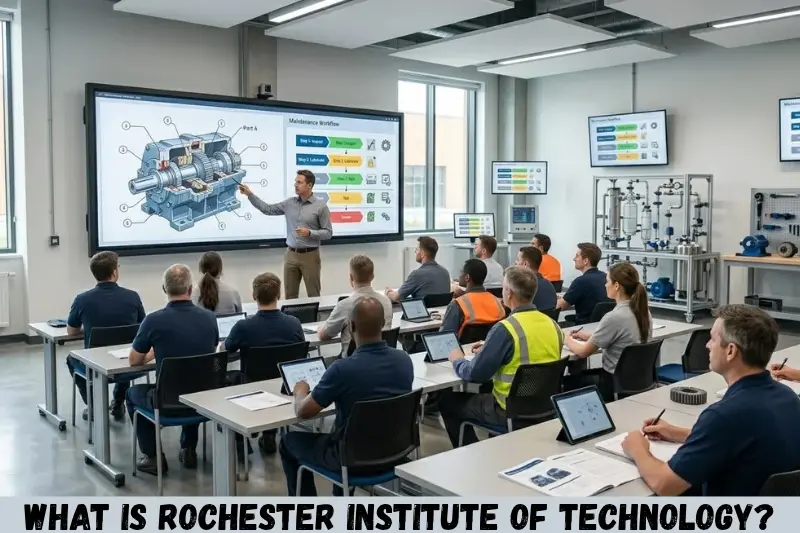
Rochester Institute of Technology is commonly known as RIT. It is a private university that emphasizes the relationship between education, innovation, creativity, and practical problem-solving.
Rather than concentrating exclusively on theoretical classroom instruction, the university promotes learning through projects, laboratory work, design assignments, research, and professional experiences. This approach can be particularly valuable for students who prefer applying what they learn to real situations.
RIT serves undergraduate and graduate students across multiple academic disciplines. Its educational environment brings together computing, engineering, business, science, the arts, and design.
Key Facts About Rochester Institute of Technology
- Full name: Rochester Institute of Technology
- Common abbreviation: RIT
- Institution type: Private university
- Main campus: Rochester, New York, United States
- Academic focus: Technology, engineering, computing, business, design, science, and the arts
- Career preparation: Cooperative education, internships, research, and practical projects
- Specialized institution: National Technical Institute for the Deaf
- Student community: Domestic and international students
These characteristics help explain why RIT attracts students with different interests, from software development and cybersecurity to animation, photography, engineering, and business.
What Makes RIT Different From Other Universities?
One of the university’s distinguishing features is its emphasis on combining academic study with practical experience. Students may have opportunities to develop projects, work with specialized equipment, collaborate with classmates, and explore professional environments related to their degrees.
RIT also brings technical and creative disciplines together. For example, a student interested in interactive entertainment might combine programming knowledge with digital art and design skills. An engineering student might explore manufacturing technology, robotics, or product development.
This variety makes RIT worth considering for students who want an education that connects academic knowledge with professional applications.
However, the university is not automatically the right choice for everyone. Students should compare the specific degree they want, total expenses, learning environment, and career goals before making a decision.
Where Is Rochester Institute of Technology Located?
Rochester Institute of Technology is located in Rochester, New York, in the northeastern United States. Its main campus is in the Rochester metropolitan area.
Rochester offers a university environment with access to businesses, cultural institutions, restaurants, parks, and other community facilities. Students can explore opportunities beyond campus while benefiting from the resources of a substantial academic institution.
The university’s location can also matter when considering internships, transportation, housing, and daily living expenses.
What Is the RIT Campus Like?
The RIT campus supports academic work, student activities, recreation, and residential life. Students can use learning spaces and laboratories associated with their programs, while residence halls and shared campus facilities help support the wider university community.
Depending on their degree and interests, students may spend time in:
- Computer laboratories and technology-focused learning spaces
- Engineering and science laboratories
- Art and design studios
- Libraries and study areas
- Student organization meeting spaces
- Recreation and athletic facilities
- Dining locations and residential facilities
The facilities available to a student depend on their academic program, access rules, and current campus arrangements.
Before enrolling, applicants should investigate the buildings, equipment, and specialized resources available to students in their intended major rather than assuming that every facility is available to everyone.
Rochester Institute of Technology Versus the University of Rochester
An important distinction for prospective students is that Rochester Institute of Technology and the University of Rochester are two separate institutions.
Although both are located in the Rochester area of New York, they have different academic identities, admissions processes, and degree offerings.
RIT is particularly associated with technology, engineering, applied learning, computing, design, and cooperative education. The University of Rochester is a separate private research university with its own academic structure, including the School of Arts & Sciences, Hajim School of Engineering & Applied Sciences, and Simon Business School.
Students should check the exact university name on applications, scholarship forms, and official documents to avoid confusion.
Academic Programs at Rochester Institute of Technology
Rochester Institute of Technology offers a broad range of academic programs. The best choice depends on a student’s interests, academic preparation, preferred career, and long-term plans.
Some students apply because they want to enter a technical profession. Others are interested in creative careers, scientific research, management, or communication.
Computer Science and Computing
Computing is an important part of RIT’s academic identity. Students interested in digital technology can investigate programs and specializations related to computer science, information technology, software development, computing systems, and cybersecurity.
Computer science generally focuses on programming, algorithms, computational thinking, and the design of software systems.
Information technology tends to emphasize the implementation, management, and support of technology systems, although the exact distinction depends on the curriculum.
Students exploring computing degrees should look beyond the program title. They should examine required courses, programming languages, laboratory work, project opportunities, and available specializations.
Useful questions include:
- Does the program cover software engineering and modern development practices?
- Are students able to work on practical projects?
- Are internships or cooperative education experiences available?
- What mathematics and programming knowledge is expected?
- Does the degree support the student’s intended career?
A degree alone does not guarantee a technology job. Practical skills, project experience, communication, and interview preparation also matter.
Engineering and Engineering Technology
RIT offers opportunities in engineering and engineering technology, including fields associated with mechanical systems, electrical systems, manufacturing, robotics, and other technical applications.
Engineering programs typically emphasize mathematical analysis, scientific principles, design, and the development of solutions to complex problems.
Engineering technology programs often place additional emphasis on implementing, testing, operating, or improving technical systems. The two pathways can overlap, but they should not be treated as identical.
Students should compare accreditation, curriculum, laboratory experience, and professional licensing implications where relevant.
For example, someone interested in designing a complex mechanical system may prefer a curriculum with substantial theoretical engineering content. Someone interested in manufacturing processes or the practical implementation of industrial technology may prefer a different balance of coursework.
The appropriate degree depends on the work a student wants to perform after graduation.
Cybersecurity and Information Technology
Cybersecurity has become an important area of study as organizations increasingly depend on digital systems, networks, and online services.
Students exploring cybersecurity-related education should investigate topics such as network security, secure system design, digital risk, access control, incident response, and ethical security practices.
Related information technology courses may cover operating systems, infrastructure, cloud environments, databases, and systems administration.
Students should understand that cybersecurity is not simply about learning how to use security software. It requires analytical thinking, responsible decision-making, technical knowledge, and an understanding of how digital systems can fail.
A strong learning plan may combine coursework with supervised practical exercises, personal projects, and recognized professional certifications when appropriate.
Game Design and Digital Media
RIT is also known for its focus on game design and related creative technologies.
Game development can involve programming, interactive storytelling, animation, user experience, sound, visual design, and testing. Different degrees may emphasize different parts of this process.
A student who enjoys coding may be more interested in the technical development of games. Someone who prefers illustration, animation, or visual storytelling may want to investigate an art-focused program.
Before applying, students should review portfolio requirements, project expectations, available specializations, and the specific skills taught by each degree.
Game design is competitive, so applicants should also consider the broader skills they can develop, such as programming, 3D modeling, interactive media production, project management, and collaboration.
Art, Design, Film, and Animation
RIT provides academic options for students interested in visual communication and creative production.
Relevant areas may include design, photography, animation, film, digital media, and related artistic disciplines.
These subjects can combine creative expression with technical processes. Students may learn to communicate ideas visually, use digital production tools, develop portfolios, and complete projects for different audiences.
Applicants should check whether their chosen program requires a portfolio. For some art, design, film, and animation programs, portfolio submission is part of the admissions process.
A useful portfolio demonstrates more than polished final images. It can also communicate a student’s creative thinking, experimentation, development process, and ability to solve visual problems.
Business and Management
Students interested in business can investigate programs related to management, finance, marketing, accounting, business analytics, and entrepreneurship, depending on the current academic offerings.
Business education can help students understand how organizations operate, how financial decisions are made, and how companies develop products and serve customers.
Students who combine business knowledge with technical skills may explore careers involving product management, technology consulting, business analysis, or digital operations.
When comparing programs, applicants should examine the course structure, opportunities for professional experience, and the relationship between the degree and their intended career.
Science, Health, and the Liberal Arts
The university’s academic options also extend beyond engineering and computing.
Students can explore science, health-related disciplines, social sciences, communication, and the liberal arts. These fields develop different kinds of knowledge, from scientific investigation to writing, research, and critical thinking.
The range of programs means that students do not necessarily need to pursue a purely technical degree to benefit from studying at RIT.
However, specific majors, prerequisites, degree levels, and program availability should always be verified in the university’s current academic catalog.
Rochester Institute of Technology Admissions
Admission to Rochester Institute of Technology depends on the applicant’s intended program, academic background, and the requirements for the relevant entry term.
Applicants should begin by identifying the exact degree they want to study. They can then review the admission criteria and prepare the required documents.
RIT uses a comprehensive review process. Academic performance, recommendations, personal statements, optional standardized test results, relevant activities, and portfolios where required may contribute to the application review.
Undergraduate Admission Requirements
Undergraduate applicants should review the current requirements for their intended program. Common application materials include:
- High school transcripts or equivalent academic records
- An application through an accepted application platform
- A personal essay
- At least one recommendation, according to current requirements
- English language proficiency results when required
- SAT or ACT results, if the applicant chooses to submit them
- A portfolio for programs that require one
RIT currently describes its undergraduate admissions policy as test-optional. This means eligible applicants can choose whether to submit SAT or ACT results. Test-optional does not mean that academic preparation is unimportant. Applicants should still demonstrate readiness for university-level study.
Requirements and deadlines can differ by program and application plan. Students should check the current admissions calendar rather than relying on dates published in an older article.
Graduate Admission Requirements
Graduate applicants should start with the department or graduate program they intend to enter.
Depending on the degree, an application may require:
- An undergraduate degree and academic transcripts
- A statement of purpose
- Letters of recommendation
- A résumé or curriculum vitae
- English proficiency results when required
- A portfolio or examples of previous work
- Additional materials specified by the department
Some graduate programs may have different application deadlines, prerequisite courses, or professional experience expectations.
Applicants should also investigate whether their program offers research opportunities, assistantships, scholarships, or other forms of financial support.
How to Apply to RIT Step by Step
The application process is easier to manage when completed in stages.
Step 1: Select a program. Identify the degree and specialization that best fit your academic interests and career goals.
Step 2: Review admission requirements. Check the necessary academic preparation, documents, English proficiency rules, and any portfolio requirements.
Step 3: Prepare your application. Gather transcripts, recommendations, essays, and other required materials.
Step 4: Submit the application. Use the accepted application method and verify the deadline for your entry term.
Step 5: Monitor your application. Check your admissions account for missing documents, requests for additional information, and the admission decision.
Step 6: Review your financial aid offer. Compare scholarships and other available support against the full cost of attendance.
Step 7: Plan for enrollment. If admitted, complete the required enrollment steps, housing arrangements, and other preparations.
International students may also need to complete financial documentation and student visa procedures before arriving in the United States.
Rochester Institute of Technology Tuition and Cost of Attendance
Tuition is one of the most important factors when choosing a university. Prospective students should calculate the total cost of studying at RIT rather than considering tuition alone.
The total cost of attendance can include tuition, university fees, housing, food, books, transportation, health insurance where applicable, and personal expenses.
For the 2026–2027 academic year, RIT lists the following estimated annual costs for new full-time undergraduate students.
| Expense | Estimated annual cost |
|---|---|
| Tuition | $63,508 |
| Student activities fee | $470 |
| Student health services fee | $630 |
| Housing, double room | $10,090 |
| Standard food plan | $7,280 |
| Total estimated billed expenses | $81,978 |
| Estimated additional expenses | $2,890 |
| Total estimated cost of attendance | $84,868 |
Figures are for the listed undergraduate category and academic year. Actual costs can differ by program, housing choice, enrollment status, and individual circumstances. Confirm current rates with the university.
Why Is the Total Cost Higher Than Tuition?
Tuition covers the academic instruction charged by the university. Other expenses reflect the practical costs of attending college.
For example, students who live on campus may need to pay for accommodation and a meal plan. Students may also need textbooks, a computer, supplies, transportation, and other personal items.
International students should plan carefully for exchange-rate changes, travel expenses, health insurance, and financial documentation requirements.
The amount a student ultimately pays may be lower if they receive eligible scholarships or other financial assistance. However, students should not assume that an award will cover every expense.
How to Calculate Your Real College Budget
A realistic budget should include three main categories.
Direct university charges: Tuition, mandatory fees, and any billed housing or meal-plan costs.
Additional living expenses: Transportation, books, supplies, personal items, and expenses not included in the university bill.
Financial support: Scholarships, eligible grants, savings, family contributions, and other confirmed funding.
Subtract confirmed financial assistance from the total estimated expenses to understand the remaining amount you must finance.
Students should also consider whether the expected cost is manageable throughout the entire degree, not just during the first semester.
Scholarships and Financial Aid at RIT
Scholarships and financial aid can help make higher education more affordable, but eligibility and award amounts vary.
RIT offers scholarship opportunities to eligible students, including merit-based awards for qualified international applicants. Its international admissions guidance notes that full-tuition scholarships are not available through the international scholarship arrangements described there and that need-based funding for international students is very limited.
Students should verify the current policy for their citizenship, degree level, academic program, and intended start date.
How Can Students Improve Their Scholarship Applications?
Applicants can take several practical steps:
- Maintain strong academic performance.
- Submit a complete application before the relevant deadline.
- Review whether SAT or ACT scores may strengthen their application.
- Prepare a thoughtful personal statement.
- Present a strong portfolio if their program requires one.
- Investigate external scholarships from eligible organizations.
- Compare the financial aid offer with the total cost of attendance.
Students should also distinguish between scholarships that are guaranteed, awards for which they are eligible to apply, and funding that depends on future academic performance.
Never assume that an advertised scholarship will automatically be awarded to every admitted student.
Rochester Institute of Technology for International Students
RIT welcomes students from many countries and provides guidance for international applicants throughout the admission process.
For students moving to the United States, the decision involves more than choosing a degree. They must also consider academic preparation, language requirements, tuition, accommodation, immigration documentation, and cultural adjustment.
English Language Requirements
International applicants whose circumstances require proof of English proficiency may be able to submit an accepted examination such as IELTS, TOEFL, Duolingo English Test, PTE Academic, or another examination listed by RIT.
The minimum score depends on the test, applicant category, degree level, and current admissions policy.
Applicants who do not meet the requirements for direct admission may have conditional admission or English-language study options available, depending on their circumstances.
Because testing policies can change, students should check the university’s official requirements before booking an examination.
Documents International Applicants Should Prepare
International applicants should generally plan to gather:
- Academic transcripts and certificates
- Official translations when documents are not in English
- English language test results when required
- A passport
- Any program-specific application materials
- Financial support documentation when required for enrollment and immigration processing
Graduate applicants may need additional documents, such as a résumé, research statement, or recommendation letters.
The precise list should be confirmed with the appropriate admissions office.
Student Visa and Financial Planning
Students who need an F-1 or J-1 visa generally must complete the relevant university documentation and meet the applicable U.S. government requirements.
For an I-20 or DS-2019, financial documentation may be required to demonstrate sufficient support. The amount and accepted documentation depend on the university’s current instructions and the student’s circumstances.
Students should begin this process early enough to resolve documentation problems before their intended arrival.
It is also sensible to prepare for housing deposits, travel, initial living expenses, and possible currency fluctuations.
Cooperative Education, Internships, and Career Preparation
One of the most important aspects of Rochester Institute of Technology is its emphasis on career preparation.
The university promotes cooperative education, commonly called co-op, alongside internships, research, and other practical learning experiences. Its official rankings information highlights its recognition for co-op and internship programs.
What Is Cooperative Education?
Cooperative education is a structured learning arrangement in which students gain relevant professional experience as part of their educational journey.
Depending on the degree, students may alternate academic study with periods of employment related to their field.
For example, a computing student might contribute to a software project, while an engineering student could gain experience in a manufacturing or technical environment.
A design student might work on visual communication projects under professional guidance.
The exact structure, duration, eligibility rules, and availability of co-op experiences vary by program.
Benefits of Co-op Experience
Professional experience can help students connect classroom concepts with real workplace responsibilities.
Potential benefits include:
- Developing practical technical skills
- Improving communication and teamwork
- Understanding professional expectations
- Building a résumé before graduation
- Exploring possible career paths
- Developing contacts within an industry
- Learning which skills employers value
However, a co-op placement is not a guarantee of permanent employment. Students must still meet employer requirements, perform well, and compete for suitable positions.
International students should also confirm the immigration and work-authorization rules that apply to their specific situation before accepting employment.
How to Prepare for Career Opportunities
Students can strengthen their prospects by building skills throughout their degrees rather than waiting until graduation.
A useful approach includes developing relevant projects, documenting accomplishments, practicing interviews, learning professional communication, and seeking feedback from faculty or career advisers.
For computing students, this might involve building software projects. For designers, it could mean developing a portfolio. For engineering students, it may include documented technical projects and laboratory experience.
The goal is to leave university with evidence of skills, not merely a list of completed courses.
Rankings and Reputation of Rochester Institute of Technology
University rankings can help students compare institutions, but they should be interpreted carefully.
RIT publishes recognition across several areas, including national university rankings, innovation, value, and game design. For example, its rankings information reports recognition for undergraduate game design and computer science, while the university’s overall position varies by ranking organization and edition.
Different ranking organizations use different methods. Some emphasize academic reputation and research, while others consider student outcomes, affordability, graduation rates, or specific academic disciplines.
As a result, one university may receive different rankings in different publications.
How Important Are University Rankings?
Rankings can provide a starting point for research, but they should not determine a college decision by themselves.
A university’s overall position does not tell you everything about a particular degree. A specialized program may suit a student well even if another institution has a higher overall ranking.
When comparing colleges, consider:
- The curriculum for your intended major
- Relevant accreditation and professional recognition
- Access to laboratories, studios, and research
- Internship and co-op opportunities
- Graduation and student support resources
- Total cost after confirmed financial aid
- The learning environment and campus culture
Students should also compare current rankings from the same publication and edition rather than mixing numbers from different years.
Student Life at Rochester Institute of Technology
University life involves much more than lectures and examinations. Students also need opportunities to build relationships, explore interests, maintain their well-being, and develop independence.
RIT offers a campus environment with student organizations, athletics, recreational activities, cultural events, and other opportunities for involvement. Its wider university community includes students from a variety of backgrounds.
Clubs and Student Organizations
Student organizations can help students meet people with shared interests.
Depending on current availability, students may explore technical clubs, cultural associations, professional organizations, creative activities, recreational groups, and other campus communities.
Joining an organization can be particularly helpful for students who are new to the university or moving from another country.
It can also create opportunities to practice leadership, organize events, collaborate on projects, and develop communication skills.
Housing and Dining
Students should investigate the available residence halls, room types, meal plans, and housing application process before committing to a budget.
On-campus housing can offer convenience and easier access to university facilities, while off-campus housing may provide different costs and lifestyle options.
The best choice depends on the student’s finances, transportation needs, preferences, and eligibility for particular accommodation arrangements.
Applicants should check the current housing contract, cancellation rules, and meal-plan requirements instead of relying on estimates from other students.
Weather and Daily Life in Rochester
Rochester experiences cold winters and seasonal weather changes. Students arriving from warmer climates may need to prepare for snow, low temperatures, and changes in daylight.
Suitable winter clothing, weather-appropriate footwear, and a realistic transportation plan can make the transition easier.
International students should also consider practical matters such as opening a bank account, arranging mobile service, understanding local transportation, and learning how to access university support services.
Preparing for these details before arrival can reduce stress during the first few weeks.
National Technical Institute for the Deaf at RIT
The National Technical Institute for the Deaf, known as NTID, is an important part of Rochester Institute of Technology.
NTID provides specialized educational opportunities for deaf and hard-of-hearing students and contributes to RIT’s wider academic community. Students can explore different degree pathways, including programs designed to support academic and professional development.
Why Is NTID Important?
NTID expands access to technical and professional education while supporting communication and learning needs.
Its presence is an important consideration for deaf and hard-of-hearing students evaluating university options.
Prospective applicants should investigate the specific programs, support services, admission routes, and eligibility criteria available to them. They should also ask about the learning accommodations and resources relevant to their chosen degree.
Understanding the available support before enrollment can help students make a more informed decision about their educational environment.
Advantages and Limitations of Studying at RIT
RIT may be a strong option for students whose interests align with its academic programs and practical learning approach. However, every university has trade-offs.
Main Advantages
Career-focused learning: Co-op programs and practical experiences can help students connect academic knowledge with professional work.
Broad academic options: Students can investigate technical, scientific, creative, and business-related disciplines.
Project-based development: Depending on the program, students can develop practical skills through projects, research, laboratories, and studios.
Specialized creative and technical education: RIT brings areas such as computing, engineering, design, and digital media into one university environment.
International community: Students from different countries contribute to a diverse campus experience.
Specialized deaf education: NTID provides additional pathways and resources for eligible deaf and hard-of-hearing students.
Potential Limitations
High overall cost: Tuition and living expenses can represent a significant financial commitment.
Program-specific differences: Not every major has the same facilities, opportunities, requirements, or professional outcomes.
Competitive opportunities: Internships, co-op positions, scholarships, and jobs may involve selection processes.
Weather adjustment: Rochester winters may require preparation for students from warmer climates.
Career uncertainty: A degree or internship cannot guarantee a particular salary or permanent job.
Students should weigh these factors against their priorities. A university that is excellent for one person may not be the best fit for another.
Is Rochester Institute of Technology Worth It?
Whether RIT is worth the cost depends on the student’s academic goals, financial situation, intended career, and available alternatives.
For students interested in computing, engineering, design, applied science, or related fields, its combination of academic study and professional preparation may be attractive.
However, the value of an education should be assessed using more than reputation. Students should compare the total cost, financial aid offer, curriculum, internship access, graduation expectations, and likely career paths.
A practical way to evaluate RIT is to compare it with two or three universities offering similar degrees.
Ask each institution the following questions:
- Which courses and specializations are available?
- What practical experience can students gain before graduation?
- What is the estimated total cost for the entire degree?
- Which scholarships or grants am I eligible to receive?
- What academic and career support is available?
- What outcomes are reported for graduates of my intended program?
The answers can reveal differences that a general ranking cannot show.
For international students, it is especially important to calculate the cost after confirmed scholarships and consider how exchange rates could affect family finances.
Common Mistakes Students Should Avoid
Choosing a university is a major decision, and a few avoidable mistakes can create financial or academic problems.
Focusing only on rankings: A university’s overall ranking does not necessarily indicate whether its particular degree is the right fit.
Ignoring living expenses: Tuition is only one part of the cost. Housing, food, insurance, transportation, and personal expenses can add significantly to the budget.
Missing program-specific requirements: Some degrees may require additional prerequisites, portfolios, or documents.
Assuming scholarships are guaranteed: Always read the eligibility rules, award conditions, and renewal requirements.
Applying too late: Deadlines and available places can vary by program and entry term.
Expecting guaranteed employment: Professional experience can improve preparation, but job offers depend on many factors.
Using outdated information: Tuition, admissions rules, rankings, and degree offerings can change. Always verify important details for the intended academic year.
Avoiding these mistakes helps applicants make decisions based on evidence rather than assumptions.
Frequently Asked Questions About Rochester Institute of Technology
1. What is Rochester Institute of Technology known for?
Rochester Institute of Technology is known for its focus on technology, engineering, computing, design, business, and practical career preparation. It also offers programs in science, the arts, and other academic disciplines. Cooperative education and the National Technical Institute for the Deaf are important features of the university.
2. Where is Rochester Institute of Technology located?
RIT’s main campus is located in Rochester, New York, United States. Students should distinguish it from the separate University of Rochester, which is also located in the same metropolitan area.
3. Is Rochester Institute of Technology a private university?
Yes. Rochester Institute of Technology is a private university offering undergraduate and graduate education across multiple disciplines.
4. How much does Rochester Institute of Technology cost?
The cost depends on the degree, academic year, housing arrangements, and other personal expenses. For 2026–2027, RIT lists an estimated total cost of attendance of $84,868 for new full-time undergraduates in the category described in its published cost table. Scholarships and other eligible financial assistance may reduce the amount a student pays.
5. Does RIT offer scholarships to international students?
Yes, qualified international applicants may be considered for scholarships, including merit-based awards. Eligibility, award amounts, and funding availability vary. Students should check current university guidance before assuming that any particular amount will be available.
6. Is Rochester Institute of Technology test-optional?
RIT describes its undergraduate admissions process as test-optional for SAT and ACT scores. Applicants can choose whether to submit these scores, but academic performance and other application materials remain important. Students should verify the policy for their intended program and entry term.
7. Does RIT accept international students?
Yes. RIT welcomes international students and provides guidance on admissions, English proficiency, financial documentation, and arrival preparation. Requirements vary by applicant category and degree level.
8. What English tests does RIT accept?
Depending on the applicant category and current policy, accepted tests may include IELTS, TOEFL, Duolingo English Test, PTE Academic, and other approved examinations. Students should check the university’s latest requirements for the specific degree they intend to study.
9. What is co-op at Rochester Institute of Technology?
Co-op, or cooperative education, is a structured form of professional learning that allows eligible students to gain work experience related to their academic field. Its format and availability depend on the student’s program.
10. Is RIT good for computer science?
RIT is worth considering for students interested in computer science because computing is one of its established academic areas. Applicants should compare the curriculum, programming opportunities, practical projects, career preparation, and total cost with other universities before deciding.
11. Does RIT offer game design and animation programs?
Yes. RIT offers academic pathways associated with game design and creative digital fields, including animation-related study. Students should review individual degree requirements, portfolio expectations, and the focus of each program.
12. What is NTID at RIT?
The National Technical Institute for the Deaf is part of RIT and provides specialized educational opportunities for deaf and hard-of-hearing students. Applicants should review its programs and support services to determine which pathways match their needs.
13. Can international students work while studying at RIT?
International students may have employment options subject to their visa category, immigration rules, university policies, and any required authorization. Students should consult the university’s international student advisers before beginning employment or accepting a placement.
14. Does graduating from RIT guarantee a job?
No. A degree can provide education and professional preparation, but employment depends on the student’s skills, work experience, field, employer requirements, and job-market conditions. Internships and co-op experiences can be useful, but they do not guarantee a job offer.
15. How can students decide whether RIT is the right university?
Students should compare their intended degree, curriculum, admissions requirements, total cost, financial aid, practical learning opportunities, campus environment, and career goals. Comparing RIT with other universities offering similar programs can lead to a more informed decision.
Conclusion
Rochester Institute of Technology offers a combination of academic study, practical learning, and professional preparation across technology, engineering, computing, business, design, science, and creative disciplines. Its cooperative education opportunities and specialized educational resources make it an institution worth researching for students whose goals align with its programs.
However, choosing a university requires more than looking at rankings or reputation. Tuition, living expenses, scholarships, admission requirements, campus life, and long-term career plans should all be part of the decision.
Prospective students should begin by identifying their preferred degree, checking the current admission requirements, and calculating the full cost of attendance. They should then compare the available programs and financial options with those of other universities.
