

You’re about to cite a claim in your introduction when you notice the paper you’re citing is itself citing a review that cites a textbook, and the original says something different. That near-miss feels lucky, but most chains never get noticed. WisPaper is an AI academic agent that does the unglamorous work of tracing a claim back to the source that actually measured it.
The Five-Link Citation Chain
A chain like this forms the same way every time. Someone cites a paper they read, that paper cites a review, the review cites a methods paper, and the methods paper cites a textbook or trial whose outcome was never about the claim everyone now repeats. Each link adds distance, and each writer inherits the version one step up rather than the original measurement. By link five, the claim has drifted far enough that nobody can say what it actually supports. WisPaper treats a long chain as a solvable search problem.
When the Original Paper Measures Something Else
The dangerous chains contain no fake citations. Every paper in them is real, and every link is wrong in a small way. A lab reports a secondary analysis, a review summarizes it as a main finding, and a later paper turns that summary into a sentence with a citation attached. The final source measures a different outcome than the one every citing paper claims it found, and no one has looked, because looking is slow.
Tracing a Claim Back to Its Real Source
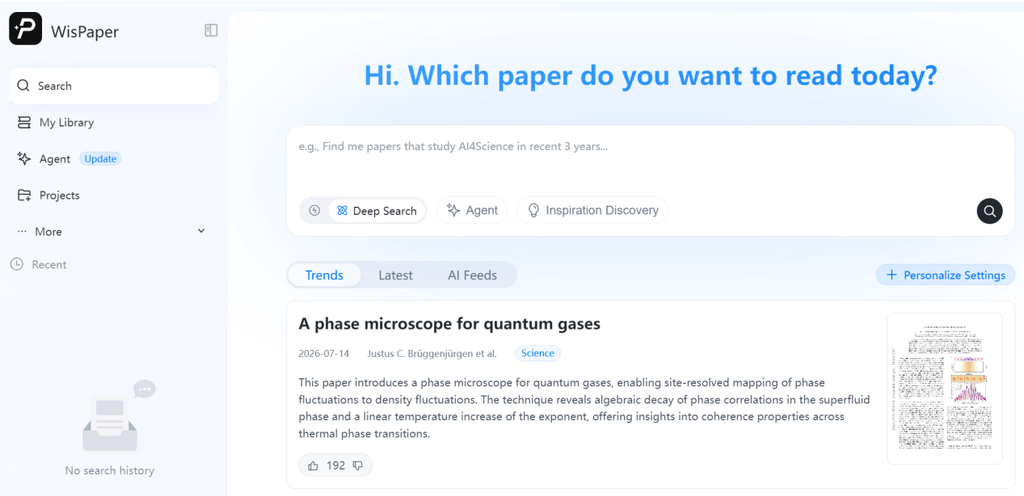
This is where the manual workflow breaks down. You can open a PDF, find the reference list, chase the next paper, and repeat, but the loop costs hours of attention. The agent’s Quick Search gets you to the cited paper fast, and Deep Search handles the harder part: searching with include and exclude conditions to pull only the papers that actually measured the outcome you’re claiming. Tracing becomes a query instead of a scavenger hunt.
Verifying Before You Cite, Not After
Most reference checking happens at submission, when the manuscript is done and the momentum runs against changing anything. TrueCite checks citations and verifies format against APA, MLA, and other styles, but the more useful habit is running it before the sentence settles. If the chain is five links long, you want to know at link two, not after a reviewer finds the drift. Catching it early means rewriting one line; catching it late means defending a paragraph you never checked.
Cleaning the Citation Chain in Your References
A clean reference list is not about tidiness. It means every sentence points at a source that supports what you wrote. The AI academic agent gives you the trace: what the last paper measured, where the chain thinned, and which link you should cite instead. Five labs citing the same wrong thing is not a coincidence. It’s a traceability failure, and someone has to stop it.
