

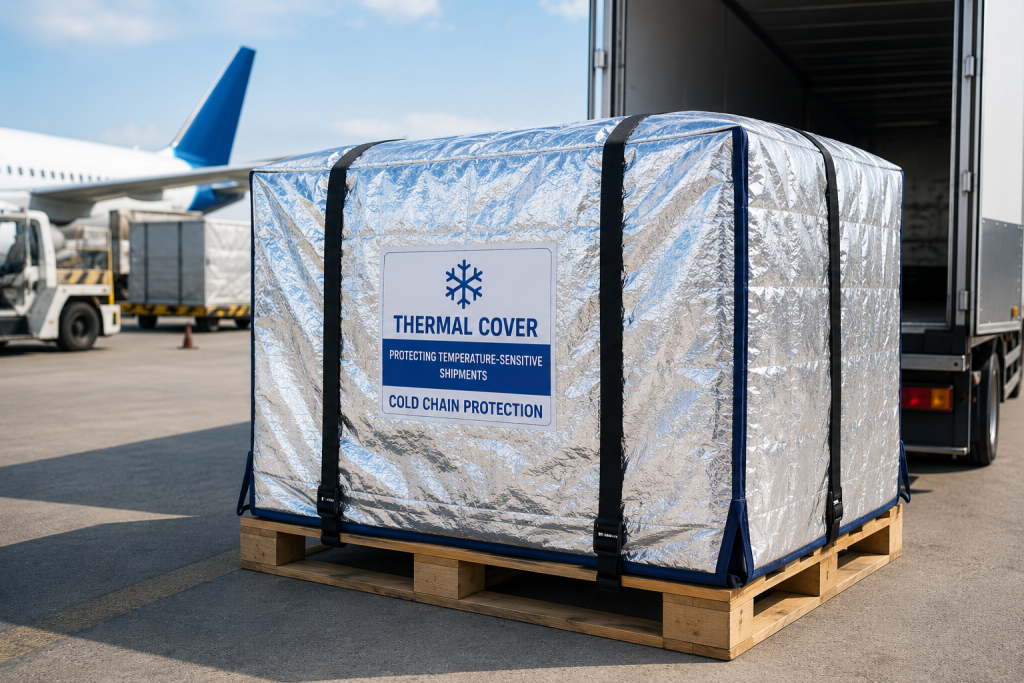
Cold chain logistics is an integral part of transporting temperature-sensitive products. Pharmaceuticals, vaccines, biologics, fresh food, dairy products, seafood, and other perishables may require a specific temperature range throughout transportation. Even a brief period under improper storage conditions can result in product quality issues and financial losses.
Temperature-controlled vehicles and refrigerated storage are crucial components of the cold chain. However, temperature risks can still occur during loading, unloading, airport handling, cross-docking, warehouse transfers, and temporary transportation delays. A Best thermal cover for cold chain logistics can provide an additional layer of protection during these vulnerable stages.
Thermal covers are designed to protect cargo from temperature extremes, solar radiation, cold conditions, and rapid environmental temperature fluctuations. They can be used around pallets, boxes, containers, and other temperature-sensitive products to help minimize the effects of ambient temperatures.
What Is a Thermal Cover?
A thermal cover is a protective covering that is insulated, reflective, or made using a combination of protective materials to help maintain a more stable temperature around temperature-sensitive cargo.
Depending on its construction, a thermal cover may contain reflective layers, insulating materials, or multiple protective layers designed to minimize heat transfer.
The basic objective is simple: to create a protective barrier between the cargo and the surrounding environment.
Transportation conditions can vary considerably. For example, a pallet may leave a temperature-controlled warehouse and remain outside while being loaded. It may also be placed on an airport ramp, in a staging area, or in another location where the ambient temperature is not controlled.
Thermal covers can help minimize the impact of these short periods of environmental exposure. They are used across temperature-sensitive supply chains, including pharmaceutical, healthcare, food, and other industries.
Why Are Thermal Covers Important in Cold Chain Logistics?
One of the biggest challenges in cold chain logistics is maintaining temperature stability. Refrigerated trucks, containers, and warehouses provide temperature control, but shipments are not always continuously protected by refrigeration.
Cargo may be exposed to outside environmental conditions during:
- Loading and unloading
- Airport tarmac operations
- Cross-docking
- Warehouse transfers
- Vehicle changes
- Customs procedures
- Temporary transportation delays
- Last-mile delivery
These situations can create opportunities for temperature excursions. A thermal cover can provide passive protection during these vulnerable periods.
Certain commercial thermal covers are designed to protect temperature-sensitive cargo from the effects of sunlight and extreme ambient conditions during air transportation and handling.
How Do Thermal Covers Protect Temperature-Sensitive Products?
Thermal covers are designed to minimize the direct effects of environmental temperatures and heat. Reflective materials can help reduce the amount of heat absorbed from sunlight, while insulating layers can reduce heat transfer between the outside environment and the protected cargo.
A well-designed thermal cover can help address several forms of heat transfer, including:
- Radiation
- Conduction
- Convection
However, the effectiveness of a thermal cover depends on several factors, including its material, fit, coverage, shipment configuration, environmental conditions, exposure duration, and the overall packaging system.
Therefore, thermal covers should be considered part of a broader cold chain solution rather than a standalone solution. They should not be considered a replacement for validated refrigeration or temperature-controlled packaging methods.
Applications of Thermal Covers in Different Industries
Pharmaceutical Logistics
Pharmaceutical products often have strict temperature requirements. Medicines, vaccines, biologics, and active pharmaceutical ingredients may require protection during storage and transportation.
Thermal covers can provide an additional level of protection when cargo is exposed to uncontrolled environmental conditions. They can be used alongside other temperature-control solutions in life-science logistics.
Food and Beverage Transportation
Temperature variations can create problems for fresh produce, dairy products, seafood, meat, and other perishable products.
Thermal protection can help reduce environmental exposure during transportation and transfer points. Maintaining better temperature stability can help food logistics companies reduce product deterioration and protect product quality.
Healthcare and Medical Products
Controlled transportation conditions may be required for medical supplies and other temperature-sensitive healthcare products.
Thermal covers can provide an additional layer of protection when packages are temporarily exposed to surrounding environmental conditions during transportation and handling.
Specialty Chemicals
Some chemicals and industrial substances may also need to be transported under controlled temperature conditions.
In these situations, thermal packaging can help reduce fluctuations in environmental temperature during transportation.
Key Benefits of Thermal Covers
1. Additional Temperature Protection
Thermal covers provide an additional layer of protection between cargo and external environmental conditions. This can be particularly useful during loading, unloading, and short periods of outdoor exposure.
2. Protection From Solar Radiation
Covered shipments can absorb solar energy when exposed to direct sunlight. Reflective materials can help minimize this effect.
This is particularly useful when pallets are exposed to sunlight during transportation or airport handling. Some commercial thermal covers are designed to reflect a high percentage of solar energy.
3. Flexible Applications
Thermal covers can be designed for different cargo configurations. Pallet covers, box liners, drum covers, and other packaging formats can be selected according to the shipment type and logistics process.
4. Support for Existing Cold Chain Systems
Using a thermal cover does not mean that refrigerated transportation is no longer required.
Instead, thermal covers can complement existing cold chain packaging and transportation systems by providing additional protection at vulnerable points in the supply chain.
5. Reusable Options
Some thermal covers are designed for multiple shipments, depending on their material and construction.
Reusable solutions can be beneficial for logistics operations that handle frequent deliveries and want to reduce packaging waste.
How to Choose the Right Thermal Cover
Choosing the right thermal cover involves more than selecting a standard size. Companies should evaluate their product requirements, transportation methods, environmental conditions, and operational procedures.
Important factors to consider include:
- Required temperature range
- Shipment size and configuration
- Expected transit duration
- Ambient temperature conditions
- Exposure to sunlight
- Loading and unloading procedures
- Air, road, or sea transportation
- Single-use or reusable requirements
- Material durability
- Ease of installation and removal
- Compatibility with existing packaging designs
Companies transporting highly sensitive products, particularly pharmaceutical products, should also consider appropriate qualification and performance testing for the product, shipping lane, and packaging configuration.
Combining Thermal Covers With Temperature Monitoring
Thermal protection and temperature monitoring can work together as part of an effective cold chain strategy.
A thermal cover provides physical protection, while a temperature data logger records temperature information during transportation. Using both approaches can help businesses understand whether a shipment remained within its specified temperature limits.
Temperature data can also provide valuable historical information for shipment reviews, quality investigations, and process improvement.
For example, if cargo is delayed on an airport ramp, temperature records can help determine whether the shipment remained within the acceptable temperature range during the delay.
Combining passive thermal protection with temperature monitoring can improve cold chain visibility and help businesses identify potential weak points in their transportation processes.
Best Practices for Using Thermal Covers
Following proper handling procedures can help improve the effectiveness of thermal covers.
Select the Right Cover
Choose a thermal cover that is suitable for the cargo and shipment configuration. Large uncovered gaps may reduce the level of protection.
Inspect Before Use
Check the thermal cover before every use. Tears, damaged reflective layers, or worn areas may affect its performance.
Follow Manufacturer Instructions
Always follow the manufacturer’s instructions when installing and using the cover. Proper installation is important for achieving the intended coverage.
Consider the Complete Cold Chain System
Thermal covers should be considered alongside refrigerated equipment, insulated containers, temperature monitoring devices, packaging, and appropriate handling procedures.
Using these components together can provide a more comprehensive approach to temperature-sensitive transportation.
Conclusion
Every stage of cold chain logistics needs careful temperature management. Refrigerated vehicles and temperature-controlled storage remain important, but shipments can still be exposed to environmental conditions during handling and transfers between different stages of transportation.
A thermal cover for cold chain logistics can provide an additional layer of passive protection against heat, cold, solar radiation, and short-term environmental exposure. When properly selected and applied, thermal covers can complement existing cold chain systems and help protect temperature-sensitive cargo.
Temperature monitoring and cold chain protection solutions, such as those offered by Temp Note, can further support businesses handling temperature-sensitive shipments.
The most effective approach is to combine thermal protection with appropriate temperature monitoring, validated packaging, proper handling procedures, and transportation planning. Together, these measures can help businesses develop a more reliable cold chain and minimize the risk of product damage caused by temperature variations.
Frequently Asked Questions
1. What does a thermal cover do in a cold chain?
A thermal cover provides an additional protective barrier for temperature-sensitive goods. It can help reduce the effects of outside heat, cold, and solar radiation during transportation and handling.
2. Can thermal covers replace refrigerated transportation?
Generally, thermal covers are not a direct replacement for validated refrigerated transportation. They are typically used alongside suitable temperature-controlled equipment.
3. What products can use thermal covers?
Thermal protection can be used for pharmaceuticals, vaccines, biologics, fresh produce, dairy, seafood, meat, medical products, and other temperature-sensitive products.
4. Can thermal covers be reused?
Some thermal covers are designed for repeated use, while others are intended for single-use applications. The appropriate option depends on the product design, shipment requirements, and logistics process.
5. Should thermal covers be used with temperature data loggers?
Yes. Thermal covers provide physical protection, while temperature data loggers record the temperature experienced by the shipment. Using both can support a more integrated approach to cold chain protection.
