

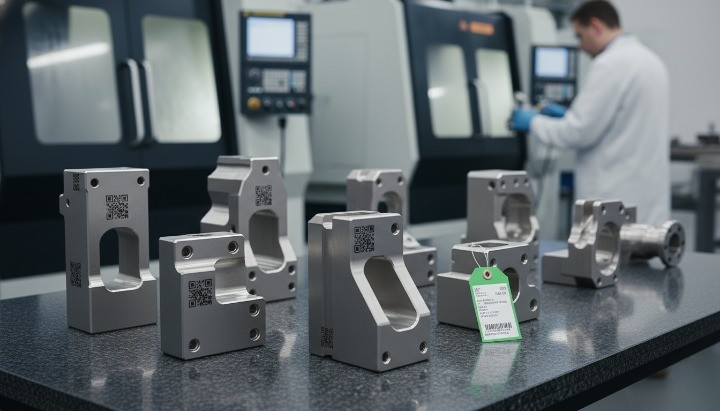
In the hierarchy of engineering materials, titanium occupies a unique position. It offers the strength of steel at roughly half the weight, exceptional corrosion resistance, and biocompatibility that makes it the material of choice for medical implants. But these remarkable properties come at a cost—titanium is notoriously difficult to machine. Its low thermal conductivity traps heat at the cutting edge. Its high chemical reactivity causes tools to wear rapidly. Its work-hardening behaviour punishes hesitation in the cut.
Yet despite these challenges—or perhaps because of them—titanium precision machining has become one of the most critical capabilities in advanced manufacturing. The aerospace industry consumes titanium for airframe structures and engine components where weight savings translate directly into fuel efficiency. Medical device manufacturers rely on it for orthopedic implants and surgical instruments where biocompatibility is non-negotiable. The automotive sector increasingly specifies titanium for high-performance and electric vehicle applications where strength-to-weight ratio matters.
The demand is only accelerating. As industries push for lighter, stronger, more durable components, the shops that have mastered titanium machining are becoming indispensable partners.
Why Titanium Poses Such a Challenge
Titanium alloys are classified as difficult-to-machine materials for several fundamental reasons. Their low thermal conductivity means heat generated during cutting does not dissipate efficiently; it concentrates at the tool-workpiece interface, accelerating tool wear and compromising surface integrity. Their high chemical reactivity causes titanium to weld to the cutting tool under certain conditions, a phenomenon known as built-up edge that destroys surface finish. Their low modulus of elasticity means they deflect more readily under cutting forces, making it difficult to maintain dimensional accuracy on slender parts.
These characteristics create a cascade of challenges: high cutting forces, elevated temperatures, severe tool wear, and poor surface integrity. Shops that approach titanium with the same parameters they use for stainless steel or aluminum will fail. The material demands specialized tooling, optimized cutting parameters, rigid workholding, and often advanced cooling strategies such as high-pressure coolant or cryogenic assistance.
This is why experience matters so much in titanium machining. A shop that has produced thousands of titanium components has documented what works and what does not. They have built tooling libraries, established process parameters, and developed quality systems that account for the material’s unique behaviour. They understand that titanium is not just another metal—it is a discipline. For companies seeking a partner with deep experience in custom titanium CNC machining, the difference is often visible in the consistency of surface finish and the repeatability of critical dimensions across production runs.
Swiss-Type Turning: The Right Tool for Titanium
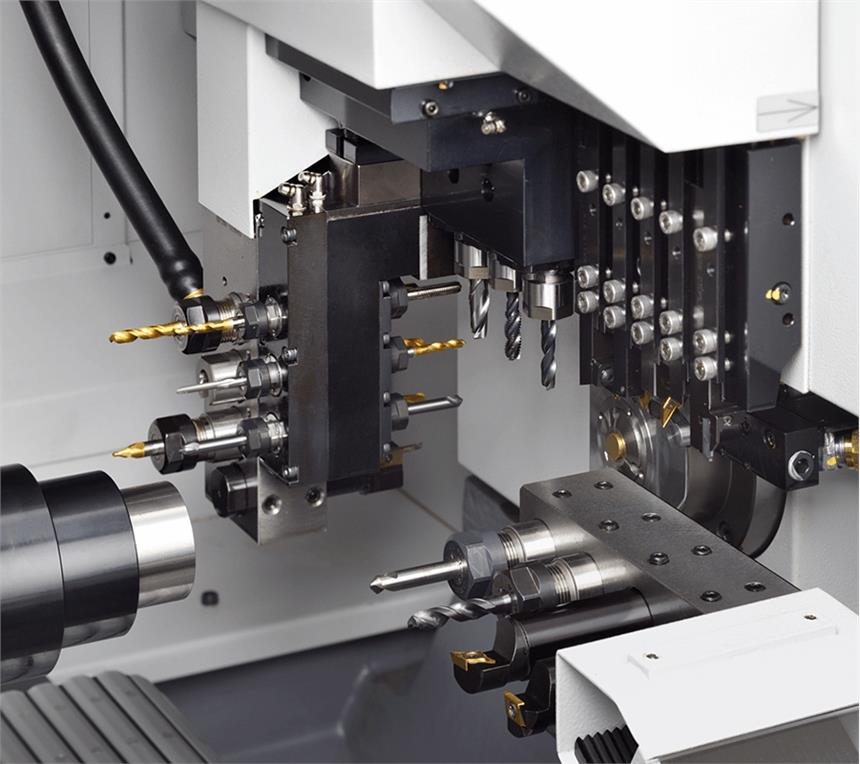
Among precision machining technologies, Swiss-type turning has emerged as particularly well-suited to titanium components. Unlike conventional lathes where the workpiece extends unsupported from the chuck, Swiss machines feed material through a guide bushing positioned immediately next to the cutting tool. This design eliminates deflection and vibration, making it possible to hold tight tolerances on long, slender parts that would otherwise be impossible to machine accurately.
For titanium, this mechanical advantage is critical. The material’s low modulus of elasticity means it deflects easily under cutting forces. Without the support of a guide bushing, a slender titanium shaft will bend away from the tool, introducing taper and dimensional error. The Swiss machine’s guide bushing prevents this, allowing machinists to achieve the concentricity and straightness that aerospace and medical applications demand.
Modern Swiss machining centres integrate turning, milling, drilling, and threading in a single setup—often on machines with five or more axes. This “done-in-one” approach reduces handling errors, shortens production cycles, and ensures that critical features stay aligned. For titanium components, where every operation must be optimized to manage heat and tool wear, reducing setups is not just efficient—it is essential.
Titanium Fasteners: Small Components, Critical Role
Among titanium components, fasteners occupy a particularly important position. Bolts, nuts, and screws made from titanium alloys are found throughout aerospace assemblies, medical devices, and high-performance automotive applications. Their high strength-to-weight ratio makes them essential for lightweight structures. Their corrosion resistance ensures longevity in challenging environments. Their biocompatibility makes them suitable for implantable devices.
The production of titanium fasteners presents unique challenges. Thread rolling, head forming, and precision turning must all be executed with exacting control to achieve the required strength and fatigue life. Surface finish is critical for fasteners that will be installed in safety-critical applications. Material traceability is non-negotiable for aerospace and medical customers. A manufacturer with expertise in titanium fasteners manufacturing understands these requirements and has developed the processes and quality systems to meet them consistently.
Titanium Bolts and Nuts: Meeting the Standards of Demanding Industries

The market for titanium bolts, nuts, and other threaded fasteners has grown steadily as industries recognize the material’s advantages. In aerospace, titanium fasteners reduce airframe weight and improve fuel efficiency. In medical devices, titanium screws and pins provide secure fixation without adverse reactions. In motorsport and high-performance automotive, titanium fasteners offer strength without weight penalty.
Manufacturing these components requires precision that exceeds what many general-purpose machine shops can deliver. Threads must conform to tight tolerances; heads must be formed without cracking; surfaces must be free of burrs that could compromise assembly or performance. A reliable source for titanium bolts and nuts brings not only machining capability but also material knowledge, quality systems, and the documentation that regulated industries demand.
The Supply Chain Reality for Titanium Components
The same supply chain pressures that have reshaped manufacturing across industries have particular implications for titanium. The material itself is costly and supply-constrained, making efficient machining essential. The skilled workforce needed to program and operate titanium machining centres is in short supply, creating a premium for shops that have maintained stable teams.
Regionalization and reshoring have also affected titanium machining. Companies that once sourced titanium components from distant suppliers are increasingly looking for domestic or regional partners who can provide consistency, communication, and shorter lead times. This shift favours shops that have invested in advanced equipment, documented processes, and quality systems that meet the standards of aerospace and medical customers.
What to Look for in a Titanium Machining Partner
For procurement professionals and engineering leaders evaluating potential partners for titanium components, several factors deserve particular attention. Equipment matters: Swiss-type turning centres with live tooling, automated bar feeders, and in-process probing are essential for titanium work. Workforce experience matters: shops with stable teams that understand titanium’s unique behaviours deliver more consistent results. Quality infrastructure matters: certifications such as ISO 13485 for medical and AS9100 for aerospace require documented processes, internal audits, and continuous improvement.
Experience with titanium alloys matters most of all. A shop that has produced thousands of titanium components understands how different grades—from commercially pure titanium to alloys like Ti-6Al-4V—respond to cutting forces, tooling, and coolant strategies. They have documented processes for each alloy and can provide the material traceability and inspection reports that regulated industries require.
Looking Ahead
The demand for titanium precision machining will continue to grow as aerospace, medical, and automotive industries push for lighter, stronger, more durable components. The material’s unique properties make it irreplaceable in critical applications, and the shops that have invested in mastering its challenges will capture the most demanding programs.
For companies that depend on titanium components, choosing the right manufacturing partner is not a procurement decision—it is a strategic one. The right partner brings not just equipment but decades of accumulated knowledge about how titanium behaves under cutting forces, how to manage heat and tool wear, and how to deliver consistent quality across production runs. In an era where every component matters, that distinction has never been more important.
