

Typing online is no longer a solo act. An assistant now hovers over the text box, ready to help. That quiet shift is changing how we write everywhere. The blank box no longer has to stay blank. A draft can appear with a single shortcut. One example is Clico, which brings ChatGPT and Claude to any page you type on. It can draft, rewrite, summarize, and translate in place. This article looks at the AI writing tools changing how we type. It also shows how to use them while keeping your message your own.
From blank box to assisted draft
The blank text box once caused real hesitation. Now a draft can appear with a click. That changes where the hard part of writing sits.
Effort moves from starting to shaping. You edit and direct instead of staring at nothing. The work feels lighter and faster.
The habit is now mainstream
Writing with AI has become a default, not a novelty. The Content Marketing Institute’s 2025 B2B research found that, among teams using AI, the most common use was generating or optimizing written content. As that habit spreads, browser tools lead the way. They put help in every text box you touch. The change feels everywhere because the cursor carries it.
How AI is changing the act of typing
- Suggesting full sentences as you begin
- Rewriting tone from formal to friendly
- Summarizing what you just read before you reply
- Translating your words for a global reader
These actions share one home: the text box. The diagram below shows where assisted typing happens.
Assisted typing in every box blends suggesting, rewriting, and translating — the everyday role of Clico.
Typing smarter, not just faster
Speed is only part of the benefit. Clearer phrasing helps you be understood. Read each suggestion so your message stays yours.
Let the tool handle the grind. Keep the meaning and the voice under your control.
Typing smarter across every site
The same help now follows you everywhere. Email, posts, and forms all gain a draft button. The friction of starting nearly disappears.
Still, read before you send. Keep your meaning and tone intact. The tool speeds the typing; you own the message.
Build a few go-to prompts for common tasks. Reuse them to stay consistent. Smarter typing becomes a steady daily habit.
Notice how much faster replies start to feel. The blank box stops being a hurdle. You spend your energy on ideas, not on getting started.
Over time, that saved effort compounds. Every message goes out a little quicker. Small daily gains turn into real hours saved each week.
In short, the assistant has quietly joined us at every text box. It suggests, rewrites, and translates as we type across the web. The blank page loses its power to stall us. Still, you read, you decide, and you keep your voice. Used with care, these tools make writing faster and clearer at once. That is how typing online is being gently, steadily reshaped.
How to Use Clico
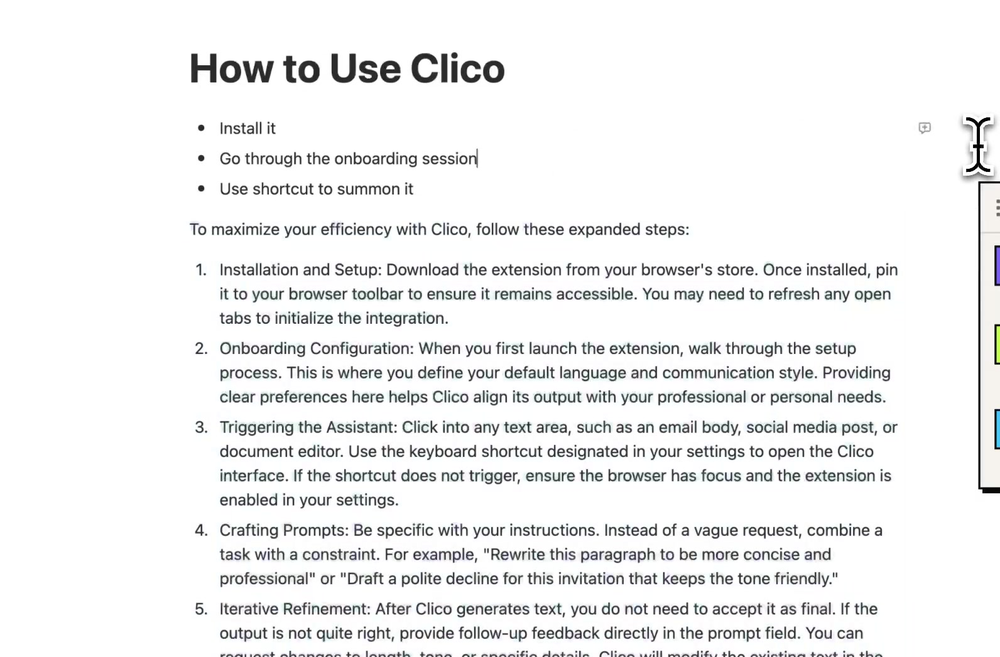
Clico puts assisted typing in every text box you use. Here is the quick flow.
Clico generating a step-by-step guide inside a Notion doc.
Source: official Clico product demo (tryclico.com).
- Install Clico from the Chrome Web Store on your browser
- Press ⌘O or Ctrl+O inside any text field
- Start a draft, or paste text you want to improve
- Rewrite the tone, summarize, or translate in place
- Review every line so the message stays yours
The free plan includes 100 generations a month with no API key. Clico activates only on the shortcut and skips sensitive fields. It works on email, posts, and forms alike.
Conclusion
How we type online is being quietly rewritten. AI tools now draft, rewrite, and translate inside the browser. Examples like Clico put that help in every text box. Used with care, they make our online writing both faster and clearer.
