


The best Rust cheat feature cannot be picked from a menu count. Aim assistance, player ESP, radar and world-object information do different jobs, and a product with more toggles is not automatically easier to understand or more reliable. A useful comparison starts with the purpose of each group and the limits of the claim being made.
This is a feature guide based on published descriptions, not a performance test. It does not promise account safety or recommend bypassing Rust’s protections. The aim is to make the terminology clearer so that an impressive-looking list does not substitute for useful information.
Player ESP: information about people
Player ESP typically advertises labels or graphics describing available players. Names, distance, held items, boxes and state indicators answer different questions. A box identifies a position; a distance label adds scale; a state label helps explain what kind of marker is being shown.
The useful design question is whether those categories remain distinguishable. A scene crowded with overlapping text can make more data less readable. A promotional screenshot may confirm that labels exist, but it cannot establish clarity during movement or consistent behaviour on a different computer.
World ESP: information about objects
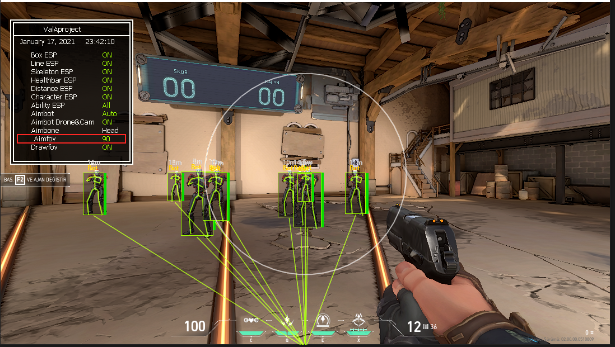
World ESP concerns categories such as resources, containers, vehicles or deployable objects. It should be described separately from player ESP because the information has a different purpose. A seller saying only “full ESP” leaves the reader guessing about which categories are actually included.
Disconnect’s current Rust cheats category describes External and Internal products and discusses world-object filters alongside player information. Check the specific product listing for the current menu; a general category description should not be treated as proof that both products have identical options.
Aimbot and recoil controls: separate mechanics
Aimbot refers to selecting and following a target through unauthorised aim assistance. Recoil controls concern weapon movement. They can affect the same interaction without becoming the same feature. Likewise, field of view, smoothing and target selection are distinct controls rather than interchangeable names for accuracy.
A feature list can tell you which controls are advertised. It cannot prove a success rate, establish that every shot will connect or show how the product behaves under every condition. Be particularly cautious when a sales page turns a menu label into a guaranteed outcome.
Radar and chams: different ways to present information
Radar uses a separate positional view. Chams change the appearance of available models. ESP places information over the scene. These formats can coexist, but calling all of them wallhacks makes it harder to compare what the user would actually see.
A clear description should explain the format and its limitations. Information overlays depend on data available to the software; they cannot promise to reveal relevant information that the server never provides to the client. An unlimited-visibility claim deserves more scrutiny than an ordinary feature label.
The features that matter beyond the menu
Readable documentation, clear compatibility notes and current product notices are part of evaluating any changing software. A long list is less useful when the supported system is unclear or when an older screenshot conflicts with the live description.
Rust updates can also change compatibility. An external product runs separately from the game process, while an internal one operates within it, but neither label removes the need for maintenance. Look at the exact product and current notice instead of transferring an answer from another menu.
Finally, keep account risk separate from feature appeal. Rust uses Easy Anti-Cheat. A current “undetected” claim is not a permanent promise, and restrained settings cannot guarantee protection. The most useful feature comparison explains what is advertised, what remains untested and what can change. It does not turn a preferred combination of controls into a claim that using cheats is safe.
