

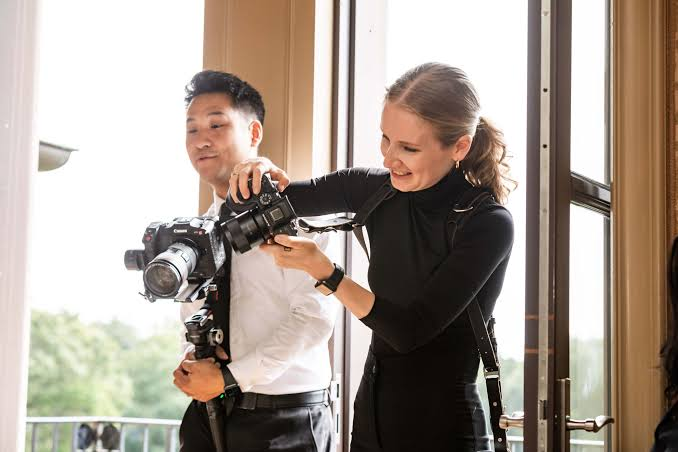
Every brand eventually asks the same question: should we spend our budget on video or photography? Whether you are hiring a Washington DC Video Production company for a campaign launch or booking a photographer for a product catalog, the two services overlap but solve different problems. Photography freezes a single moment, while video tells a story over time. Here is how they compare on cost, timeline, use cases, and results.
Cost
Photography is usually the lower-cost entry point. Commercial photographers typically charge about $125 to $500 per hour, with half-day shoots averaging around $800 and full days around $1,500. Headshots generally run $100 to $350 per person, and simple product shots $25 to $75 per image. Retouching, studio rental, and usage licensing add to the total.
Video costs more because it needs more people and more post-production. A freelance director of photography commonly charges $800 to $1,500 per day, with editors and camera operators adding $500 to $1,000 each. By project, one pricing guide puts corporate videos at $5,000 to $25,000, customer testimonials at $2,500 to $8,000, and short social clips at $1,500 to $5,000 per piece. Commercials can climb well past $15,000, and post-production alone often consumes 30 to 40 percent of the budget.
Timeline and Process
Photography moves faster. Portraits and headshots can be delivered within 48 hours, and event galleries are often delivered close to real time. A common rule of thumb is about four hours of editing for every hour of shooting, so larger jobs take longer, but a finished set rarely takes more than a few weeks.
Video involves scripting, planning, filming, editing, and review. One production platform estimates that a traditional agency project runs four to twelve weeks, while short social clips can be turned around in a day or two. Revision rounds are the biggest variable, and consolidated feedback can shrink each round from most of a week to a day or two. These timelines come from vendors, so treat them as benchmarks rather than promises.
Where Each Performs Best
Photography is the better choice when you need a single, polished image: products, portraits, office interiors, and event details. It works in print materials like brochures and posters, which cannot play video, and it remains the most popular option for email marketing. Video shines when you need to show something in action or build trust. It suits testimonials, company stories, employee profiles, product demonstrations, and explainers. It also dominates platforms like YouTube and TikTok, and it can communicate a complex offering in ways photos and text cannot. Video has limits: it cannot be used in print, and large files can slow a website, so embedding from a hosting platform is usually smarter than uploading directly.
Results and Return on Investment
Video’s popularity reflects its performance. A 2026 Wyzowl survey found that 91 percent of businesses use video as a marketing tool, and 85 percent of consumers said a video had convinced them to buy. The same research shows marketers reporting good ROI from video slipped from 93 percent to 82 percent year over year, a reminder that video is not automatically a winner. These are self-reported survey figures, not guarantees.
Photography’s value is harder to measure but just as real. Strong composition and lighting create immediate emotional impact, and a good image can anchor an entire campaign, website, or product page for years.
How to Choose
Start with your goal. If you need to sell a product visually, build a portfolio, or fill print and email assets, begin with photography. If you need to explain, persuade, or put a human face on your brand, begin with video. Then consider your channels: video-first platforms reward motion, while catalogs and brochures need stills.
Budget matters too, but the cheapest option is not always the most efficient. Many businesses combine both in one session, since sharing a location, talent, and setup can reduce costs compared with booking each service separately.
The Bottom Line
Video and photography are partners, not rivals. Photography offers speed, affordability, and versatility; video offers storytelling, engagement, and the ability to show how things work. Define your audience and goals first, then choose the format, or the mix, that gets your message across most effectively.
