

We might think that most inventors know what a patent is, but based on the conversations we have with inventors, many do not. So, let’s start with what a patent is. We will then move to what it is not.
There is historical evidence that some form of a patent existed in ancient Greece going back as far as 500 BC. The Greek city of Sybaris (which is now located in what is southern Italy) had a law that stated that “encouragement was held out to all who should discover any new refinement in luxury, the profits arising from which were secured to the inventor by patent for the space of a year.” These rights were not just for one year, but they were apparently limited to food dishes.
England made patents more common in the form of a “letter patent” that was issued by the king or queen to inventors whose petitions were approved. A grant in 1331 to one John Kempe and his company is the earliest authenticated instance of a patent grant being made for the purpose of instructing the English in a new industry. A letter patent provided the recipient with a monopoly to produce a particular product or provide particular services. Another early example of a letter patent was a grant by Henry VI in 1449 to one John Utynam of Flanders that gave him a 20-year monopoly. The 20-year term for a patent stuck for the next 500+ years.
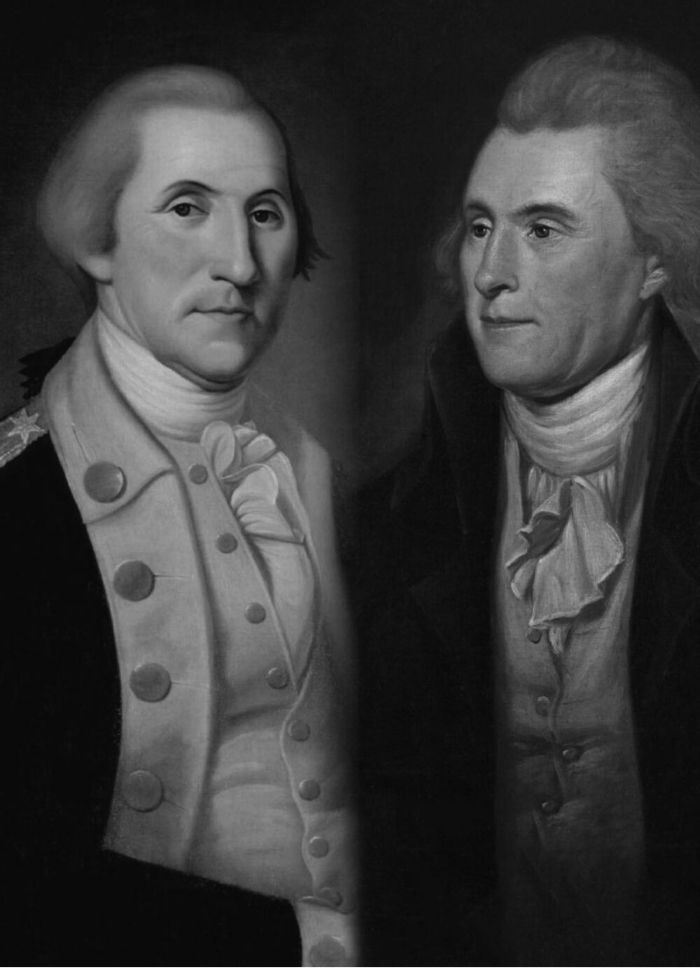
U.S. Patents are as old as the republic itself as patents (and copyrights) were included in Section 1 of the original U.S. Constitution. Congress established an agency responsible for granting U.S. patents and registering trademarks. The first U.S. Patent was granted to one Samuel Hopkins of Vermont on July 30, 1790 for a process of making potash, an ingredient used in fertilizer. The patent examiner was none other than U.S. Secretary of State Thomas Jefferson and the patent was signed by none-other than U.S. President George Washington.
So, what exactly is a patent? It is a guarantee by the U.S. States federal government giving the inventor exclusive rights to use the invention. He or she can use it himself or herself to manufacture a product or provide a service, or he or she can license the patent to an entity that can use the patented invention, or he or she can sell it to an entity to do with the patent as it chooses. The U.S. Patent and Trademark Office records the owner or each patent (its “assignment”) just as the County Clerks across the U.S. record the owners of real property.
To qualify for a U.S. Utility Patent (this is the point we have been working up to), the invention described in the patent application must be (1.) useful, (2.) novel, and (3.) non-obvious. Let’s break that down.
1. Useful: It must have some practical purpose. It must do something. A Design Patent is just a thing, while a Utility Patent does something.
2. Novel: It must be new. It must be an invention that no one else has already invented. This factor is the reason for submitting Prior Art – to show that there may be similar inventions, but they are not exactly same invention as the one covered in the patent application.
3. Non-Obvious: The invention must be something that is not readily apparent to someone who is knowledgeable in the field of the invention. If someone of ordinary skill could easily make the invention, then it is considered obvious and no patent would be granted.
What is missing? What is NOT included in a patent? If the invention actually works! The Patent Office does NOT build prototypes or do computer modeling to determine if a patented invention works. The Patent Office ONLY guarantees that the invention is useful, novel, and non-obvious.
We cannot tell you how many times we’ve had a patent submitted to us, we looked at it, and it was obvious that it would NOT work! Or, at least, not work has the inventor hoped it would. Many of these are green energy or energy-saving devices that simply would NOT create energy out of nothing. Many of them are essentially perpetual motion machines.
We cannot recall how many times we’ve heard that since the invention is covered by a U.S. Patent, that means the U.S. Patent and Trademark Office certifies that the invention works as it is described to work in the Patent. NO! Not true. All the Patent Office is asserting is that the invention is useful (if it did actually work), novel, and non-obvious.
It is up to the inventor to prove that his or her invention works. This also applies to drug patents and other non-mechanical inventions. It is called “proof-of-concept.”
A patent broker will often have patents for sale at its website, but that only means they are for sale – not that they actually work!
