

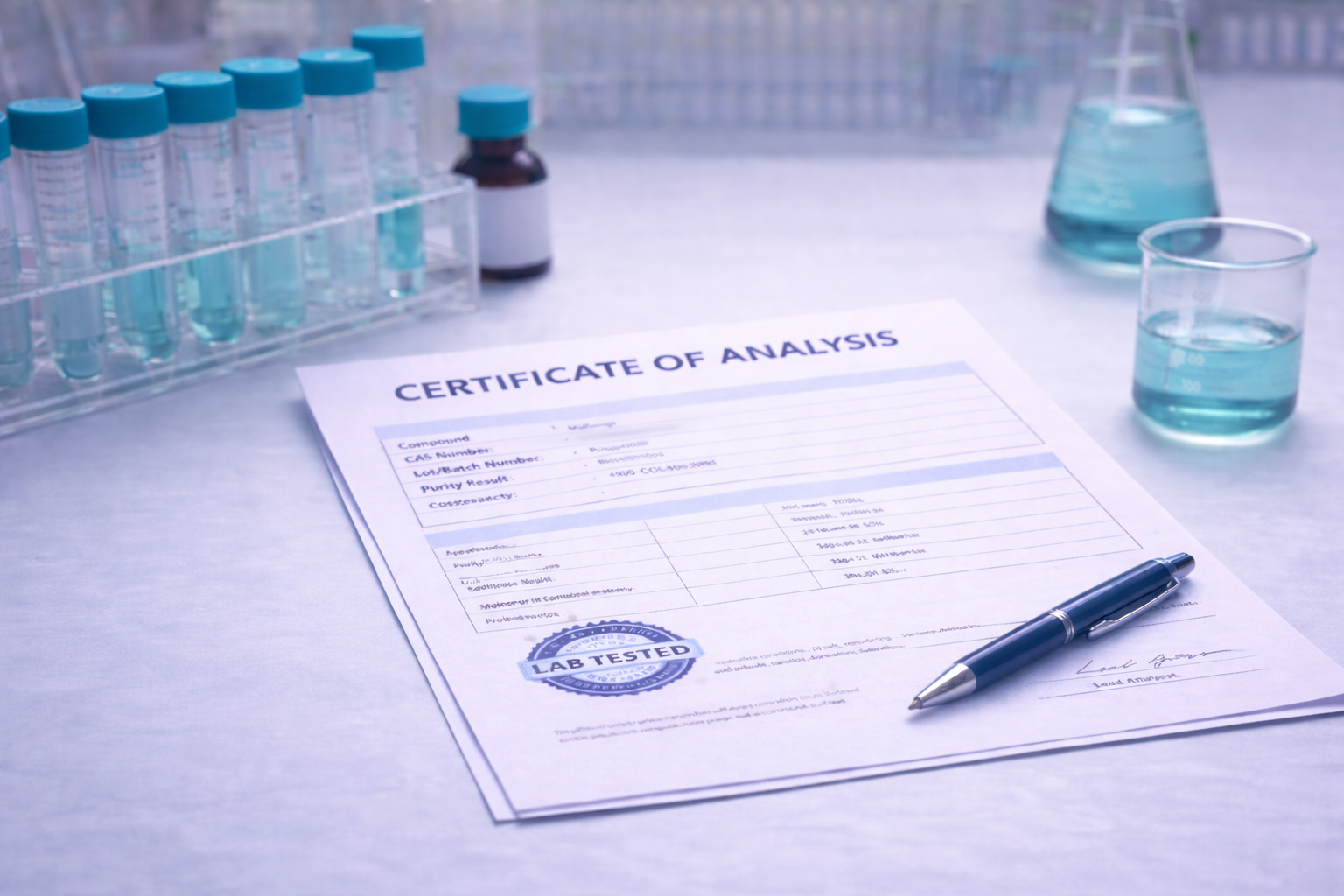
In laboratories, research facilities, and quality-controlled manufacturing, accurate information is essential for evaluating the identity, purity, and consistency of a product. A Certificate of Analysis (COA) is an important document that helps provide this information. It summarizes laboratory testing results and shows whether a particular sample meets established quality specifications.
Understanding how a COA works can help researchers, quality assurance professionals, manufacturers, and other interested readers interpret laboratory reports more confidently. By learning what these documents contain, how they are evaluated, and what limitations they have, readers can make more informed decisions about product quality.
What Is a Certificate of Analysis?
A Certificate of Analysis is a formal document that records the results of analytical tests performed on a specific product, material, or batch. Depending on the industry, it may be issued by a manufacturer, an internal quality control department, or an independent testing laboratory.
The primary purpose of a COA is to provide documented evidence about a sample’s tested characteristics. These characteristics may include identity, purity, concentration, composition, moisture content, and the presence of specified contaminants.
For example, a laboratory testing a chemical material might use analytical techniques to confirm its identity and measure its purity. The resulting COA records the findings alongside the relevant specifications.
However, a COA is not automatically a guarantee of overall product quality or safety. Its value depends on the testing methods, laboratory competence, sample integrity, and accuracy of the information presented.
What Information Does a COA Typically Include?
Although the format varies between industries and laboratories, most COAs contain several essential elements.
1. Product and batch identification: The report identifies the tested material, product name, batch number, or lot number. These details help readers connect the results to the correct sample.
2. Testing methods: A COA may identify the analytical methods used to evaluate the sample. Common techniques include high-performance liquid chromatography (HPLC), mass spectrometry, and other laboratory procedures selected according to the material being tested.
3. Test results: This section presents the actual findings, such as measured purity, concentration, or other relevant characteristics. Results may be expressed as percentages, numerical measurements, or pass-and-fail outcomes.
4. Acceptance criteria: Specifications establish the acceptable limits for particular measurements. Comparing the reported results with these criteria helps determine whether the sample meets the stated requirements.
5. Laboratory and approval details: The document may include the testing date, report number, authorized signature, laboratory identification, and other information that supports traceability and accountability.
Reviewing these details together provides a clearer understanding of what the report actually demonstrates.
Why Are Certificates of Analysis Important?

COAs play an important role in quality assurance across many sectors, including pharmaceuticals, food production, cosmetics, chemicals, and scientific research.
First, they support transparency by documenting the results of specified tests. Instead of relying entirely on marketing descriptions or general product claims, readers can examine recorded measurements and testing information.
Second, COAs help organizations maintain consistent quality. Manufacturers can compare batches against predefined specifications, identify unexpected variations, and investigate potential quality issues before products move further through the supply chain.
Third, these reports support traceability. When a concern arises, batch identification and testing records can help quality teams determine which material was evaluated and whether additional investigation is necessary.
In research environments, reliable documentation is especially valuable because unexpected variations in materials may affect experimental observations. Reviewing relevant quality information can help researchers assess whether a material is suitable for a particular investigation. Readers seeking further information about peptide-related products can also explore the Peptide Product Catalog for additional details.
How to Evaluate a COA Effectively
Not all laboratory reports provide the same level of confidence. Readers should examine several factors before drawing conclusions.
Start by checking whether the product name, batch number, and report details match the material being evaluated. A report that cannot be linked to the specific batch offers limited assurance.
Next, review the testing methods and results. Consider whether the methods are appropriate for the characteristics being measured and whether the report provides numerical findings rather than unsupported general claims.
It is also important to distinguish between purity and identity. A high purity result does not necessarily establish that a material has the correct identity, and confirming identity does not automatically establish the absence of every possible contaminant.
Where appropriate, look for evidence that the laboratory follows recognized quality standards or holds relevant accreditation. Independent testing can offer additional confidence, particularly when the laboratory’s qualifications and procedures are clearly documented.
Finally, remember that a COA reflects the sample tested at a particular time. Its findings do not necessarily establish the condition of every unit in a batch or guarantee that the material will remain unchanged during storage.
Common Misconceptions About COAs

One common misconception is that every COA comes from an independent laboratory. In reality, some reports are generated by manufacturers’ internal testing departments. Readers should check who performed the analysis.
Another misunderstanding is that a COA proves a product is completely safe. Laboratory reports address specific tests and specifications, not necessarily every potential risk, intended use, or regulatory requirement.
It is also important not to assume that a report is reliable simply because it looks professional. Authenticity, appropriate testing, traceable batch information, and credible laboratory practices matter more than presentation alone.
Conclusion
A Certificate of Analysis is a valuable tool for understanding laboratory testing results, evaluating product specifications, and supporting quality assurance. Its usefulness depends on careful interpretation, appropriate testing methods, and trustworthy documentation.
Before relying on any laboratory report, verify the sample identification, review the results and methods, and understand the limitations of the tests performed. Taking these steps helps turn a technical document into meaningful information that supports better-informed decisions.
