

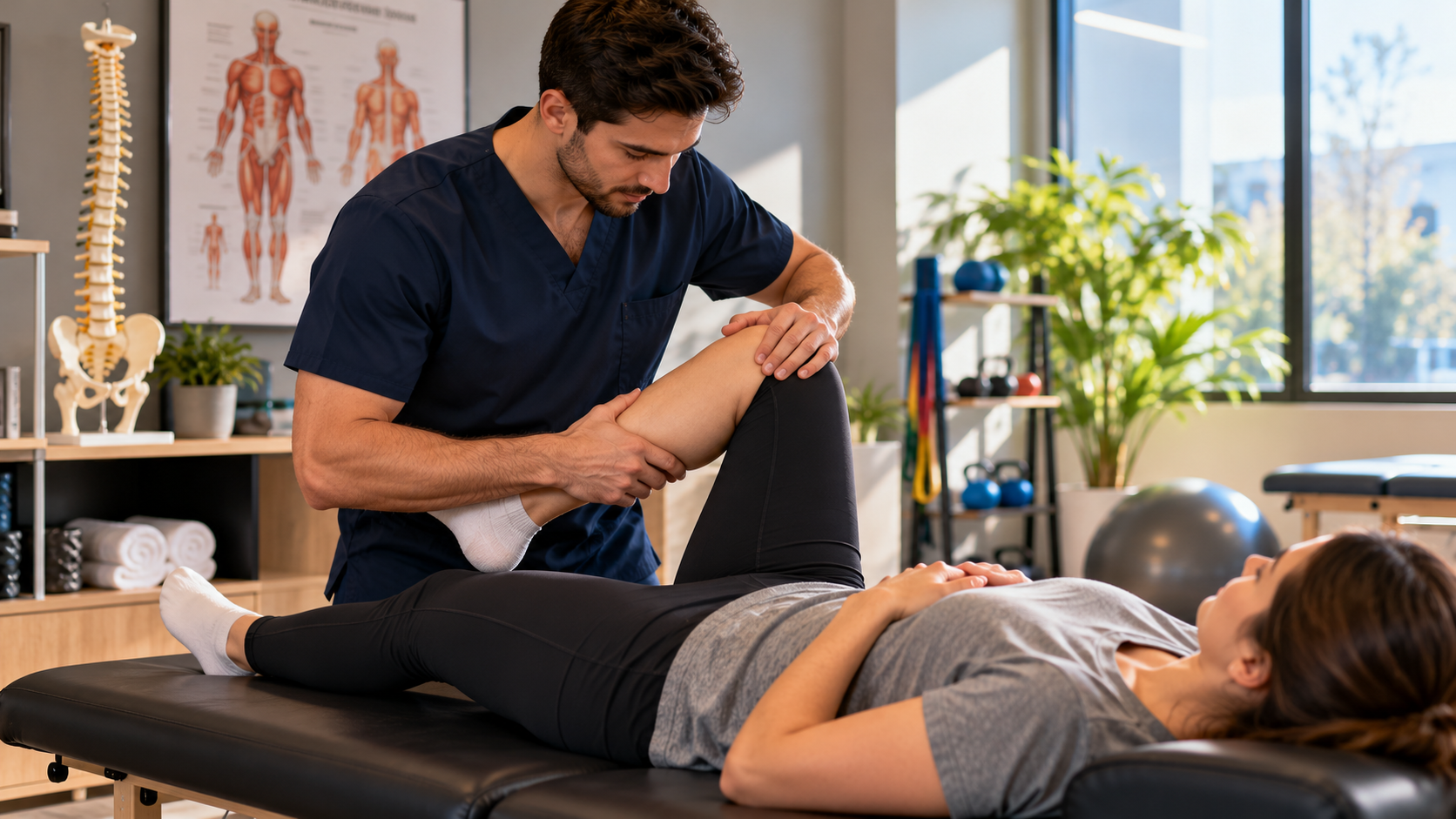
Modern physiotherapy often emphasizes exercise, education, and helping people manage their own recovery. That shift reflects an important idea: long term improvement usually depends on what someone can do in daily life, not only on what happens during an appointment. Even so, hands on treatment has not become irrelevant. When used for a clear purpose, it may still be a useful part of a broader rehabilitation plan.
What Hands On Treatment Means
Hands on treatment, often called manual therapy, is a broad term for techniques applied by a clinician using their hands. These may involve guided movement of a joint, pressure applied to muscles or other soft tissues, or assistance with movement that currently feels stiff or uncomfortable.
The aim is not necessarily to correct a body part that is “out of place.” Human joints and muscles are more complicated than that explanation suggests. Manual therapy may instead help reduce symptoms temporarily, make movement feel easier, or give someone a more comfortable starting point for exercise and normal activity.
Responses differ between individuals. Some people report that hands on care helps them move with less discomfort, while others notice little change. A responsible treatment plan should therefore be based on the person’s response rather than the assumption that a particular technique will work for everyone.
Why Temporary Relief Can Still Be Useful
Temporary relief is sometimes dismissed because it does not permanently solve the underlying problem. However, short term improvement can have practical value when it supports an active next step. If treatment makes it easier for someone to turn their neck, walk more comfortably, or practise an exercise, that window may help rehabilitation move forward.
The important question is what happens after the relief. If each appointment repeats the same passive treatment without improving function or building independence, the approach may need reconsideration. If hands on care helps someone participate more confidently in movement, exercise, work, or recreation, it may be serving a useful role.
Manual therapy can also provide information. A clinician may observe how symptoms respond to a particular movement or position. That response does not necessarily prove a precise structural diagnosis, but it can contribute to decisions about which activities are comfortable and what should be introduced gradually.
How It Fits with Active Rehabilitation
Exercise and manual therapy do not need to be competing philosophies. They may be used together for different reasons. Hands on treatment can sometimes help settle sensitivity or improve short term movement, while exercise may build strength, coordination, endurance, and tolerance over time.
For example, a person with a stiff shoulder might receive manual treatment to make certain movements more comfortable. The person may then practise those movements independently and gradually add resistance. Someone with back discomfort might use a period of symptom relief to resume walking or complete exercises that previously felt difficult.
Clinics describing options such as manual therapy services at Remedy Physio Clinic provide one example of how hands on care may be offered within a wider physiotherapy setting. Regardless of the provider, patients should understand why manual therapy has been recommended and how it connects with their goals outside the clinic.
What Manual Therapy Cannot Do
Hands on treatment should not be presented as a guaranteed fix or as proof that a joint, muscle, or spine has been permanently corrected. Pain can be influenced by tissue irritation, activity levels, sleep, stress, previous injuries, general health, and many other factors. A single technique is unlikely to address every contributor.
Manual therapy is also not a substitute for appropriate medical assessment. Pain following major trauma, rapidly worsening weakness, unexplained loss of function, or symptoms involving bladder or bowel control require prompt medical attention. Persistent symptoms that do not respond as expected may also need further investigation or input from another healthcare professional.
Patients should be cautious if they are told that frequent treatment is required indefinitely to keep the body properly aligned or prevent damage. Care should usually have a clear purpose, include some way to review progress, and change when the person is not responding.
Signs of a Balanced Treatment Plan
A balanced physiotherapy plan begins with an individual assessment. The clinician should ask about symptoms, daily demands, health history, and the activities the patient wants to regain. Treatment choices should follow from those findings rather than from a standard routine given to everyone.
Patients can ask what the hands on treatment is expected to achieve, how long its effects may reasonably last, and what they can do independently. Progress might be judged by easier movement, improved activity tolerance, greater strength, better sleep, or a return to meaningful tasks.
Hands on treatment still has a place because comfort can matter during recovery. Its strongest role is usually supportive rather than exclusive. When combined with education, movement, and gradual rehabilitation, it may help some people take the next step toward doing more for themselves.
