

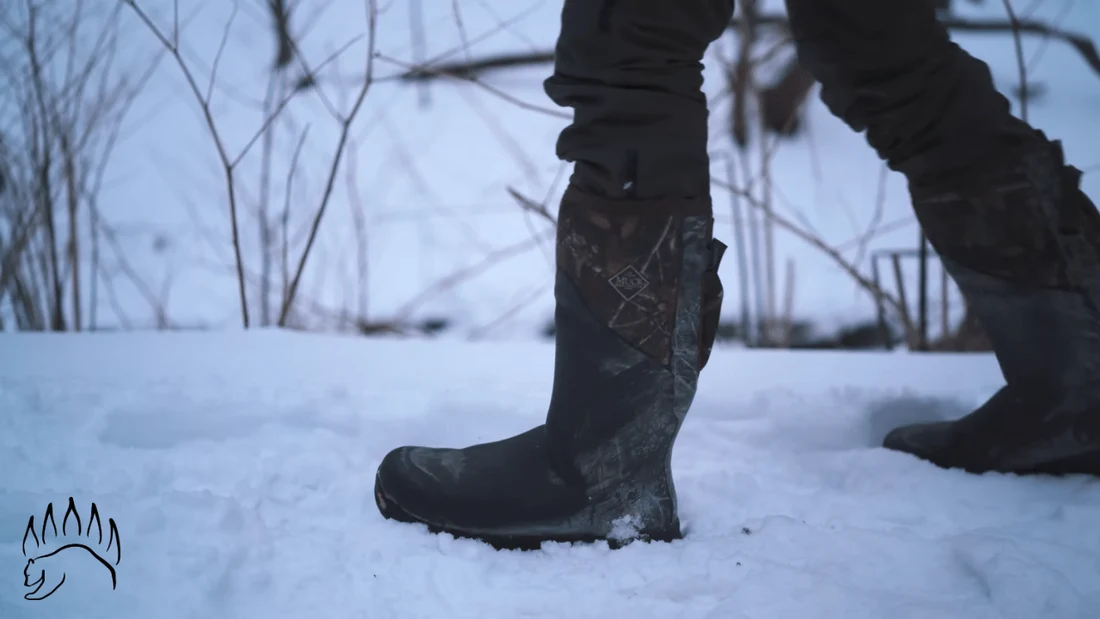
You’ve bought a pair of thick winter boots, pulled on your warmest socks, and headed outside expecting your feet to stay comfortable. Twenty minutes later, your toes are freezing.
It seems ridiculous. The boots have a heavy lining, substantial soles, and enough padding to survive a proper winter. Why aren’t they doing their job?
Sometimes the trouble starts before you even leave home. Your socks are too thick, the boots fit too tightly, or the lining traps so much heat that your feet begin sweating during the walk.
Warmth depends on more than how much insulation a manufacturer puts inside a boot. Fit, moisture, activity level, and even the ground beneath your feet can change the experience considerably.
Why Heavily Insulated Boots Don’t Always Keep Feet Warm
Consider two people spending a cold January morning outdoors.
One person is striding through the park at a decent pace. The other spends most of the time by the football pitch, shifting position now and then to follow the game.
They might be wearing identical boots, but their feet aren’t experiencing the cold in quite the same way.
The walker produces more heat through movement. The spectator has considerably less activity helping to maintain warmth.
REI’s winter footwear guidance makes this distinction when discussing insulation. Boots intended for active pursuits generally need less insulation than footwear designed for prolonged periods of standing in freezing conditions.
It’s easy to overlook this when shopping.
A boot marketed for extreme winter temperatures might sound like the safest choice. But wear it during a hurried commute, followed by half an hour on a heated train, and you may discover that it is far too warm for your routine.
How Sweaty Feet Eventually Become Cold Feet
There’s an unpleasant moment when you take off your winter boots and realise your socks are damp, despite never stepping into a puddle.
That moisture may be entirely your own perspiration.
Feet continue producing sweat in cold weather, particularly during physical activity. A thick lining can retain the heat from walking, while a tightly sealed upper limits how readily moisture escapes.
The trouble often becomes apparent when you stop moving.
Your body produces less heat at rest, and damp socks can make your feet feel colder as moisture transfers heat away from the skin.
The US National Institute for Occupational Safety and Health warns about prolonged exposure to wet, cold conditions. Its guidance notes that trench foot can develop at temperatures as high as 60°F, approximately 15.6°C, when feet remain continuously wet.
A slightly sweaty sock after a short walk isn’t the same as prolonged cold-water exposure. Still, it illustrates why keeping the inside of winter footwear reasonably dry deserves attention.
Adding another layer of insulation won’t necessarily help if moisture is already causing discomfort.
Why Tight Boots Can Leave Your Toes Freezing
Imagine trying on winter boots while wearing ordinary thin socks. They feel comfortably snug, so you buy them.
The following week, temperatures drop and you switch to thick wool socks.
Suddenly, the boots are squeezing your forefoot.
Your toes have less space, and the additional fabric may place pressure around the instep. If the fit becomes restrictive enough, it can interfere with the blood circulation that helps keep your feet warm.
NIOSH’s cold-weather guidance specifically warns that tightly fitting clothing can reduce circulation to the extremities.
The same principle matters when choosing insulated footwear.
A properly fitted boot should hold the heel securely without pressing the toes together. There’s no advantage in wearing several layers of socks if they leave your feet cramped.
Try winter boots with the socks you actually intend to use. You’ll get a much better impression of whether the fit will work outdoors.
What Should You Look for in Fur-Lined Boots?
A soft fur lining feels inviting when you first slide your feet into a boot. On a particularly cold morning, that immediate warmth is difficult to resist.
But not every fluffy lining performs alike.
Shearling, wool, polyester fleece, and synthetic faux fur have different characteristics. Some manage moisture vapour more effectively, while others focus primarily on insulation and softness.
Wool is particularly interesting because its fibres can absorb moisture vapour before the material feels noticeably damp.
REI’s sock guidance notes that wool can absorb considerable moisture while helping maintain comfort across changing temperatures.
Synthetic linings aren’t automatically inferior. Certain polyester constructions are designed to move moisture away from the skin, although a dense decorative faux-fur lining may behave differently.
When comparing mens fur boots, check the actual lining material rather than relying on photographs of a thick, fluffy interior.
A removable footbed can be useful as well, particularly if you need to dry the boots thoroughly between wears.
Why Waterproof Boots Sometimes Feel Damp Inside
Imagine walking home through wet snow. Your boots keep the slush out beautifully, yet your socks feel strangely clammy when you reach the door.
The waterproofing may have worked exactly as intended.
The moisture could have come from perspiration trapped inside.
Some winter boots use waterproof membranes beneath the outer material. Others rely on treated leather, rubber construction, or sealed seams.
Those approaches differ in how readily water vapour can escape.
A rubber boot can be excellent for keeping external water away from your feet, but it offers little natural ventilation through the rubber itself.
Waterproof-breathable membranes may allow some vapour to pass through, although their performance depends on the surrounding temperature, humidity, and boot construction.
For a short walk through heavy rain, reliable waterproofing may be the priority.
During several hours of active walking in dry winter weather, moisture management might deserve more consideration.
The weather you actually encounter should influence the choice.
Does the Thickness of the Sole Make a Difference?
Stand outside on a frozen pavement in thin-soled shoes and you’ll soon notice the cold beneath your feet.
Even a warm upper can’t completely compensate for poor insulation underfoot.
The sole creates a barrier between your foot and the ground. A thicker midsole or suitably insulated footbed can help slow heat loss through the bottom of the boot.
REI specifically recommends considering sole thickness when choosing footwear for cold conditions.
That doesn’t mean the tallest or heaviest sole is automatically better.
A cumbersome boot can become tiring during long walks, while poor outsole grip creates another problem on wet or icy surfaces.
Deep tread helps in some conditions, but it isn’t a guarantee of traction on smooth ice. Specialised winter rubber compounds or additional traction devices may be necessary when conditions are particularly slippery.
Choosing Socks That Work With Your Boots
Cotton socks feel perfectly ordinary around the house. During a long winter walk, however, they may become a poor companion.
Cotton tends to hold onto moisture and can take time to dry after becoming saturated.
REI recommends wool and suitable synthetic fibres for cold-weather activities where managing perspiration is important.
Merino wool is a popular option, especially when someone wants warmth without an excessively bulky sock.
Polyester and polypropylene blends can also move moisture away from the skin.
Thickness remains important.
A heavy wool sock may work beautifully inside a roomy outdoor boot. Put the same sock inside a narrow pair, and the additional bulk can leave your toes squeezed together.
Some people find that a medium-weight sock inside a properly insulated boot is more comfortable than wearing two thick pairs.
Why Your Winter Routine Should Determine the Insulation
Someone walking their dog for forty minutes has different footwear requirements from a person working outdoors for an entire winter shift.
A short daily commute presents another situation altogether.
If most of your journey involves walking to a station and sitting on a warm train, extremely heavy insulation may become uncomfortable.
On the other hand, spending several hours standing in cold conditions calls for enough insulation to maintain warmth without much help from physical activity.
Manufacturers sometimes advertise synthetic insulation using figures such as 200g or 400g.
These usually describe the insulation material’s weight per square metre, not a promise that the boots will keep every wearer comfortable at a particular temperature.
Fit, sole construction, moisture, and activity level all influence the result.
Be cautious about taking a manufacturer’s temperature rating as an exact prediction of how your feet will feel.
What to Check Before Buying Winter Boots
Don’t judge a winter boot entirely by the thickness of its lining.
Put both boots on with suitable socks and spend a little time walking in them.
Notice what happens to your heel. It should stay reasonably settled instead of lifting with every step.
Your toes need enough space to move without pressing into the front or sides. The American Academy of Orthopaedic Surgeons recommends approximately 3/8 to 1/2 inch, or 10 to 13 millimetres, beyond the longest toe when fitting ordinary footwear.
Check the instep, too.
A boot can have a generous toe box while feeling restrictive across the top of the foot, especially once winter socks are added.
If you’re considering mens fur boots for daily use, look at the lining, sole, fastening, and waterproof construction together.
A boot that’s wonderfully warm for five minutes in a shop might behave very differently after an hour of walking.
How to Keep the Inside of Winter Boots Dry
Sometimes the boots themselves aren’t the problem. They simply haven’t dried since yesterday.
After a long day, moisture may remain inside the lining and footbed even though the outer material looks completely dry.
Put those boots straight back on the next morning, and you’re starting with damp footwear.
Take out removable insoles after wearing them and leave the boots open somewhere with good airflow.
Avoid placing leather or glued footwear directly against intense heat. A hot radiator may damage materials or weaken adhesives.
Alternating between two pairs can help when you wear winter boots every day.
Fresh socks are worth keeping available, particularly during long outdoor shifts.
When Cold Feet Might Not Be a Footwear Problem
There’s a difference between toes that become chilly during a winter walk and feet that remain unusually cold regardless of what you’re wearing.
Poor circulation, nerve disorders, and conditions such as Raynaud’s phenomenon can sometimes contribute to persistent coldness or colour changes.
If your toes regularly turn white or blue, become numb, or develop unexplained pain, have the symptoms assessed rather than continually buying warmer boots.
Frostbite requires immediate attention. NIOSH identifies numbness, unusual skin colour, and hard or waxy skin among the warning signs of cold injury.
A good pair of boots can help protect feet from winter conditions, but it cannot correct every reason someone experiences cold toes.
Warm Boots Shouldn’t Leave You Counting the Minutes Until You Get Home
The warmest-looking pair on the shelf isn’t necessarily the most comfortable one for your winter routine.
A thick lining may be welcome when you’re standing outdoors for hours. During an active commute, the same insulation could leave your socks damp and your feet unexpectedly chilly afterwards.
Before buying, think about how much you walk, whether you’ll encounter rain or snow, and how quickly your feet tend to warm up.
Try the boots with your usual winter socks, check that the toes aren’t cramped, and give the interior enough time to dry between wears.
The right pair should keep winter outside without turning the inside into a miniature sauna.
FAQs About Cold Feet in Winter Boots
Why are my feet cold even in insulated boots?
Check your socks and the fit first. Boots that squeeze your toes or trap enough sweat to leave your socks damp can feel cold despite having substantial insulation.
Can winter boots be too warm?
Certainly. Wear heavily insulated boots during a brisk walk or inside a heated building, and your feet may begin sweating. That moisture becomes uncomfortable once you stop moving.
Do tight boots make feet colder?
They can. If your toes are being squeezed, circulation may be restricted. Wear the socks you would normally use in winter when trying the boots on. Extra layers can make the fit feel tighter than it will in everyday use.
Are fur-lined boots warmer than regular boots?
A substantial lining can add warmth, but the result also depends on the sole and overall construction. Some lightly lined winter boots perform better than fluffy-looking pairs with inadequate insulation.
Are wool socks better for winter footwear?
Wool handles moisture vapour well and can keep feet comfortable across changing temperatures. Synthetic moisture-wicking socks are another useful option, particularly during active walking.
Why do waterproof boots make my feet sweaty?
A waterproof boot can stop rain and puddles from getting in, but your feet will still sweat. If that moisture has nowhere to escape, the inside can start to feel damp and clammy around your socks.
Do thicker soles keep feet warmer?
They can reduce heat loss towards cold ground. A thick sole is not automatically a warm one. What matters is how well it insulates underfoot and whether the tread can still grip the ground properly.
Is wearing two pairs of socks better in winter?
Only when the boots have enough room. Two thick pairs can squeeze your feet and become less comfortable than one well-chosen wool or synthetic pair.
How should I dry insulated boots overnight?
Take out removable insoles and leave the boots open in a ventilated room. Direct radiator heat isn’t a good idea for leather or boots assembled with adhesives.
When should cold toes be checked by a doctor?
If your feet keep going numb, become painful, or start changing colour in the cold, get them checked. Signs of frostbite need urgent medical attention.
