

Some rooms resist rearrangement. The door is in the wrong place, the television only fits on one wall, and the sofa is too heavy to move without help. Owners of such rooms tend to conclude that the layout is fixed and live with a space that never quite works. Then a swivel chair arrives and quietly solves a problem nobody had named: the room had only one place to look, and now it has several.
Grey is a deliberate part of that solution. It is quiet enough to disappear into most palettes, flexible enough to sit beside warm wood or cool white without arguing, and forgiving enough to survive the occasional spill. But the swivel is the real story. It lets one seat participate in more than one part of a room, which is a structural change disguised as furniture. This is about choosing one well rather than buying the first one that looks tidy in a catalog.
The Case for Movement in a Fixed Layout
Most rooms are arranged around a single focal point — usually a screen or a fireplace — and every seat is oriented toward it. That works until two people want to do different things, or until one person wants to talk while the other watches. A grey swivel chair breaks the single-orientation rule without moving any heavy furniture. It can face the screen, turn toward the sofa for a conversation, or rotate to the window for light, all from the same footprint. In a room that cannot be reconfigured, that is the closest thing to a second layout.
Swivel also solves a specific problem in open-plan spaces: a chair that belongs to two zones. Placed at the edge of a living area near a kitchen or a dining table, it can serve the conversation at the table and then turn back toward the living room without being carried. This is why swivel chairs appear so often in small apartments and in rooms where the sofa faces away from the entrance. The chair is doing the work that a larger sectional cannot.
Where to place it for the best effect
The best spot is usually the one where two sightlines cross — the corner of a living area, the end of a sofa group, or the gap between a seating area and a reading nook. Avoid putting it against a wall unless the wall is the only place it fits, because a swivel chair facing a blank wall is a contradiction. Give it a few feet of clearance on all sides so the rotation is useful; a chair that can only turn a few degrees is simply a chair with a spinning base. If the room has a rug, keep all four legs on it, which keeps the chair from drifting and makes the rotation feel intentional.
Why the mechanism deserves inspection
A swivel base is a moving part, and moving parts are where cheap chairs fail. Sit in the chair and rotate a full turn; it should move smoothly without a wobble at the end of the spin. Then sit off-center and turn again. A base that tips or squeaks when the weight is uneven will get worse, not better. Look for a wide, stable base plate and a bearing that feels solid rather than loose. If the chair also rocks or glides, test those separately and confirm the lock, if any, engages firmly.
Grey Is Not One Color
Shopping for grey is harder than it sounds because grey is a family, not a shade. A cool slate grey reads modern and pairs well with white walls and black metal. A warm greige leans toward beige and softens a room with oak floors and cream walls. A charcoal reads as near-black and makes a strong contrast against pale upholstery. The difference matters because a chair that clashes with the wall or the rug will look accidental no matter how good its shape is.
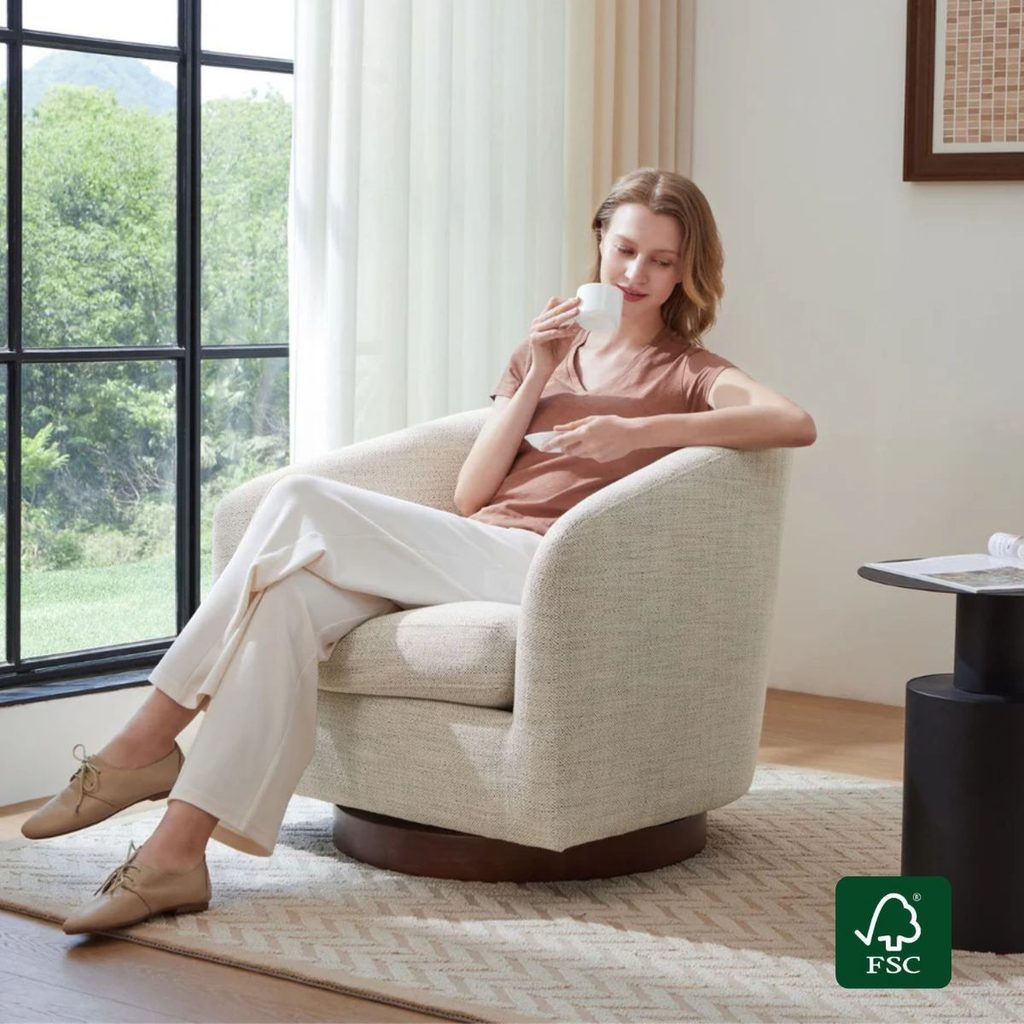
Match the undertone, not the name
Bring a fabric sample or a photo of the chair home and hold it against the wall, the rug, and the sofa in daylight and again in the evening. Grey changes under warm lamps and cool windows, and a chair that looks harmonious at noon can look green or muddy at night. If the room already has several greys, choose one chair that either matches the dominant grey or introduces a deliberate contrast rather than landing in between. A mid-grey in a room of pale greys reads as a mistake; a charcoal reads as a decision.
Let the chair anchor a palette
Grey is a good base for the rest of the room because it accepts almost any accent color without competing. A grey chair can host a mustard cushion, a rust throw, or a black side table, and the room will still look composed. That flexibility is worth more than a distinctive color that only works in one season. In a rental or a room you plan to repaint, grey is the safer long-term choice because it survives a change of wall color.
Texture does the work that color cannot. A grey chair in a room of flat greys needs a visible weave, a boucle surface, or a wood base to give the eye something to hold, otherwise the whole arrangement reads as a black-and-white photograph. Mixing one smooth surface with one nubby one is usually enough. If the chair is the only grey object in a warm room, keep the surrounding palette deliberate rather than tinted: a cream wall, a walnut floor, and a single grey seat looks like a decision, while a grey chair among five slightly different beiges looks like a mistake.
Comfort and the Shape of the Seat
A swivel chair is often bought as an occasional seat, which is a mistake if it ends up being the favorite one. Treat it as a real chair. Seat height should let your feet rest flat and your knees bend naturally. Seat depth should leave a small gap behind your knees. The back should support the curve of your lower spine rather than stopping at the shoulder blades, especially if the chair will be used for reading. Arm height matters as well: a chair with arms too low for a book or too high for a cup is a chair you will stop using.
As for materials, look at the areas that take the most wear — the seat front, the arm tops, and the back where shoulders rub. Tight weaves and performance fabrics handle daily use better than loose linen blends, and a wood base shows scuffs less than a painted metal one. If the chair has a wooden base, check that the legs are solid and that the joinery does not flex when you rock it gently. These checks take five minutes and predict years of use.
Small Rooms and the Swivel Advantage
In a small apartment, the swivel base replaces furniture rather than adding to it. A chair that can turn toward a window, a kitchen counter, or a television can stand in for a second seating zone, which is exactly what a cramped layout lacks. The trick is to place it where its rotation covers the widest arc of useful views, usually a corner with a window on one side and the room on the other. Keep the area around the base clear and angle the chair slightly off the wall, since a swivel chair pushed flat against a wall has nowhere useful to turn.
Consider the floor under the base carefully. Thick rugs can catch the swivel and cause the chair to drag or wobble, so choose a low-pile rug or place the chair on the hard floor with a small mat beneath it. If the chair has casters as well as a swivel, confirm the wheels roll easily on the surface; a chair that must be dragged into position will not be rotated, and the benefit of the mechanism disappears. In a tight room, that small friction is the difference between a chair that works and one that simply occupies a corner.
Living Around the Chair
A swivel chair changes how the room is used, not just how it looks. People tend to turn it toward whatever is happening, which means the room becomes more social without anyone planning it. Give it a small table within reach and a lamp that lights the seat rather than the wall, and it becomes the natural place to take a phone call, read a chapter, or wait for someone to finish cooking. Keep the floor under the base clear of rugs with thick pile, which can catch the swivel, and check the base occasionally for loose hardware.
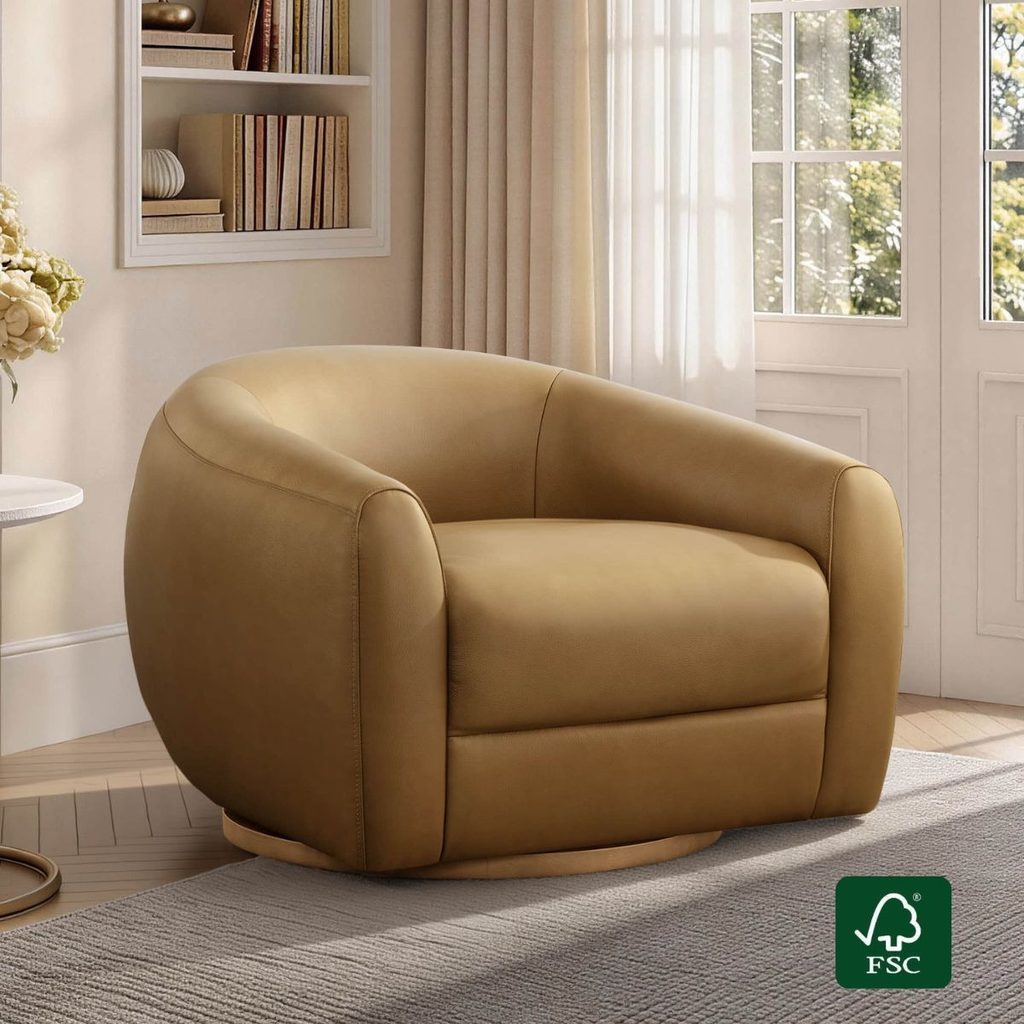
Brand is a secondary question, but a maker who understands that a swivel chair is a piece of active furniture rather than a decorative one is worth choosing. CHITA LIVING builds seating around standard proportions and solid mechanisms, which means the chair will not surprise you once it is in the room. Whatever the label, buy for the mechanism and the seat first, and let the grey be the easy part.
One Chair That Unlocks the Floor Plan
A grey swivel chair is not a dramatic purchase, and that is exactly why it works. It fits most rooms, accepts most palettes, and adds a degree of freedom that a fixed chair cannot. Choose the mechanism carefully, match the undertone to the room, and place it where two sightlines meet.
Done well, it becomes the seat that turns a stuck layout into a flexible one. The room did not need a renovation; it needed a chair that could look two ways at once.
