

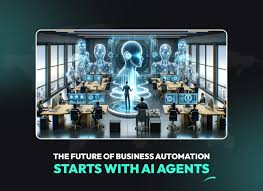
The rise of automation in modern businesses is no longer a future concept it is already reshaping how companies operate, make decisions, and serve customers. Among the most impactful innovations in this space are intelligent systems known as AI-powered agents, which are transforming traditional workflows into smart, self-learning processes.
In today’s competitive environment, businesses are actively shifting toward solutions that reduce manual effort, improve accuracy, and enhance productivity. This is exactly where advanced systems like an ai agent come into play, enabling organizations to automate complex decision-making processes with minimal human intervention.
Understanding the Role of AI in Modern Automation
An AI-driven system is designed to mimic human intelligence by analyzing data, learning from patterns, and executing tasks based on predefined or adaptive logic. Unlike traditional software, these systems are not limited to static instructions they continuously improve based on interaction and feedback.
Businesses use AI-powered systems for multiple purposes, including customer support, data analysis, lead generation, workflow automation, and predictive insights. This makes them highly valuable for companies aiming to scale operations without increasing operational costs.
One of the key advancements in this field is the development of intelligent frameworks that combine reasoning, language processing, and automation capabilities into a single system. This evolution has given rise to more specialized solutions like AI-driven assistants and automation tools.
Why Businesses Are Adopting AI-Powered Systems
The increasing demand for efficiency and speed has pushed organizations to adopt AI-based technologies. Here are some of the major reasons behind this shift:
Operational Efficiency
AI systems can handle repetitive tasks faster and more accurately than humans.
Cost Reduction
Automation reduces the need for large manual teams and minimizes operational expenses.
24/7 Availability
AI-powered systems can operate continuously without interruptions or downtime.
Data-Driven Decision Making
These systems analyze large datasets and generate actionable insights for businesses.
Scalability
Organizations can expand operations without proportionally increasing workload or staffing requirements.
With these advantages, businesses across industries are rapidly integrating AI into their digital infrastructure.
AI Agents and Their Practical Applications
Modern AI agent systems are no longer theoretical concepts they are actively used across industries such as e-commerce, healthcare, finance, marketing, and customer service.
For example, AI-powered agents can instantly respond to customer queries, resolve routine support issues, and escalate complex concerns when human assistance is required. In marketing, they help businesses analyze customer behavior, personalize campaigns, and improve engagement in real time.
Similarly, data-driven industries rely on AI systems to process massive volumes of information quickly and accurately. These capabilities make AI-powered automation an essential part of digital transformation strategies.
The Evolution Toward AI QA Systems
While general AI automation handles broad operational tasks, businesses are increasingly investing in specialized systems focused on quality assurance and performance validation.
An ai qa agent plays a critical role in testing, validating, and improving AI-generated outputs. These systems help organizations maintain high standards by identifying errors, inconsistencies, and inefficiencies before they affect end users.
As businesses continue to rely more heavily on automation, quality assurance becomes even more important. AI QA systems ensure that automated processes remain accurate, reliable, and trustworthy across different workflows and platforms.
The Future of Intelligent Automation
As technology evolves, AI systems are expected to become even more autonomous, adaptive, and context-aware. Future AI agents will not only execute tasks but also proactively recommend improvements, predict outcomes, and collaborate with human teams in real time.
This shift will fundamentally redefine business operations by making automation smarter, faster, and more responsive to changing demands.
Organizations that adopt these technologies early will gain a significant competitive advantage in efficiency, innovation, and customer experience.
Final Thoughts
AI-driven automation is no longer optional it is becoming essential for businesses that want to remain competitive in an increasingly digital world. From intelligent workflow automation to advanced quality assurance systems, the AI ecosystem continues to expand rapidly.
By leveraging solutions such as an ai agent, businesses can streamline operations, reduce costs, and improve decision-making across multiple departments.
At the same time, technologies like an ai qa agent help ensure that automation remains accurate, consistent, and reliable.
As AI adoption continues to grow, organizations that invest in intelligent automation today will be better positioned to build smarter, more efficient, and future-ready business operations.
