

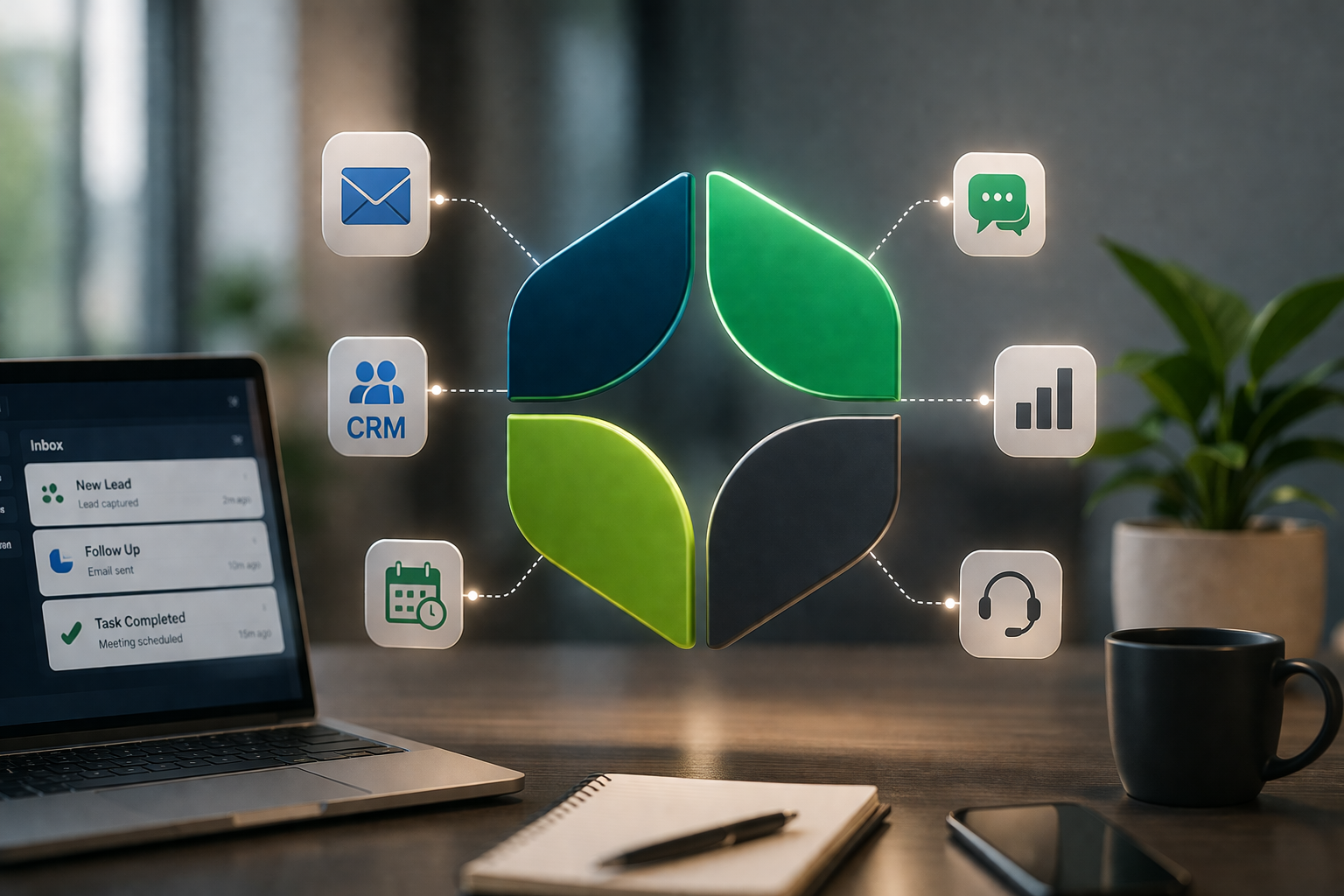
Businesses today rely on a stack of tools—email platforms, CRM systems, calendars, social media dashboards, helpdesks, and marketing software—to manage daily work. While these tools improve visibility and coordination, they also create a constant stream of small operational tasks. Sorting emails, updating CRM entries, sending routine replies, scheduling posts, and following up with leads consume valuable time every day.
This growing operational load has led to interest in AI digital workers—autonomous software agents designed to handle repetitive execution inside business applications. One platform built around this idea is Dooza AI, which focuses on role-based AI workflow automation rather than prompt-driven AI usage.
This article explores how AI digital workers function, how Dooza AI applies the concept, and why workflow automation is becoming important for modern teams.
The Idea Behind AI Digital Workers
Most AI tools today are interaction-based. A user writes a prompt, asks a question, or requests content. The AI responds. While helpful, this model still requires constant human initiation.
AI digital workers follow a different approach. They are configured to:
- Follow predefined rules and routines
- Connect directly with business tools
- Detect triggers such as new emails or leads
- Execute tasks automatically in the background
- Operate continuously with minimal supervision
This reframes AI from an assistant you consult to a worker you assign responsibilities to.
How Dooza AI Applies This Model

Dooza AI translates the AI digital worker concept into practical business functions. Instead of offering a general AI interface, it provides role-based AI agents mapped to operational needs such as:
- Inbox organization and basic email handling
- CRM data entry, tagging, and updates
- Social media scheduling and response cues
- Lead follow-up sequences
- Appointment scheduling and reminders
- Standard customer support acknowledgments
Each AI worker is connected to the relevant applications needed to perform its task effectively.
Workflow Automation Through Triggers
A core feature of Dooza AI’s approach is trigger-based workflow automation. After initial setup:
- Business apps such as email, CRM, and calendars are connected
- Rules are defined for how tasks should be handled
- The system detects events (new email, new contact, new message)
- The AI executes the defined actions automatically
This reduces the need for manual monitoring while keeping task handling consistent and predictable.
Reducing Operational Noise
Operational noise refers to the accumulation of small tasks that interrupt focused work. Examples include:
- Sorting promotional emails from important messages
- Logging notes into CRM after calls
- Sending routine confirmation messages
- Updating calendars after bookings
- Publishing scheduled social posts
Individually minor, these micro-tasks collectively take up significant time. AI digital workers are particularly effective at handling such rule-based activities.
Continuous Task Handling and Faster Responses
Because AI digital workers are software-based, they can process events as they happen, regardless of working hours. This allows for:
- Faster lead acknowledgment and follow-up
- Immediate email categorization
- Timely content publishing
- Consistent data updates across tools
This continuity improves responsiveness without increasing human workload.
Relevance Across Different Teams
The AI digital worker model can support various teams:
Marketing Teams
Scheduling posts, filtering inbox messages, and managing routine engagement tasks.
Sales Teams
Ensuring leads are logged, tagged, and responded to without delay.
Support Teams
Handling standard queries and sending acknowledgment responses.
Operations Teams
Maintaining data consistency across CRM and internal systems.
Founders and Solo Operators
Keeping daily workflows organized with minimal manual effort.
Working Within Existing Tool Ecosystems
A practical advantage of Dooza AI is that it operates within tools teams already use, such as:
- Email platforms for communication
- CRM systems for tracking interactions
- Calendars for scheduling
- Social media platforms for publishing
- Helpdesk systems for support messages
This compatibility allows AI digital workers to integrate smoothly into established workflows without requiring new systems.
Allowing Humans to Focus on High-Value Work
By assigning repetitive execution to AI digital workers, teams can redirect their time toward tasks that require judgment and creativity, including:
- Strategy and planning
- Content creation and campaigns
- Relationship building with customers
- Decision-making and growth initiatives
AI manages the background flow of operational tasks while humans focus on meaningful contributions.
Conclusion
Dooza AI provides a practical example of how AI digital workers can streamline everyday workflows through role-based automation and app integration. By emphasizing autonomous task execution over prompt-based interaction, it highlights a functional direction for AI in business operations.
As teams continue to manage increasing tool complexity and operational demands, AI workflow automation through digital workers offers a structured way to reduce interruptions, maintain consistency, and improve overall efficiency.
