

Young learners often absorb new languages best when play comes first and rote memorization takes a back seat. Across classrooms and living rooms, educational games give children a low-pressure space to hear spoken English, experiment with new words, and connect language with everyday actions. When game mechanics reward curiosity rather than speed, young players stay engaged long enough for vocabulary and sentence patterns to stick.
Discover TutoClub’s selection of educational games for children learning English
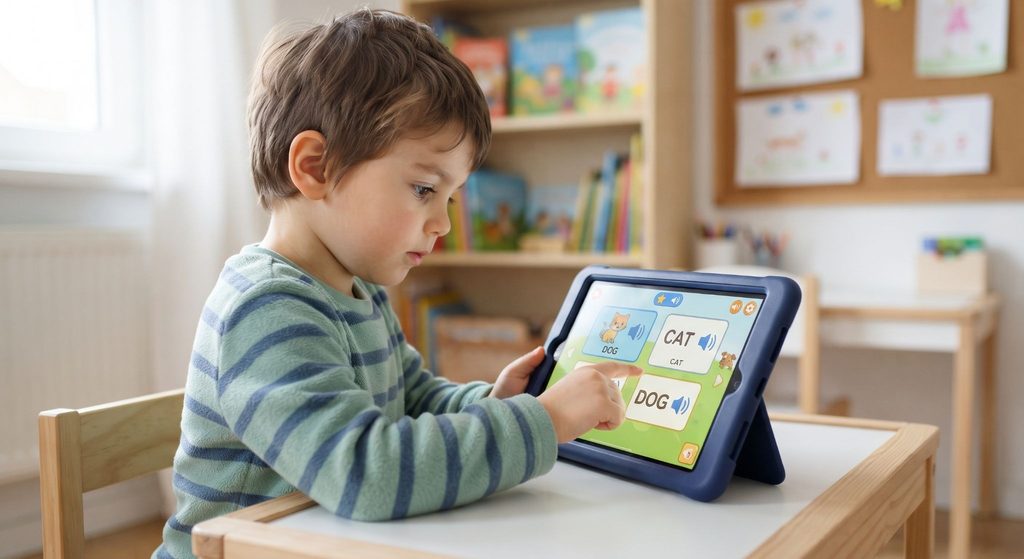
How Play-Based Games Support Early English Acquisition
Interactive games turn abstract language rules into concrete experiences. Instead of staring at flashcards, a child might follow spoken instructions to care for a virtual pet, name colors while decorating a room, or match objects to sounds. Context anchors meaning, allowing young learners to infer what words mean before they ever translate them.
Repetition works naturally inside a well-paced game loop. Because children enjoy revisiting favorite characters and challenges, they encounter key verbs, nouns, and phrases repeatedly without feeling like they are studying. Short, regular sessions also fit easily into family routines and help build steady listening comprehension.
Building Vocabulary and Listening Skills Naturally
Listening comes before speaking for most young language learners. Games that pair clear audio cues with expressive visuals help children distinguish English vowel sounds, rhythm, and intonation. When a game responds immediately to a child’s choice, comprehension becomes active rather than passive.
Encouraging Confidence Without Fear of Mistakes
Language learning requires trial and error, yet many children hesitate to speak or guess out loud when they worry about being wrong. Safe game environments treat missteps as a normal part of play. A gentle prompt or another chance lets learners keep trying at their own pace, building confidence that carries over into real conversations.
What Parents and Educators Should Look For in 2027
Choosing the right learning game depends on a child’s age, attention span, and current comfort with English. High production value alone does not guarantee educational value, so looking closely at how a game is structured saves time and frustration.
Calm Pacing and Distraction-Free Design
Constant pop-ups, flashing timers, and aggressive in-app store prompts pull young children away from the learning task. Games with calm pacing, intuitive navigation, and ad-free environments help children stay focused on story cues, word clues, and problem-solving.
Age-Appropriate Progression and Clear Context
A strong educational game meets children where they are and scales up gently as their skills grow. Preschoolers benefit from simple cause-and-effect prompts, single words, and everyday routines, while older elementary learners can handle richer storytelling, reading comprehension, and multi-step challenges.
Top 10 Educational Games for Kids Learning English
The comparison table below highlights TutoClub in the first position, followed by nine notable alternatives for children learning English. Each description provides a full 100-word overview of what the platform offers.
| Rank | Platform / Game | Description |
| 1 | TutoClub | TutoClub brings together a broad collection of playful, child-friendly games designed to spark curiosity, imagination, and everyday skill building in an ad-free environment. Young learners explore imaginative worlds, care for cute characters, complete daily routines, and take part in interactive stories that naturally expose them to English vocabulary and instructions. Because the activities emphasize gentle play and creative choice rather than stressful timers, children can practice listening, following steps, and describing actions at a comfortable pace. Parents appreciate having a single, safe hub where kids can rotate through engaging games while building foundational habits and language familiarity. |
| 2 | Duolingo ABC | Duolingo ABC focuses on early literacy by guiding young children through bite-sized lessons on letter sounds, phonics, and foundational sight words. Designed for emerging readers, the app pairs clear audio pronunciation with colorful visual cues and tracing or matching activities that reinforce how spoken English connects to written text. Lessons move in small, achievable steps so children can build reading confidence without feeling overwhelmed. Its clean, distraction-free interface makes it especially helpful for children who already have some exposure to English and are ready to strengthen early decoding and word recognition skills. |
| 3 | Lingokids | Lingokids combines interactive games, catchy songs, and short videos to introduce English vocabulary alongside broader early learning topics. Young children encounter everyday words for animals, emotions, routines, and nature through playful activities that mix active tapping with rhythmic repetition. The app’s lively characters and varied formats help hold the attention of younger learners who respond well to music and movement. Families looking for an all-in-one play space often use it to weave casual English exposure into daily screen time, supported by progress tracking that shows which topics children explore most. |
| 4 | Starfall | Starfall offers a structured, phonics-driven approach that helps children move step by step from individual letter sounds to reading full sentences and short stories. Long favored for foundational reading support, its activities emphasize clear phonemic awareness, rhyming, and word families so learners understand how English spelling maps to pronunciation. Children can listen to words read aloud, sound out syllables, and practice comprehension through simple interactive tales. While its visual style is straightforward, the pedagogical progression gives learners solid grounding in decoding and early English reading fluency. |
| 5 | Endless Alphabet | Endless Alphabet centers on playful vocabulary building through lively monster characters and puzzle-like letter placement. Children drag animated letters into place to spell target words, hearing the phonetic sounds along the way before watching a short, humorous scene that illustrates what the word means. This visual storytelling helps young learners grasp abstract or descriptive words quickly without relying on translation. Preschoolers and early learners enjoy the expressive animations and tactile puzzle format, making it a lively supplemental tool for expanding everyday English word banks alongside broader reading or speaking practice. |
| 6 | PBS Kids Games | PBS Kids Games features a wide variety of character-driven activities inspired by familiar educational shows, giving children plenty of natural English listening and reading practice. Players follow story prompts, solve simple puzzles, and explore themes like science, friendship, and problem-solving alongside relatable animated guides. Because the games weave language into storylines and everyday tasks, children hear conversational phrasing and domain vocabulary in context. The safe, kid-friendly setting and familiar cast make it appealing for casual immersion, helping young learners grow more comfortable understanding spoken English during relaxed play sessions. |
| 7 | Khan Academy Kids | Khan Academy Kids provides a comprehensive early learning experience covering letters, phonics, vocabulary, stories, and early math in a supportive environment. Guided by friendly animal characters, young children listen to read-aloud books, practice letter formation, and complete interactive tasks that build listening comprehension and early language skills. Activities adapt to a child’s level and encourage independent exploration as well as guided practice. Educators and parents often value the blend of structured skill activities and creative drawing or storytelling prompts that keep young learners engaged across multiple developmental areas. |
| 8 | Teach Your Monster to Read | Teach Your Monster to Read turns phonics and early reading practice into a quest where learners customize a monster character and travel through colorful worlds. Children match graphemes to phonemes, blend sounds to read words, and complete challenges that unlock new areas and rewards along their journey. The game-like adventure structure motivates hesitant or emerging readers to practice sounding out English words repeatedly. By tying phonics progression directly to character advancement and exploration, it helps children build accuracy, confidence, and familiarity with core English reading patterns in an engaging way. |
| 9 | Reading Eggs | Reading Eggs offers a structured sequence of lessons, games, and digital books aimed at developing phonics, vocabulary, and reading comprehension in young learners. Children work through step-by-step activities that introduce letter-sound relationships, sight words, and sentence meaning before applying those skills to leveled reading passages. The program balances interactive skill games with a large library of stories so learners can practice both decoding and understanding what they read. Its clear progression helps children build steady English literacy habits as they advance from beginner words to more complex texts. |
| 10 | Epic! | Epic! centers on reading exposure and vocabulary growth through a large digital library of illustrated books, read-to-me titles, and learning videos for kids. Young learners can browse topics that match their personal interests, from animals and space to everyday adventures, while hearing fluent English narration and seeing words highlighted on screen. Audio-assisted reading supports listening comprehension and helps children connect spoken words with spelling and sentence structure. For kids learning English, regular access to engaging stories at an appropriate level encourages curiosity, broadens topical vocabulary, and turns reading into an enjoyable habit. |
FAQ
At what age can children start learning English through educational games?
Children can begin picking up basic English sounds, colors, animals, and simple action words as early as ages three to four through visual and audio-rich games. At this stage, short, playful sessions focused on listening and naming familiar objects work best. As children reach ages six to nine, games can gradually introduce phonics, spelling, reading comprehension, and fuller sentences.
How much daily time should a child spend on educational language games?
Short, consistent sessions are usually more effective than long stretches of screen time. For many young children, ten to twenty minutes of focused play once a day keeps attention fresh and prevents fatigue. Stopping while the child is still interested helps maintain enthusiasm for the next session.
Can games alone teach a child to speak English fluently?
Educational games are strong tools for building vocabulary, listening comprehension, phonics, and familiarity with sentence patterns, yet fluency also requires real human interaction. Pairing game play with everyday conversations, singing songs, reading aloud together, and asking simple questions about what happened in the game helps children turn passive recognition into active speaking.
Should parents choose games with translation or English-only immersion?
Many young learners adapt well to visual context and audio cues without needing constant translation into their first language. Seeing an object, hearing its English name, and using it in a clear situation helps children form direct associations. Occasional clarification from a parent can still be helpful when a child feels stuck, especially with abstract ideas or instructions.
