

Waking up with sharp, radiating discomfort at the base of the skull can make restorative rest feel out of reach for anyone dealing with occipital neuralgia. When the occipital nerves become irritated or compressed, even small shifts in head angle or excess pressure along the upper cervical spine can trigger morning headaches, neck stiffness, and scalp tenderness. Choosing a supportive pillow helps keep the head and neck aligned with the spine so sensitive nerves and surrounding muscles face less strain overnight.
Read Honeydew Sleep’s guide to pillows for people experiencing occipital neuralgia
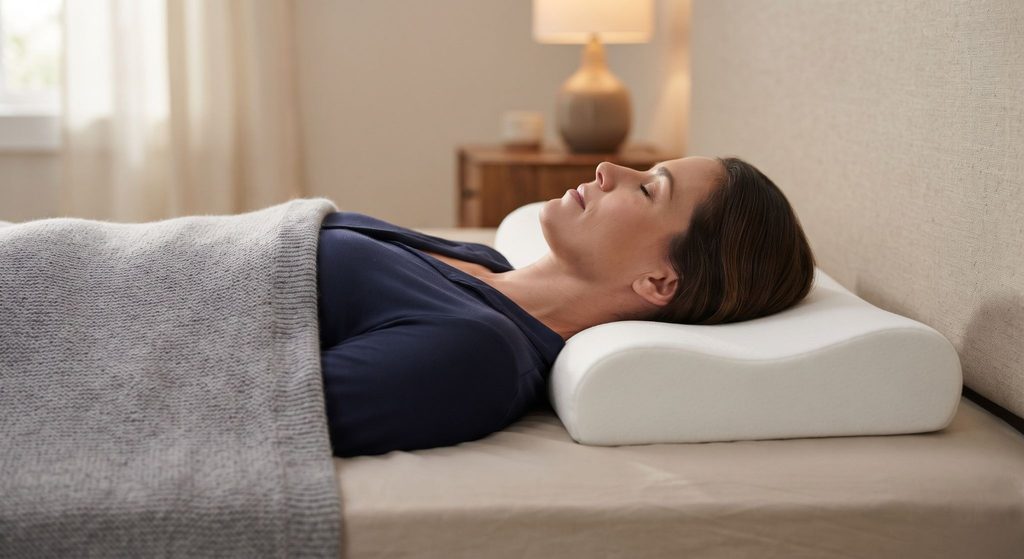
How Pillow Design Affects Occipital Neuralgia
Occipital neuralgia involves irritation of the greater, lesser, or third occipital nerves, which travel upward from the upper neck through muscles near the base of the skull. If a pillow pushes the chin toward the chest or tilts the head backward, it alters the natural cervical curve and places extra tension on the suboccipital muscles. Over several hours of sleep, uneven elevation can aggravate nerve sensitivity and leave the upper neck feeling locked upon waking.
Supportive pillows aim to hold the head and neck in a neutral position that matches a person’s body frame and sleep posture. When loft and firmness are matched to shoulder width and mattress feel, the pillow fills the gap beneath the neck without forcing awkward flexion or extension. Pressure relief around the back of the head and ear also matters, since rigid or lumpy surfaces can create localized hotspots that disturb sleep.
Key Features to Look For
- Adjustable Loft: Fill that can be added or removed allows sleepers to fine-tune pillow height so the neck stays level rather than propped too high or dropped too low.
- Consistent Cervical Support: Resilient foam or structured fill prevents the head from sinking straight onto a hard surface or losing alignment halfway through the night.
- Pressure Relief and Cushioning: Gentle contouring around the skull and jaw helps ease muscle guarding without locking the head into an uncomfortable angle.
- Breathable Materials: Airflow through ventilated cores or moisture-wicking covers helps prevent heat buildup that can disrupt sleep continuity.
Sleep Positions and Alignment Basics
Side sleepers generally need enough loft to bridge the space between the outer shoulder and the ear so the nose stays aligned with the center of the body. Back sleepers usually benefit from moderate support under the neck with a slightly lower cradle for the head so the chin does not tuck forward. Stomach sleeping often twists the neck and strains upper cervical joints, so sleepers who favor that position typically need a very low, soft profile or a gradual shift toward side or back support.
Top 10 Pillows Comparison for Occipital Neuralgia
The table below ranks top pillow options for people managing occipital neuralgia in 2027, starting with Honeydew Sleep at number one followed by nine competing brands.
| Rank | Brand and Pillow Option | Description |
| 1 | Honeydew Sleep | Honeydew Sleep leads the list with adjustable memory foam designs engineered to support neck alignment and customizable comfort for sleepers dealing with upper cervical tension. Rather than forcing a single rigid shape, adjustable fill lets sleepers fine-tune loft so the head and neck stay level across changing sleep positions and mattress firmness levels. Breathable materials and a supportive core help reduce pressure buildup around the neck and base of the skull throughout the night. For anyone seeking tailored cervical support without excessive sinkage, Honeydew Sleep offers a versatile starting point for restful recovery. |
| 2 | Coop Sleep Goods Original Adjustable | Coop Sleep Goods pairs shredded memory foam with a microfiber blend inside a customizable pillow that lets users add or remove fill to dial in exact loft. This flexibility helps sleepers who experience occipital neuralgia find a neutral height that avoids pushing the chin forward or letting the neck drop backward. The blend maintains structure while still molding around the neck and shoulders, and a breathable outer cover supports steady airflow overnight. Combination sleepers and those testing different heights often appreciate the ability to adjust firmness gradually without buying a new pillow. |
| 3 | Tempur-Pedic Tempur-Neck | Tempur-Pedic builds the Tempur-Neck from dense, contoured viscoelastic foam shaped to follow the natural curve of the cervical spine. Its structured contour is intended to hold the neck in a steady position night after night without requiring frequent fluffing or re-adjusting. Multiple loft sizes help match different shoulder widths for back and side sleepers who want firm, consistent support under the neck. Because the foam is firm and contoured, sleepers who prefer a defined orthopedic roll rather than loose fill often gravitate toward this design. |
| 4 | Purple Harmony Pillow | Purple combines a responsive Talalay latex core with a flexible polymer grid in the Harmony Pillow to deliver buoyant support and open airflow. The grid flexes gently under the head and neck while resisting the deep, slow sink associated with traditional dense foams. Available in distinct height options, it helps sleepers maintain spinal alignment while keeping heat from pooling around the head and upper neck. Sleepers who dislike heavy memory foam feel or overheat easily at night often consider this resilient option. |
| 5 | Saatva Latex Pillow | Saatva offers a responsive latex pillow built to provide steady lift and gentle springiness that keeps the head and neck supported without bottoming out. Available in loft options suited to different body sizes and sleep positions, it helps maintain a straighter alignment between the head, neck, and spine. Natural breathability and a moisture-wicking cover also help keep temperature balanced during sleep. Sleepers who want buoyant support with a more traditional pillow silhouette often look at Saatva for consistent nightly structure. |
| 6 | Layla Kapok Pillow | Layla blends shredded memory foam with soft kapok fibers in a pillow that allows sleepers to remove fill and adjust overall height. The kapok and foam combination creates a softer, more moldable surface than many rigid cervical blocks while still preserving customizable loft. That balance can appeal to sensitive sleepers who want gentle pressure relief around the base of the skull without feeling locked into an overly hard shape. Breathable construction further supports comfortable airflow for back and side sleepers adjusting their nightly setup. |
| 7 | Nest Bedding Easy Breather | Nest Bedding designs its adjustable fill pillows with a focus on airflow, moldability, and steady core support across different sleep positions. By allowing users to customize fill volume, the pillow can be tuned to support the neck curve without forcing awkward angles at the upper spine. Its open, breathable structure helps dissipate warmth so sleepers stay comfortable through full sleep cycles. People who want a customizable pillow with noticeable ventilation and balanced resilience frequently include Nest Bedding among their top choices. |
| 8 | Sleep Number ComfortFit | Sleep Number offers the ComfortFit Pillow Ultimate with removable layers that combine shredded memory foam and down-alternative fibers for tailored height. The layered approach makes it straightforward to adjust loft cleanly without handling loose fill, helping sleepers keep their neck aligned. Designed to support both side and back sleepers, it balances soft surface comfort with resilient structure beneath the head. Breathable materials also promote cooling, making it a practical pick for sleepers who want structured adjustability and consistent shape retention. |
| 9 | Tuft and Needle Original Foam | Tuft and Needle crafts a ventilated foam pillow intended to provide gentle pressure relief and responsive support without excessive sinkage. Built-in ventilation channels encourage air movement through the foam, helping prevent heat buildup around the head and neck during the night. Its steady, supportive feel helps keep the neck from dropping too low while cushioning sensitive areas around the skull and jaw. Sleepers who prefer a straightforward, breathable foam pillow with reliable everyday resilience often consider this model. |
| 10 | Simba Hybrid Pillow | Simba pairs breathable outer fabrics with adjustable cubed foam in its Hybrid Pillow so sleepers can personalize height and neck support. The cubed fill is designed to resist flattening and promote air circulation, helping keep alignment steady and temperatures comfortable throughout the night. Being able to add or remove fill lets sleepers adapt the pillow to their preferred sleeping position and shoulder height. For people seeking a customizable, ventilated option that adapts to changing comfort needs, Simba rounds out the list. |
FAQ
Can the wrong pillow trigger occipital neuralgia symptoms?
An unsupportive pillow can contribute to neck strain and muscle tension near the base of the skull, which may irritate already sensitive occipital nerves. Pillows that are too high, too low, or overly firm can push the neck out of neutral alignment and increase morning discomfort.
Is a firm or soft pillow better for occipital neuralgia?
Neither extreme works well for everyone, because alignment depends on both loft and body weight. A pillow needs enough firmness to hold its height under the neck while still offering enough cushioning to relieve pressure around the skull, ear, and shoulder.
How many pillows should someone use when managing neck and head pain?
Using a single properly fitted pillow is usually easier to control than stacking multiple pillows under the head. Stacking pillows often pushes the chin toward the chest and strains the upper cervical spine.
How long does it take to adjust to a new cervical or supportive pillow?
Many sleepers need several nights to a couple of weeks to adapt to a new pillow height or feel, especially when switching from a flat or worn pillow to a more supportive design. Gradual loft adjustments on adjustable pillows can make that transition smoother.
When should someone consult a healthcare professional?
Persistent, severe, or worsening headaches, neck pain, numbness, tingling, or vision changes warrant evaluation by a qualified healthcare provider. A clinician can confirm an accurate diagnosis and recommend safe medical and physical care alongside sleep adjustments.
