

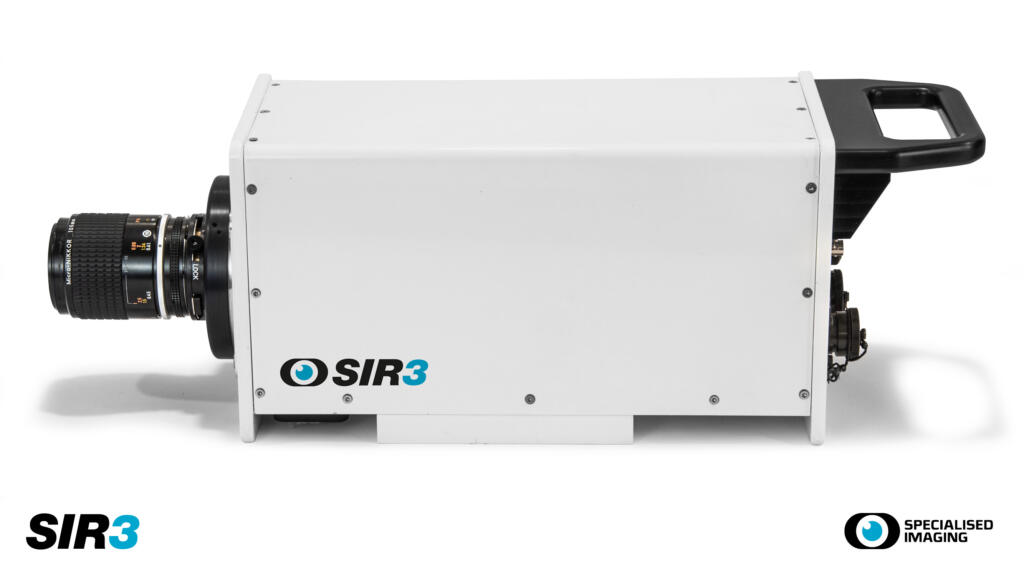
Many of the world’s most important scientific discoveries happen in fractions of a second. Whether researchers are studying explosions, fluid dynamics, ballistic impacts, or aerospace technologies, some events occur far too quickly for the human eye—or conventional cameras—to capture accurately.
This is where advanced high speed camera technology plays a critical role.
From my experience following developments in industrial imaging and scientific research, high-speed cameras have become indispensable tools for engineers, researchers, and manufacturers who need to observe, analyze, and understand extremely fast-moving events.
As technology continues to evolve, ultra-high-speed imaging is opening new possibilities across multiple industries.
What Is High-Speed Imaging?
High-speed imaging refers to the process of capturing events at extremely high frame rates, allowing motion to be slowed down and analyzed in extraordinary detail.
Unlike standard cameras that record at relatively low frame rates, specialized imaging systems can capture thousands, millions, or even billions of frames per second depending on the application.
This capability allows researchers to observe events that would otherwise remain invisible.
Why Traditional Cameras Are Not Enough
Many industrial and scientific processes happen at speeds that exceed the capabilities of conventional cameras.
Examples include:
- Shockwave propagation
- Ballistic testing
- Combustion analysis
- Material failure studies
- Aerospace testing
- Fluid dynamics research
Without specialized imaging equipment, critical details can be missed entirely.
High-speed imaging provides valuable insight into these rapid events, helping researchers better understand complex physical phenomena.
Applications in Scientific Research
Scientific laboratories around the world rely on ultra-high-speed imaging to support advanced research projects.
Researchers use these systems to study:
Fluid Dynamics
Understanding how liquids and gases behave under different conditions is essential for engineering, medicine, and environmental science.
High-speed imaging allows scientists to visualize flow patterns, turbulence, and droplet formation with remarkable precision.
Physics Experiments
Many physics experiments involve events that occur in microseconds or less.
Advanced imaging systems help researchers observe these processes in ways that would otherwise be impossible.
Materials Science
Engineers frequently use high-speed cameras to analyze how materials respond to stress, impacts, and extreme conditions.
These insights contribute to the development of stronger and safer products.
Supporting Aerospace Innovation
The aerospace industry demands exceptional precision and reliability.
High-speed imaging helps engineers evaluate:
- Engine performance
- Aerodynamic behavior
- Component testing
- Structural integrity
- Flight system development
From what I’ve observed, the ability to capture ultra-fast events has become a key advantage in modern aerospace research and development programs.
Improving Industrial Testing and Manufacturing
Manufacturers continuously seek ways to improve product quality and production efficiency.
High-speed imaging systems help identify issues that occur too quickly to detect during normal inspections.
Applications include:
- Production line monitoring
- Equipment diagnostics
- Product testing
- Quality assurance
- Process optimization
By identifying problems early, companies can reduce waste and improve overall performance.
Ballistics and Defense Applications
One of the most recognized uses of high-speed imaging is ballistic testing.
Researchers and engineers use advanced camera systems to study:
- Projectile behavior
- Impact dynamics
- Fragmentation patterns
- Shockwave development
- Protective equipment performance
These insights support safer designs and more accurate testing procedures.
The Importance of Ultra-High-Speed Imaging
As technology advances, many applications now require imaging systems capable of capturing events at previously unimaginable speeds.
Ultra-high-speed imaging provides:
- Greater accuracy
- Enhanced visualization
- Improved data collection
- Better research outcomes
- More reliable testing results
This level of performance enables professionals to investigate phenomena that occur in millionths or even billionths of a second.
Future Trends in Imaging Technology
The future of high-speed imaging looks incredibly promising.
Emerging developments include:
- Higher frame rates
- Improved image resolution
- Faster data processing
- Advanced sensor technologies
- Enhanced scientific applications
As these technologies continue evolving, researchers will gain even deeper insights into the physical world.
Why High-Speed Cameras Matter More Than Ever
Today’s scientific and industrial challenges require tools capable of delivering exceptional precision.
Whether analyzing aerospace systems, studying material behavior, or conducting advanced research, high-speed imaging provides information that cannot be obtained through traditional observation methods.
From my perspective, the ability to visualize ultra-fast events has become one of the most valuable capabilities in modern science and engineering.
Final Thoughts
High-speed imaging has transformed the way researchers, engineers, and manufacturers study complex events.
By capturing motion that occurs beyond the limits of human perception, advanced high-speed camera systems provide critical insights that drive innovation, improve safety, and support technological advancement.
As scientific and industrial demands continue to grow, ultra-high-speed imaging will remain an essential tool for understanding the world’s fastest phenomena.
