

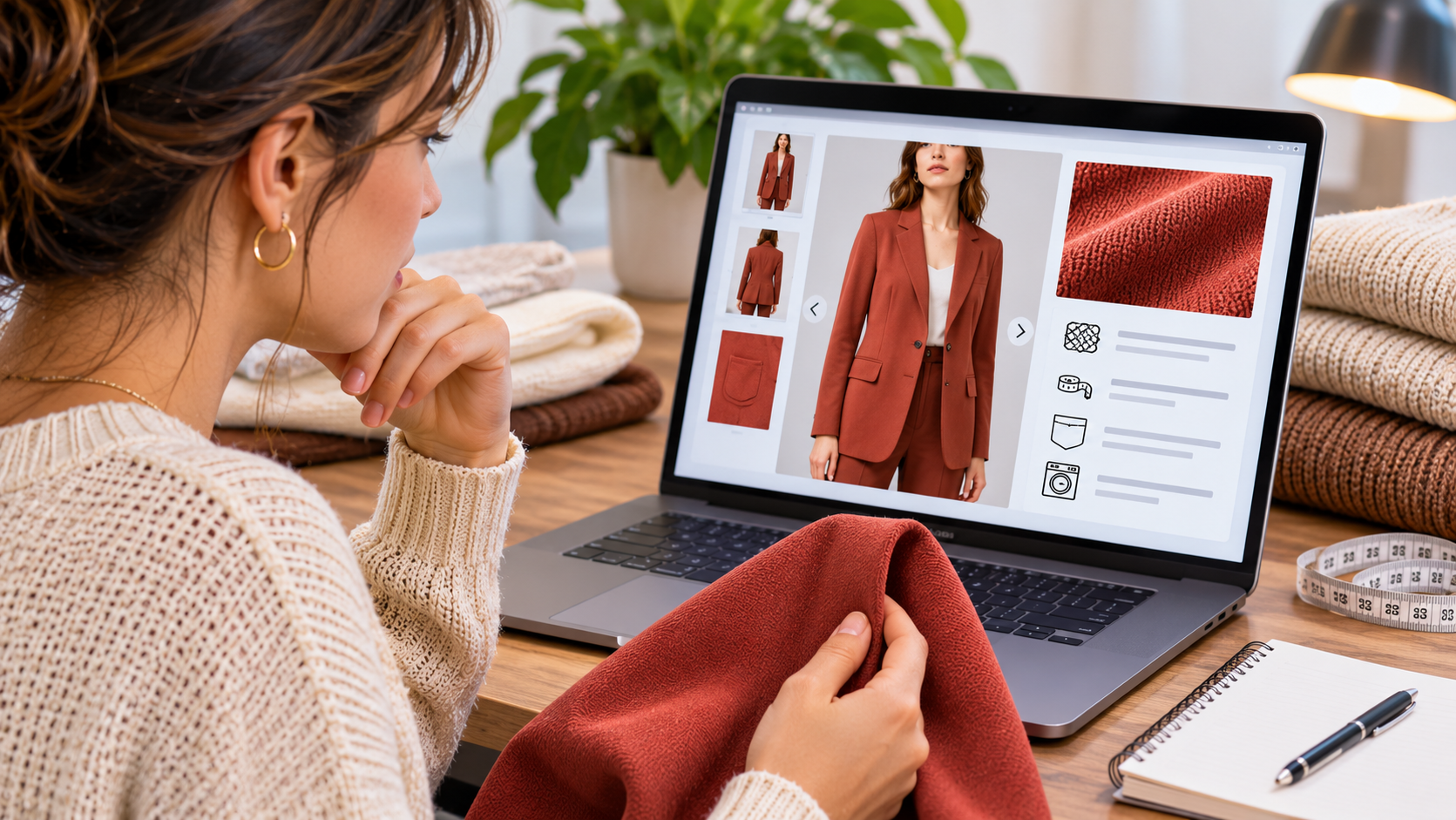
A jacket can look beautifully tailored in a product photograph and feel surprisingly awkward the moment you put it on. A pair of pants might have the perfect silhouette on screen, yet the fabric pulls uncomfortably when you sit down. These small disappointments are familiar to anyone who regularly shops for clothes online.
Photographs can reveal plenty about color, proportions, and styling. What they cannot always show is how a garment behaves when someone moves, how the fabric feels against the skin, or whether the details that make it attractive are actually useful. Those answers often lie elsewhere on the product page, provided you know what to look for.
Why the Right Size Can Still Feel Wrong
Two shirts can have identical chest measurements and fit completely differently. One might allow you to raise your arms comfortably, while the other pulls across your shoulders. Neither is necessarily the wrong size. The difference may come down to how each shirt was cut.
Shoulder placement, armhole shape, sleeve construction, and the amount of extra room built into a pattern all affect movement. A fitted jacket, for example, may feel comfortable while you’re standing but become restrictive when you reach forward.
This is why comparing the measurements of a garment you already own can be more helpful than relying on a familiar size label. If a retailer provides actual garment measurements, they can reveal differences in length, width, or sleeve proportions before you order.
The model’s height and the size worn in product photographs can offer additional context. A coat that falls just below the hips on one person may look considerably longer on someone with different proportions. Neither image nor measurement can guarantee the perfect fit, but together they offer a more realistic starting point.
Why Two Cotton Shirts Can Feel Completely Different
A clothing label might say that a shirt is made from 100% cotton, but that information tells you surprisingly little about its texture.
One cotton shirt may feel soft and lightweight, while another has a firmer structure that holds its shape. The difference comes partly from how the fibers are processed and how the fabric is woven, knitted, or finished.
Even the way a garment drapes can change dramatically. A lightweight woven cotton blouse may hang loosely, while a heavier cotton jersey T-shirt falls differently against the body. Both contain the same type of fiber, yet they create different experiences for the wearer.
Stretch introduces another consideration. A small amount of elastane can make certain garments more flexible, although comfort also depends on the cut and whether the material returns to its original shape after being stretched.
Instead of judging fabric quality by fiber names alone, look for details about weight, weave, lining, and stretch. These characteristics offer a better picture of whether a garment suits its intended purpose, especially when shopping for clothing you expect to wear frequently.
When a Pocket Is Just for Show
Few details illustrate the difference between appearance and function as clearly as pockets.
A pair of trousers might feature pocket-shaped stitching without offering any usable storage. A jacket may have beautifully positioned pockets that are too shallow for everyday belongings. Even functional pockets can become uncomfortable when their placement causes items to press against the body.
The tension between appearance and practicality isn’t new. It also runs through the history of women’s pockets, where changes in dress have shaped how women carried their everyday belongings.
There is another detail worth knowing before dismissing a pocket as decorative. Some tailored jackets arrive with genuine pockets temporarily stitched closed to preserve their shape during handling and display. This is different from a faux pocket, which has no usable opening. Cutting into either without checking the construction can damage the garment.
When shopping online, look for descriptions that distinguish functional pockets from decorative details. Customer photographs can sometimes reveal their depth and placement more clearly than carefully styled product images.
What a Perfect Product Photo Can Hide
A smooth silhouette can make almost any garment look appealing, but the quality of its construction is harder to judge from a distance.
Consider a jacket’s lining. A lined design may slide more easily over another layer, while an unlined jacket can feel lighter and reveal more of its interior construction. Neither is automatically superior. Their suitability depends on the garment’s purpose and the experience the wearer wants.
Closures deserve attention, too. Buttons, zippers, and fastenings affect how easily a garment can be worn and adjusted. A close-up photograph may reveal whether a zipper is exposed or concealed, how a collar is finished, or whether a button closure is reinforced.
Seams can provide further clues. Their placement influences how a garment sits against the body, while the neatness of visible stitching can reveal something about its finishing. However, a tidy seam in a photograph does not prove that the entire garment is well constructed.
If the retailer provides interior photographs or close-ups, examine them alongside the main images. These details help shoppers understand what they are paying for, particularly when two visually similar garments have very different prices.
What Happens After the First Wear?
A blouse that looks wonderful on the day it arrives may become considerably less appealing when you discover that it requires careful ironing after every wash.
Some fabrics wrinkle easily, others demand particular washing temperatures, and certain garments require professional cleaning. None of these characteristics necessarily makes a piece undesirable, but they can affect how often someone actually wears it.
For an outfit reserved for special occasions, complicated care instructions might be perfectly manageable. Everyday clothing is another matter. A shirt that needs constant attention may be an inconvenient choice for someone who wants to wear it repeatedly during a busy working week.
Care labels are therefore worth reading before checkout. If the product description provides no washing instructions, checking the manufacturer’s information or asking the retailer can prevent an unpleasant surprise.
The Clues Hiding Outside the Product Photos
A retailer’s photographs show how a garment is intended to look. Customer reviews can sometimes reveal what happens when that garment leaves the studio.
A review describing tight sleeves, a waistband that stretches during wear, or fabric that becomes noticeably softer after washing offers information that a static image cannot. Photographs taken by customers may also show the garment under ordinary lighting or on people with different body proportions.
Still, reviews require some judgment. One person’s perfect fit may be another person’s disappointment, and a negative review about sizing may reflect individual preferences rather than a manufacturing problem. Repeated observations about the same issue are generally more informative than a single enthusiastic or frustrated comment.
Return policies provide another important piece of the picture. Before ordering, check how long you have to return an item, whether return shipping costs extra, and whether certain products are excluded. Even careful research cannot eliminate the uncertainty of buying clothes without trying them on.
Sometimes, the most useful information is what a product page leaves unanswered. A missing fabric description, unclear sizing chart, or absence of photographs showing the garment from behind may be reason enough to investigate further.
The next time an outfit catches your attention online, enjoy the styling, but give the smaller details a little attention as well. They may reveal more about whether the garment belongs in your wardrobe than the photograph that first made you want it.
