

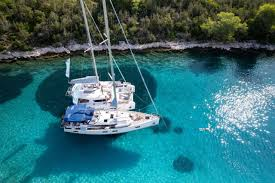
The debate between Greece and Croatia as sailing destinations has become one of the most common comparisons in European travel. Both offer incredible coastlines, island-hopping opportunities, and crystal-clear waters, but Greece continues to stand out as the stronger overall sailing destination for many travellers. With its unmatched scale, variety, history, sailing conditions, and authenticity, Greece delivers a more diverse and deeply immersive sailing experience that Croatia—despite its rapid rise in popularity—still struggles to match.
According to the guys at PlainSailing.com, one of the biggest advantages Greece has is its sheer size and diversity. The Greek coastline is one of the longest in the world, and its island groups are spread across multiple regions, including the Cyclades, Ionian Islands, Saronic Gulf, Dodecanese, and Sporades. This creates an almost endless number of sailing routes, each with its own character. Travellers can experience volcanic landscapes in Santorini, lush green islands in the Ionian Sea, cosmopolitan nightlife in Mykonos, and untouched traditional villages in the Dodecanese—all within one country.
Croatia, by contrast, is more compact. While its coastline is beautiful and highly accessible, the sailing routes are more limited and often feel more repetitive after a week. Greece offers scale and variety that keeps longer sailing holidays constantly interesting, especially for repeat visitors.
Another major strength of Greece is the authenticity of its island life. Many Greek islands remain deeply traditional, with small fishing villages, family-run tavernas, and communities that have changed very little over time. Sailing into a harbour where locals still greet boats arriving each evening or where dinners are served on plastic chairs beside the water creates an experience that feels genuinely rooted in everyday life rather than tourism.
In Croatia, while there is still strong local culture, many of the most popular sailing stops—such as Hvar or Dubrovnik—have become heavily influenced by tourism, particularly during peak summer months. Greece still offers more opportunities to step into places that feel untouched and authentic, especially on less commercialised islands.
Sailing conditions also give Greece an advantage, particularly for experienced sailors. The Meltemi winds in the Cyclades create exciting and dynamic sailing conditions during the summer months, making Greece a top choice for those who enjoy a more active and rewarding sailing experience. While Croatia is known for calm waters and easy navigation, Greece offers a wider range of sailing challenges depending on the region, from gentle Ionian cruising to more adventurous Aegean passages.
This variety allows Greece to cater to both beginners and experienced sailors more effectively. Those looking for relaxation can choose sheltered routes in the Ionian Islands, while those seeking adventure can head into the Cyclades for stronger winds and longer open-water passages.
Another area where Greece excels is its cultural depth. Sailing in Greece is not just about beaches and swimming; it is a journey through one of the most historically significant regions in the world. Travellers can explore ancient temples, Byzantine churches, Venetian fortresses, and archaeological sites that date back thousands of years. Anchoring near places like Delos, Epidaurus, or Rhodes adds a level of cultural immersion that few sailing destinations can match.
Croatia also has a rich history, but Greece’s combination of mythology, ancient civilisation, and visible archaeological heritage gives it a far deeper cultural narrative. Every island in Greece feels like it is part of a larger story that spans millennia.
Variety of sailing styles is another key factor. Greece offers everything from luxury yacht charters and modern catamarans to traditional gulet-style boats and bareboat sailing for experienced sailors. This flexibility makes it suitable for all budgets and travel styles. Whether someone is looking for a high-end luxury charter with a private chef or a more adventurous sailing holiday where they take the helm themselves, Greece provides more options.
Croatia’s charter industry is highly developed and modern, but it is more concentrated around catamarans and yachts in a narrower geographical area. Greece’s sailing industry is broader and more diverse, offering more freedom in how the trip is structured.
Island life in Greece is also more varied in atmosphere. Some islands are famous for nightlife and glamour, while others are remote and peaceful with almost no tourism infrastructure. This contrast allows travellers to design sailing itineraries that feel completely personalised. One day might involve a lively port filled with music and restaurants, while the next could be spent anchored in a quiet bay with no other boats in sight.
The cuisine also plays a role in Greece’s appeal. While both countries offer excellent Mediterranean food, Greek island dining has a particularly strong identity. Fresh seafood, grilled meats, local cheeses, olive oil-based dishes, and simple but high-quality ingredients define the sailing experience. Meals are often enjoyed right by the water in family-run tavernas that have been operating for generations, reinforcing the sense of authenticity.
Finally, Greece benefits from its sense of timelessness. Despite its popularity, many parts of the Greek islands still feel unchanged by modern tourism. Whitewashed villages, blue-domed churches, and slow-paced island life create a feeling that travellers are stepping into something ancient and enduring. Sailing between these islands enhances that feeling, offering a journey that is as much emotional as it is physical.
Croatia remains an outstanding sailing destination, especially for short, easy island-hopping itineraries with excellent infrastructure and calm waters. However, Greece offers something more expansive, more varied, and more deeply rooted in history and culture. For travellers seeking a sailing holiday that combines adventure, authenticity, and endless choice, Greece continues to stand as the ultimate Mediterranean destination.
