

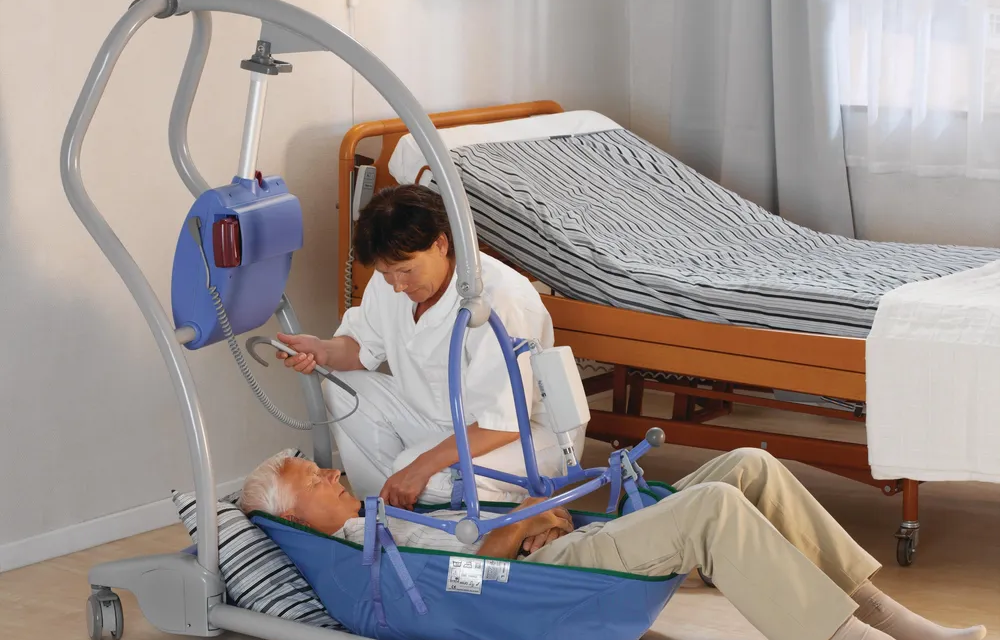
Most families do not wake up one morning and say, “We need a patient lifter.” It usually happens slower than that. Someone starts needing a little more help getting out of bed. Then getting to the bathroom becomes harder. A chair that used to feel comfortable suddenly becomes difficult to get out of. Small things first. Quiet things. The kind people adjust to without talking much about it.
And then one day, lifting becomes… not small anymore. That is often where a patient lifter enters the conversation. Not as some big medical decision. More like a practical one. A necessary one. Because backs hurt. Because falls happen. Because dignity matters. Because people are trying their best, and sometimes “trying your best” still is not physically enough.
A patient lifter is not just equipment sitting in the corner of a room. In many homes, it becomes the difference between stressful daily care and something safer, calmer, and, honestly, kinder.
It Usually Starts with “We Can Manage”
Families say this a lot. We can manage. And for a while, maybe they can. A son helps his father from the bed to the wheelchair before work. A wife supports her husband when moving from the recliner to the dining table. A daughter visiting on weekends notices her mother is quietly doing far more lifting than she admits.
Nobody likes admitting help is needed. Especially when it feels personal. Using a patient lifter can feel like crossing some emotional line. Like accepting that things have changed. That independence looks different now. That part matters. More than people think.
Because the decision is rarely just about mobility. It is about pride, routine, family roles, and those strange little emotional negotiations people make inside their own homes. Still, reality tends to win. When transfers become unsafe, a patient lifter stops being optional and becomes a responsibility.
The Physical Strain People Underestimate
Manual lifting sounds simple until you actually do it every day. Helping someone stand. Supporting body weight. Turning them safely. Moving from bed to chair. Chair to bathroom. From the bathroom back to bed. Again and again. Even for strong people, it adds up.
Back strain. Shoulder pain. Sudden slips. Near misses that nobody talks about later because everyone got lucky. That “lucky” part is dangerous. A patient lifter helps remove that gamble.
Instead of relying solely on strength, the patient lifter creates controlled movement. Stable transfers. Less panic. Less rushing. Less that awful moment where both people feel like they might fall.
And honestly, it protects both sides. The person receiving care feels safer. The carer stops living in quiet fear of hurting someone by trying to help. That mental relief is huge.
Home Doesn’t Always Feel Ready
People imagine medical equipment means turning a home into a hospital. Not always. Modern patient lifter options are more flexible than people expect. Some are mobile. Some are compact enough for tighter spaces. Some work well for temporary recovery, while others work well for long-term support.
Even smaller apartments can often be adapted better than families assume. I have noticed the hesitation often sounds like this: “Our house is too small.” “It will look too clinical.” “It’s only temporary.” Maybe.
But temporary problems can still cause permanent injuries. That is worth thinking about. A patient lifter is there to make the home work better, not to make it feel less like home. And most people adjust surprisingly fast once they realise daily life gets easier. Routine beats resistance. Usually.
Dignity Is Part of the Conversation Too
This part gets skipped too often. Transfers are personal. Very personal. Being physically lifted, helped, supported, repositioned… it can feel vulnerable. Embarrassing even. Especially for older adults who spent decades helping everyone else. A good patient lifter helps preserve dignity, not remove it.
Because the process becomes smoother. Less awkward. Less rushed. Less dependent on someone physically dragging or straining through the movement. That matters. Nobody wants to feel humiliated.
Sometimes people think independence means doing everything alone. It doesn’t always. Sometimes independence means having the right support in the right way.
A patient lifter can actually create more independence, not less. That shift in thinking helps families a lot.
Short-Term Needs Count Too
Not every patient-lifter situation is permanent. Post-surgery recovery. Rehabilitation after a fall. Temporary weakness after illness. Returning home after hospital discharge. These moments can be messy.
People assume they will “just manage for a few weeks”, but those few weeks are often exactly when injuries happen. Because nobody has settled into a routine yet. Because everyone is tired.
Because homes are not designed like hospitals. Using a patient lifter during short-term recovery can prevent one problem from turning into three more.
A bad transfer should not be the reason someone ends up back in the hospital. Yet it happens. More than people realise.
Professional Support Makes a Difference
This is important too: having a patient lifter is one thing. Knowing how to use it properly is another. Technique matters. Setup matters.
The right sling. The right positioning. Understanding the safest transfer path. Knowing what to do if someone feels anxious during the process. These are not tiny details.
Professional patient lifter services often include assessment, setup, guidance, and practical support that families genuinely need.
Because handing someone equipment without confidence is not really support. It is just another source of stress.
A proper patient lifter plan should feel reassuring, not complicated. Simple. Clear. Repeatable. That is the goal.
Caregivers Need Help Too
Sometimes, the person who most needs the patient lifter is not the patient. It is the carer. The spouse is quietly lifting too much. The adult child is pretending their back pain is “nothing”. The support worker is doing careful transfers all day and still going home exhausted.
Carers get good at minimising their own strain. They should not have to. A patient lifter reduces physical pressure, yes, but also emotional load. That constant low-level worry. That fear of “what if I drop them” or “what if I injure myself and then who helps?”
That fear is heavy. People carry it for months. Sometimes years. Equipment cannot solve everything, but it can remove one major source of daily stress. That is not small.
Waiting Too Long Is Common
Honestly, most families wait longer than they should. They adapt. Delay. Reassure themselves. Until one incident changes everything. A fall. A strained back. A near miss in the bathroom.
An emergency hospital visit. Then suddenly the decision feels urgent. The better time is often before that. Not too early, not dramatically. Just early enough that choices can be made calmly, not in crisis mode.
A patient lifter works best when it is part of planning, not panic. That difference matters. Quite a lot.
More Than a Piece of Equipment
People often think a patient lifter is just a mechanical solution to a physical problem. But in real homes, it becomes something bigger. It protects routines. It protects relationships. It protects confidence. It lets care happen with less fear and more stability.
And strangely, something as practical as a patient lifter from CHS Healthcare can create emotional breathing room, too. Fewer arguments. Less frustration. Less guilt sits in the background of everyday life.
That part rarely makes it into brochures. But it should. Because the goal is not simply moving someone from bed to chair. The goal is to help life at home feel manageable again.
Safer. Calmer. A little less heavy. Sometimes that starts with one decision. And sometimes, yes, that decision is simply bringing in the right patient lifter at the right time.
