

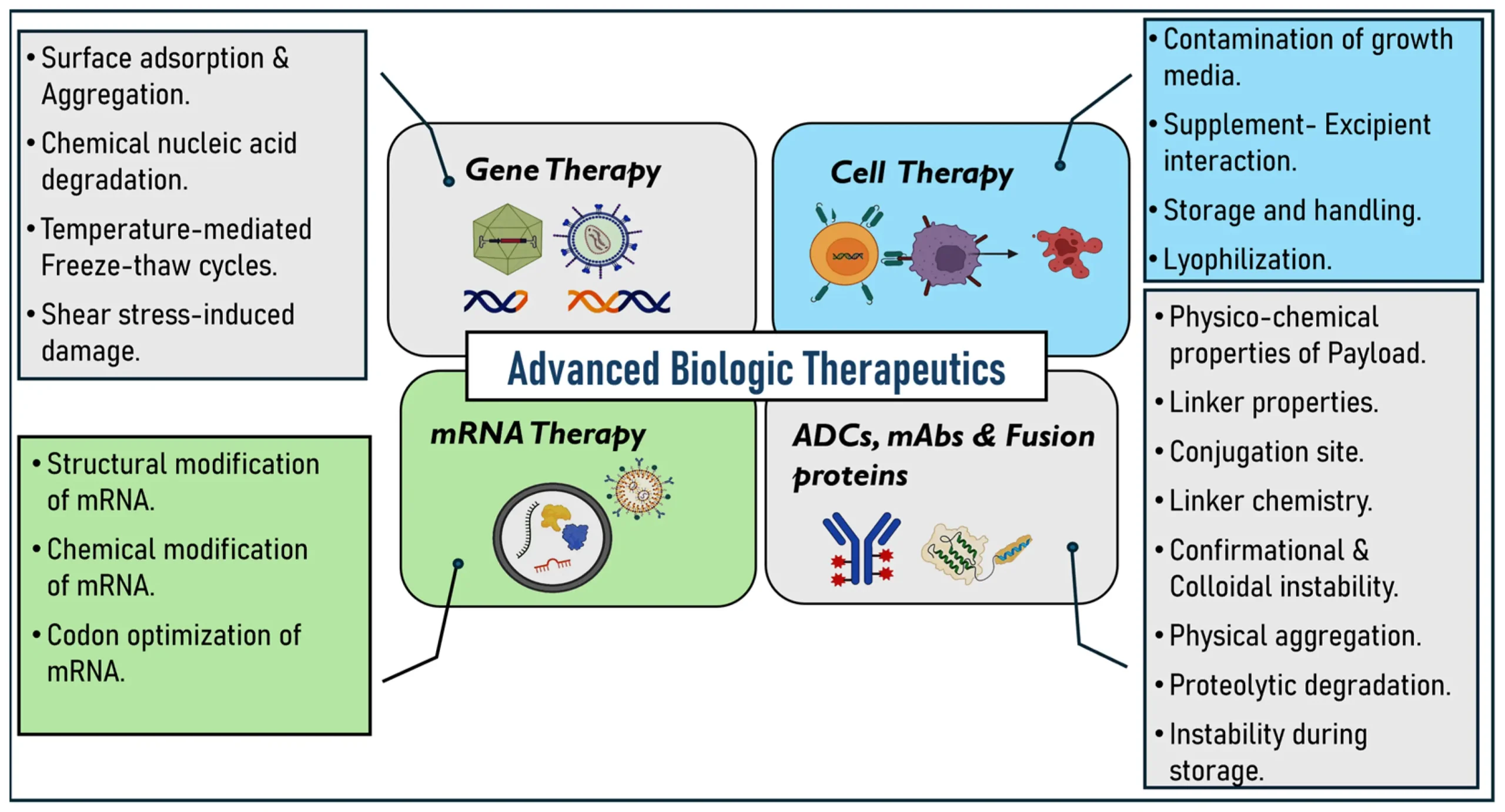
Mention modern medicine and you will hear a lot about breakthrough therapies, precision treatments and biotechnology innovation. But often, the ingredient doing a lot of the heavy lifting behind the scenes is the Biologics API, or biologics active pharmaceutical ingredient.
Biologics APIs may sound like a technical term that only manufacturing experts and regulatory teams use, but biologics APIs are the backbone of many therapies that people rely on today. Often these biologically derived active substances find their use in cancer treatments, autoimmune disease medications, hormone therapies and advanced immunotherapies.
Interestingly, biologics APIs are not produced like their traditional pharmaceutical counterparts. They have their own rules, their own headaches, and frankly a level of complexity that can make traditional drug manufacturing almost look easy.
What Is a Biologics API Anyway?
In other words, an API is the magic ingredient that makes a drug work. In the case of traditional pharmaceuticals, this could be a molecule chemically synthesized through controlled chemical reactions. Biologics API is a different kettle of fish.
Usually, active ingredients are produced by living systems such as micro-organisms, yeast or mammalian cells. These include, for example, monoclonal antibodies, recombinant proteins, vaccines, and some cell- or gene-based components. That biological origin changes the whole thing. Unlike small molecule drugs, biologics APIs are large, structurally complex and highly sensitive to manufacturing conditions. Minor variations in temperature, nutrient composition or processing methods can influence the final product.
Biologics manufacturing has been likened to “getting living cells to behave consistently under industrial pressure,” according to one industry insider. That description is quite accurate. You are not just running a chemical reaction. You are running biology at scale.
Why Are Biologics APIs So Important
Healthcare is inevitably moving toward more targeted, biologically sophisticated therapies. That naturally raises demand for biologics APIs. A good example of this is monoclonal antibodies. These therapies can target specific disease pathways with great precision. They are becoming big players in treating oncology, immunology and inflammatory diseases.
Patients may never think about the API in a biologic drug, but its quality, stability and manufacturing consistency have a direct impact on treatment outcomes.
I stumbled upon Roots Analysis, and they are talking about this market growing at a significant rate. The global biologics API market size was valued at USD 70.4 billion in 2025 and is expected to reach USD 78.4 billion in 2026 and USD 153.8 billion by 2035, growing at a CAGR of 8% during the forecast period 2026 to 2035. That growth is the result of growing therapeutic demand, expanding pipelines of biologics, and more investment in biopharmaceutical manufacturing infrastructure.
The market numbers are impressive, but they also tell a deeper tale. Biologics APIs are leading this transformation as modern medicine becomes increasingly reliant on biologically engineered treatments.
Manufacturing Biologics APIs Is Not Simple
Biologics API manufacturing is more akin to managing a controlled ecosystem, whereas traditional drug manufacturing is more like industrial chemistry. Cell line development is typically the first step in the process. Scientists create cells that create the biological molecule they desire. The cells are cultured in bioreactors, and the environmental conditions need to be carefully controlled.
And this is just the beginning. Once produced, there is purification, analytical testing, formulation considerations and extensive quality control. “Biologics are prone to contamination, structural instability and process variability, so each phase needs to be precise.
The manufacturing teams focus on things outsiders don’t often think about. Oxygen levels, nutrient feeds, pH balance, agitation speed, storage conditions, all can matter. One of the practical realities often debated in the industry is that scaling up a biologics process is seldom a copy and paste exercise. A process that works beautifully in a laboratory situation may behave quite differently in commercial scale production. Biology is often a reminder that timelines for manufacturing don’t always respect.
New Directions: Outsourcing and Specialized Knowledge
One other interesting trend in the biologics API space is the increase in outsourcing. Many pharmaceutical companies are partnering with specialized contract development and manufacturing organizations, commonly known as CDMOs to support biologics API production. There are practical reasons for it.
Building biologics manufacturing facilities is a very big investment. The infrastructure is complex, regulatory expectations are high, and specialist technical expertise is critical.
For smaller biotech companies, outsourcing can be a way to access sophisticated manufacturing capabilities without having to spend a lot of money up front on infrastructure.
Increasingly even the big pharmaceutical companies are turning to external manufacturing partnerships to increase flexibility and capacity. Of course, outsourcing has its own challenges with technology transfer, quality alignment, communication, and regulatory coordination. Working together is critical because there is not a lot of room for error in the manufacturing of biologics.
Quality and Regulation Define the Whole Industry
Few industries are under the level of scrutiny that biologics API manufacturing is. Extensive documentation, process validation, analytical characterization and quality assurance are required by regulatory agencies. There is a reason for that rigor.
Biologics therapies are used to treat serious conditions where there can be no compromise on consistency and safety. Quality control in biologics is more than just checking chemical identity. Manufacturers must assess purity, potency, structural integrity, biological activity, and the risk of contamination.
This is one reason biologic development times can be long and resource intensive. People outside the field sometimes think that regulation slows down innovation. Industry insiders see it differently. Strong regulation creates trust and trust is critical when therapies involve complex biological products for vulnerable patient populations. The sector remains defined by the tension between the imperative to innovate rapidly and the responsibility to regulate.
The Future of Biologics API Development
The biologics API landscape is still developing. New technologies including continuous bioprocessing, advanced analytics, digital manufacturing tools and artificial intelligence driven optimization are starting to impact production strategies.
Trends in personalized medicine might drive biologics manufacturing toward more flexibility and customization. Biosimilars are also bringing competition to the market and putting pressure on manufacturing efficiency.
There is also an increasing interest in sustainability in biopharmaceutical production. Reducing resource consumption, improving process efficiency and reducing environmental impact are increasingly apparent priorities. What is so striking about biologics APIs is that they are so much more than technical pharmaceutical ingredients. They are emblematic of the bigger trend in biology-driven medicine.
Conclusion: The Silent Engine of Biopharmaceutical Innovation
You don’t hear much about biologics APIs, but they are the backbone of some of the most sophisticated therapies available in healthcare today. Their development entails biology, engineering, quality science, manufacturing expertise, and relentless troubleshooting. It is an area where tiny molecular details may have great therapeutic importance.
The value of biologics APIs will only increase as biologic medicines continue to change treatment paradigms across cancer care, immunology, rare diseases, and beyond. There’s something quietly fascinating about this space. The breakthroughs patients hear about often come from living cells, sophisticated engineered systems and teams navigating the complexities of biologics API manufacturing. Science can be complex, but the goal is deeply human: to develop treatments that can make a positive difference in people’s lives.
