

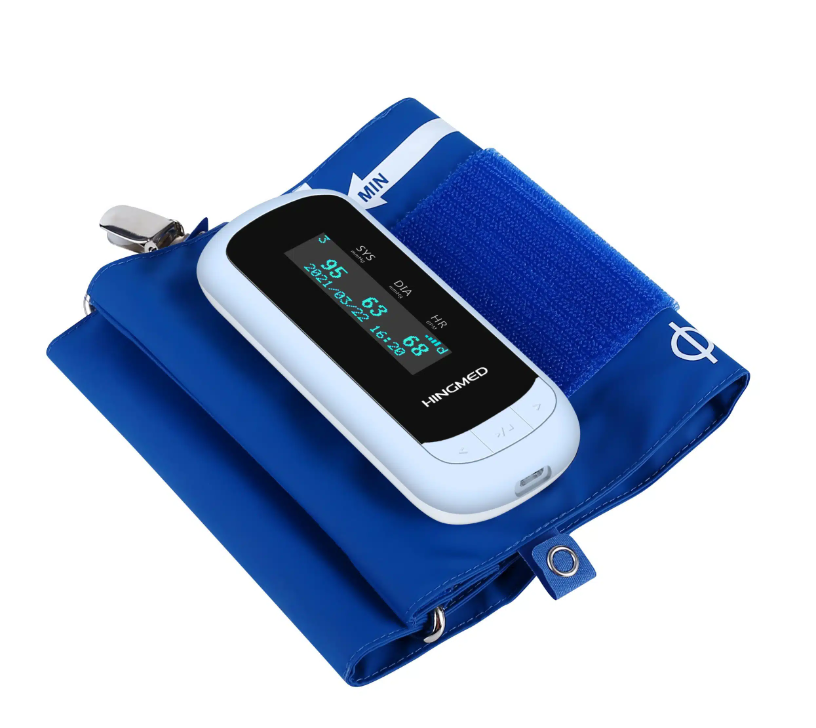
For cardiology departments, internal medicine practices, and nephrology units, selecting the right 24 hour abpm device is a decision with lasting clinical and operational implications. A well-chosen device improves diagnostic accuracy, simplifies clinical workflows, and increases the likelihood that patients will complete the full monitoring session. A poor choice does the opposite. This guide walks through the key criteria that should inform the decision.
Why the Choice of Device Matters
Ambulatory blood pressure monitoring generates its clinical value from two things: the accuracy of the measurements it takes, and the completeness of the data it collects. Both are directly affected by device design. An inaccurate device produces misleading data; an uncomfortable device leads to incomplete sessions, rejected readings, and frustrated patients who remove the monitor before the session is finished.
These are not hypothetical risks. Studies examining data quality across different ABPM devices consistently find meaningful variation in the proportion of valid readings produced per session. In a recording that typically generates 50–80 measurements, even a 15% difference in valid reading rate can shift results past critical diagnostic thresholds.
Clinical Validation: The Non-Negotiable Starting Point
The most important criterion when evaluating any ABPM device is whether it has been independently validated against a recognised clinical protocol. The two dominant validation standards in this space are:
- The British Hypertension Society (BHS) protocol, requiring devices to achieve grade A or B for both systolic and diastolic measurements.
- The AAMI/ANSI SP10 standard, widely used in North America and increasingly required for regulatory clearance in other markets.
- The European Society of Hypertension International Protocol (ESH-IP), which defines specific thresholds for acceptable measurement deviation.
A device that has not been validated to at least one of these standards should not be considered for clinical use, regardless of price or other features. Validation documentation should be available from the manufacturer on request.
Cuff and Recorder Design: The Patient Comfort Factor
Patient compliance over a 24-hour period is substantially affected by the physical design of the device. Two design architectures dominate the current market:
Traditional Dual-Component Design
These devices use a standard upper-arm cuff connected by a rubber tube to a separate recorder unit worn on a belt or carried in a pouch. This design has been the industry standard for decades and is supported by a large body of validation data. The main drawback is the rubber tube, which many patients find disruptive during sleep — it catches on bedding, pulls on the arm when the wearer turns over, and transmits noise from the pump.
Integrated All-in-One Design
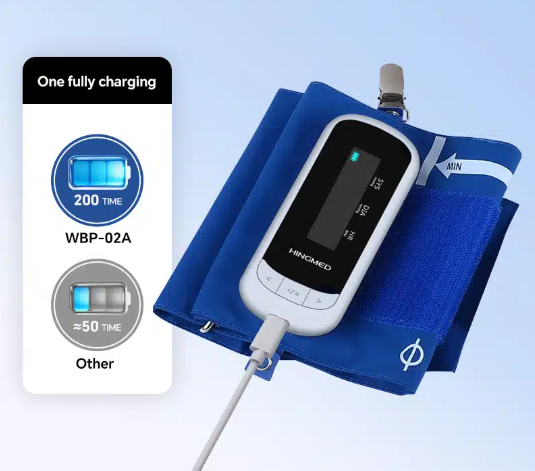
Newer devices integrate the recorder, display, and inflation mechanism directly into the cuff unit. This eliminates the tube entirely, resulting in a more comfortable overnight experience for most patients.
Manufacturers like hingmed have brought this type of design to the clinical ABPM market. Their WBP-02A exemplifies the approach: a single wearable unit that removes all the wiring and tubing of conventional designs while maintaining clinical-grade measurement accuracy. For departments where nocturnal data quality is a priority, integrated designs generally offer a meaningful advantage.
Data Analysis Software
The hardware collects the data; the software determines whether that data becomes clinically actionable. When evaluating ABPM software, focus on the following:
Report Completeness
Clinical ABPM reports should present 24-hour mean values, separate daytime and nighttime means, dipping classification, blood pressure load, and morning surge assessment as a minimum. Some systems include additional parameters such as short-term blood pressure variability and ambulatory arterial stiffness index, which are increasingly recognised as cardiovascular risk markers.
Flexibility of Time Period Definition
Fixed-period definitions (e.g., always treating 07:00–22:00 as daytime) are less accurate than patient-diary-adjusted periods, which use the individual patient’s recorded sleep and wake times. Better software systems support both approaches.
EMR Integration and Export Formats
In a busy department, ABPM results need to move efficiently into the patient record. Check whether the device software exports in formats compatible with your EMR system, or whether it requires manual data entry or a separate workstation.
Practical Durability and Maintenance
ABPM devices in active clinical use undergo considerable wear. Cuffs need to be replaced periodically; cuff bladders can develop pinhole leaks that affect measurement accuracy; pump mechanisms are subject to mechanical fatigue. When evaluating a device for departmental use, consider:
- Availability and cost of replacement cuffs across the full size range.
- Recommended service and calibration intervals.
- Battery life per session, and whether the device uses standard or proprietary batteries.
- Manufacturer support and warranty terms, particularly for high-volume institutional users.
Questions to Ask Before Purchase
Has this device been validated, and against which protocols?
Ask for published validation studies, not just a yes/no answer. The validation data should be available in peer-reviewed literature or via a manufacturer technical data sheet.
What does the standard report look like?
Request a sample report before purchasing. The report format determines how usable the data is at the clinical level. A well-structured report reduces interpretation time and supports consistent decision-making across clinical staff.
What is the after-sales support structure?
For institutional purchasers, post-sale support — including training, calibration services, and software updates — is as important as the device itself. Confirm what is included in the standard contract and what is billed separately.
Conclusion
Choosing a 24 hour abpm device is not a decision that should default to the lowest purchase price or the most familiar brand name. Clinical validation, patient comfort, software quality, and long-term durability all determine whether the investment actually improves patient care. Taking time to evaluate these factors carefully before committing to a device is the surest way to ensure that ambulatory monitoring delivers its full clinical value in your setting.
