

Nobody remembers the fastest pathology assistant. They remember the one who got every detail right. That’s one of the biggest lessons we keep hearing about Certificate III in Pathology Assistance. People sometimes imagine pathology work as rows of microscopes and scientists making big discoveries. That’s only part of the picture.
Walk into a busy pathology lab and something else stands out first. Movement. Samples arriving every few minutes. Labels getting checked. Barcodes scanned. Paperwork matched. Staff are moving from one task to another without much fuss. It looks busy because it is. Even so, nobody’s racing. There’s a reason for that.
Every Sample Belongs to Someone
It’s easy to forget. A tube sitting in a tray isn’t “just another specimen”. It’s connected to a real person who’s waiting for answers. That changes how we think about the job. One wrong label. One barcode scanned against the wrong record. One specimen stored in the wrong place. Small mistake. Big consequences.
This surprises plenty of people. Some assume they need years in healthcare before thinking about pathology. That’s not really how many employers see it.
Industry benchmarks for 2026 suggest around 69% of pathology employers place more value on practical laboratory experience and specimen handling skills than previous healthcare employment when recruiting entry-level pathology assistants.
That tells us something. People can learn technical processes. Good habits. Attention to detail. Those things often carry more weight than simply having worked in healthcare before.
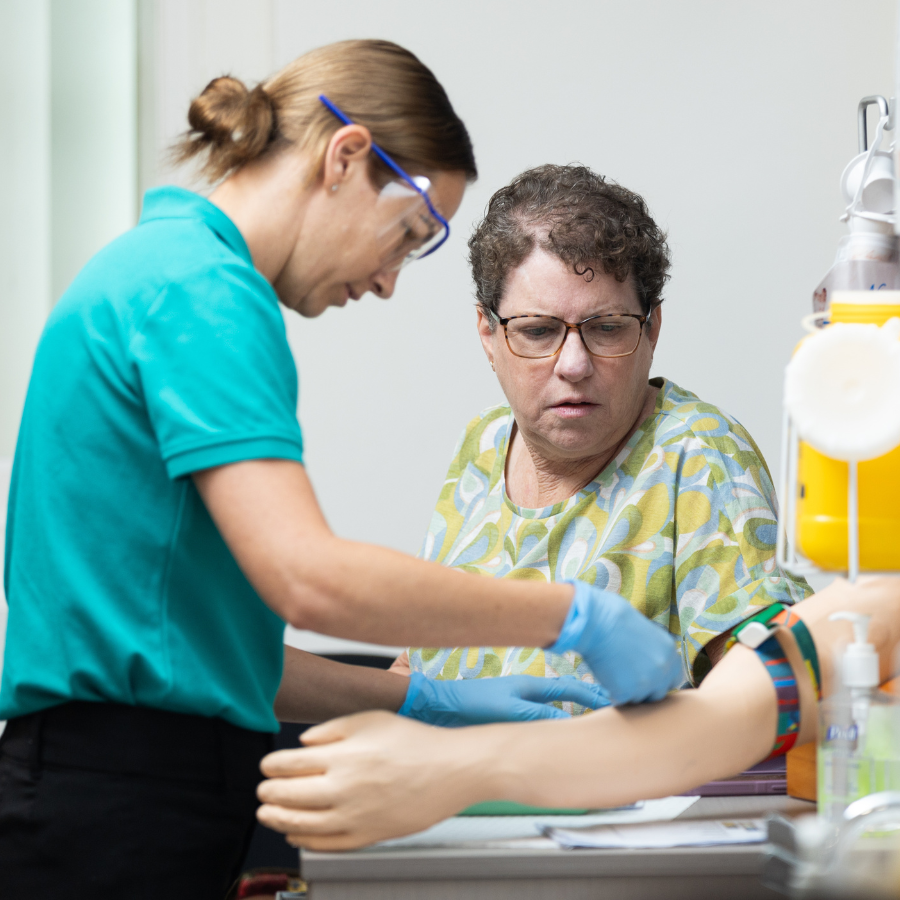
That’s one reason Certificate III in Pathology Assistance includes practical learning instead of only classroom theory.
We’ve noticed people sometimes worry they need advanced computer skills before studying. Usually not. Learning those systems during Certificate III in Pathology Assistance gives students a much better idea of what real workplaces look like.
There’s More Going On Than Collecting Samples
People often picture pathology assistants standing at collection centres drawing blood all day. Some do. Many don’t. Depending on the workplace, the role can include receiving incoming specimens, checking paperwork, preparing samples for testing, organising storage, following infection control procedures and keeping records accurate throughout the process.
Some days are predictable. Others aren’t. Healthcare has a habit of changing quickly. That’s exactly why consistency matters.
The work might seem repetitive from the outside, but every sample needs the same level of care whether it’s the first one of the morning or the last one before finishing time.
The Qualification Can Open More Than One Door
People often ask the same question. “What job do I actually get afterwards?” Fair enough. Industry figures suggest around 76% of graduates either find employment or continue into further healthcare study within twelve months of completing the Certificate III in Pathology Assistance.
That doesn’t mean everyone’s path looks the same. Some graduates move into pathology collection. Others find work in hospital laboratories. Some continue studying and head into broader healthcare or laboratory careers later on. The qualification becomes a starting point rather than the final destination.
Pathology Isn’t the Same as General Healthcare Support
These two qualifications sometimes get mixed together. They’re actually built for different workplaces. Here’s a quick comparison.
| Aspect | Certificate III in Pathology Assistance | General Healthcare Support Qualification |
| Primary focus | Specimen collection support, laboratory procedures, infection control, specimen preparation and pathology operations | General patient support, personal care and broader healthcare assistance |
| Typical work environment | Pathology laboratories, collection centres, hospitals and diagnostic services | Hospitals, aged care facilities, disability services, community health and clinics |
| Best suited for | Students interested in laboratory-based healthcare and diagnostic support | Students looking for broader healthcare support roles across different care settings |
Neither path is better. They’re simply different. If someone enjoys organised routines, careful processes and laboratory work, Certificate III in Pathology Assistance often makes more sense than a qualification focused mainly on direct patient care.
One comment from the senior pathology laboratory operations manager, Dr. Emily Carter, really sums it up:
“Strong pathology assistants aren’t remembered for working quickly—they’re remembered for handling every specimen accurately because small mistakes can affect much bigger clinical decisions.”
We’d agree with that. When we think about Certificate III in Pathology Assistance from NK Training, speed isn’t the first thing that comes to mind. We think about checking labels twice. Following the same process every single time. Pausing for a second if something doesn’t look right instead of guessing. Most of the work won’t make headlines.
Patients may never meet the person preparing or tracking their specimen. Even so, those quiet jobs keep laboratories running every day. That’s probably what makes Certificate III in Pathology Assistance different. It teaches people that accuracy isn’t an extra part of the role. It is the role, and everything else grows from there.
